US Moves Bitcoin During Iran Strikes — Market Watches Closely

Washington makes a blockchain play as geopolitical tensions flare—and traders scramble to decode the signal.
The Digital Asset Gambit
Forget gold bars in vaults. When the U.S. government shifted Bitcoin holdings amid strikes on Iran, it didn't just move value—it sent a message on a public ledger for the entire world to parse in real-time. This isn't your grandfather's monetary policy.
Markets on Edge
Every satoshi matters when nation-states become whale wallets. The transaction triggered instant analysis across trading desks, with algorithms hunting for patterns and human traders debating whether it was a tactical maneuver or a broader strategic pivot. Volatility spiked—because nothing says 'risk-on' like mixing crypto with cruise missiles.
The New Sanctions Playbook
Blockchain's transparency cuts both ways. While it allows for unprecedented tracking of state-level activity, it also creates a global spectator sport out of fiscal strategy. Traditional finance types are left squinting at wallet addresses, probably muttering about the good old days of opaque SWIFT transfers and a nice, quiet banking crisis.
A Provocative Precedent
This move blurs the line between asset class and instrument of statecraft. It proves digital currency isn't just for rebels and retail degens anymore—it's now part of the great game. The real question isn't what moved, but what comes next. Because in today's market, the most bullish signal might just be a government treating crypto seriously enough to use it in a crisis. Even if that means the 'store of value' narrative now includes storing value before a potential escalation.
Watch the charts, but watch the headlines harder. The keys to the next market cycle might be held in a cold wallet—somewhere in the Pentagon.
Small Transfers, Big Timing
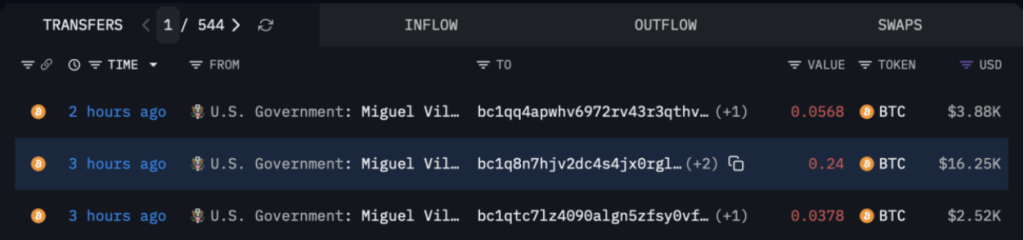
The amounts were modest. But small government crypto transfers like these often precede larger moves, and the timing drew immediate attention from traders already watching the markets closely.

The US government currently holds around $23 billion in seized cryptocurrency, according to Arkham data. No official explanation was issued for the transfers.
Bitcoin had already taken a hit when the transfers were recorded. American and Israeli forces launched strikes on Iran over the weekend, sending the price tumbling roughly 3% within hours to NEAR $63,000 — though it has since recovered sharply, climbing to $71,000 as of press time.
Gold and oil climbed. US equity futures pointed lower. Bitcoin behaved the way it usually does when fear takes over — it sold off alongside other risk assets.
Markets Whipsaw On Khamenei News
Then the situation shifted again. Iranian officials confirmed the death of Supreme Leader Ayatollah Ali Khamenei, and Bitcoin briefly spiked to $68,196 before reversing course and settling near $65,300 — still down about 2%.
Iran fired back at the strikes, launching missiles toward Israel and hitting US military bases in Kuwait, the United Arab Emirates, and Bahrain.
Through all of it, Bitcoin held up better than US stock futures. Funding rates in Bitcoin’s futures markets turned sharply negative during the worst of the selling, a sign traders rushed to open short positions expecting further losses. If the conflict widens and oil prices surge, analysts say a deeper risk-off wave could follow.
Iranian Citizens Rushed To MOVE MoneyOn the ground in Iran, ordinary people responded immediately. Nobitex, the country’s largest crypto exchange, saw outflows jump 700% right after the strikes began. Crypto offered one of the few available channels to move money quickly across borders under sanctions.
The convergence of events — a live military conflict, a government Bitcoin transfer, and a dramatic surge in Iranian crypto activity — landed on markets all at once.
Whether the US transfers were routine or something larger is still unclear. Traders are watching the next wallet move just as closely as the next headline from the region.
Featured image from Unsplash, chart from TradingView
