Geopolitical Shockwave: Iranian Crypto Outflows Surge to $10.3 Million Following US-Israeli Airstrikes

When missiles fly, digital assets flee. Chainalysis data reveals a stark capital flight pattern from Iran directly tied to escalating military action.
The On-Chain Exodus
Forget slow-moving bank wires and frozen accounts. The moment tensions spiked, cryptocurrency wallets lit up. This wasn't retail panic—it was targeted, high-value movement. The blockchain doesn't care about borders or sanctions; it just settles. While traditional finance scrambles with compliance forms, a $10.3 million transfer is already complete, settled, and irreversible.
Digital Sanctions-Busting 101
This flow underscores crypto's raw, amoral utility: capital mobility under duress. It's the ultimate contingency plan for entities operating in politically volatile regions. The networks facilitating these moves are as crucial as the assets themselves, creating a parallel financial rail that operates 24/7.
A New Front in Financial Warfare
Every geopolitical event now has a crypto dimension. Analysts aren't just tracking troop movements but also wallet clusters and transaction volume spikes. This data provides a real-time, unfiltered pulse on capital sentiment that no official report can match. It’s the hedge fund manager's dream—and the sanctions officer's nightmare.
The takeaway? In a world of unstable regimes and sudden conflicts, sovereign-agnostic money isn't just a speculative asset—it's a strategic lifeline. And as one cynical trader put it, 'War is terrible for people, but sometimes great for proving a blockchain use-case.' The markets, as always, find a way.
Iran’s Crypto Use Amidst Economical Collapse
Crypto has become a financial lifeline for both ordinary households and state‑affiliated networks in Iran, according to an article posted on our sister website NewsBTC. Years of US and EU financial and oil sanctions have strained the economy, cutting Iranian banks off from SWIFT and dollar funding, and now even targeting Iran‑linked crypto platforms through recent US Treasury designations. Add to this cocktail a runaway inflation and a collapsing rial, and it becomes clear why many Iranians increasingly look to bitcoin and stablecoins as an alternative store of value and cross‑border payment rail.
A Lifeline Of Hope For Ordinary Folk?Chainalysis has estimated that Iran’s crypto activity reached roughly 7.78 billion dollars in 2025, with usage spiking around protests, bombings and other security crises as people rush to MOVE funds off local platforms and into self‑custody.
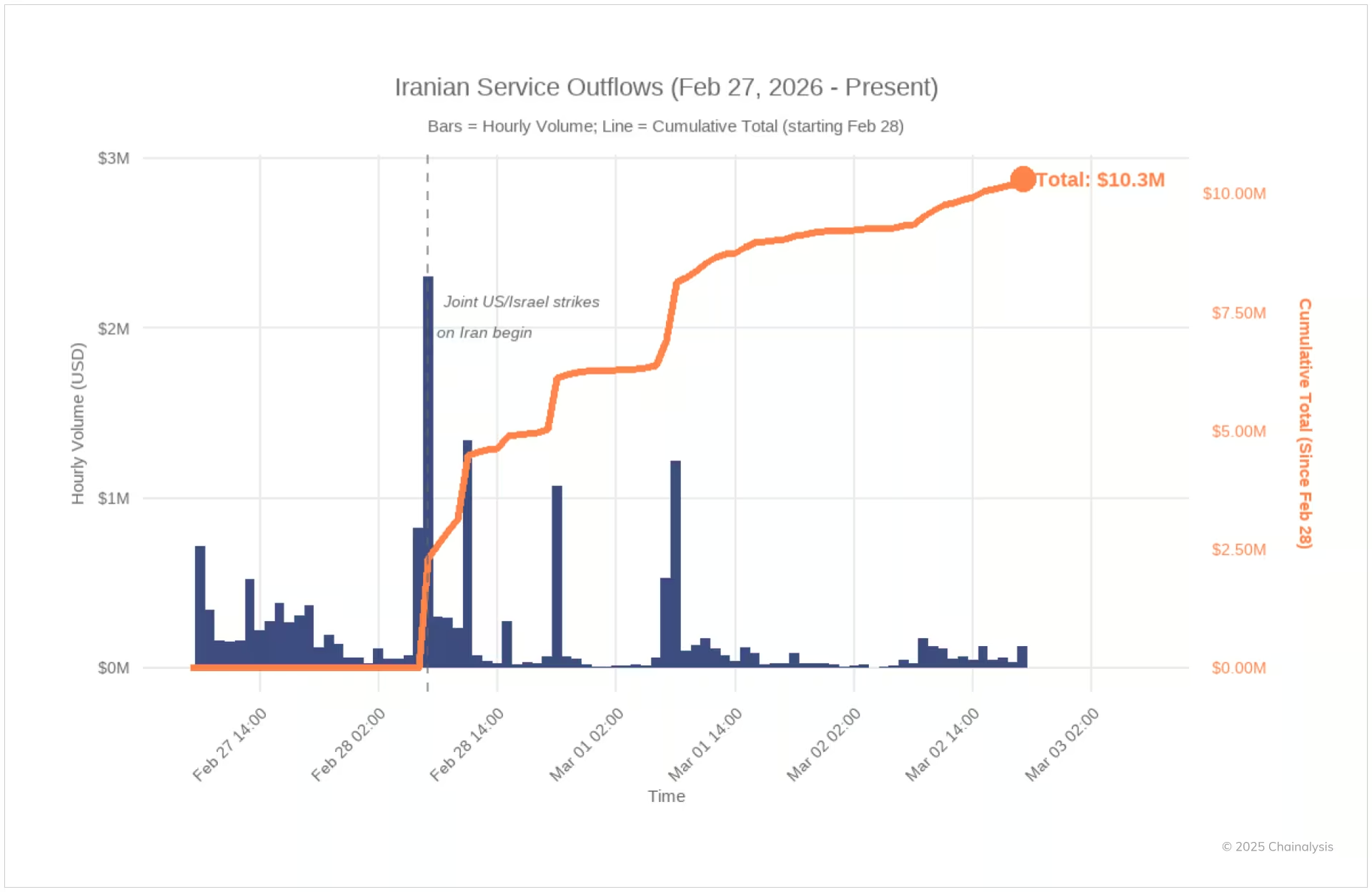
In its latest report, Chainalysis visualizes this idea with a series of charts that track hourly outflows from major Iranian exchanges before and after the February 28 airstrikes.
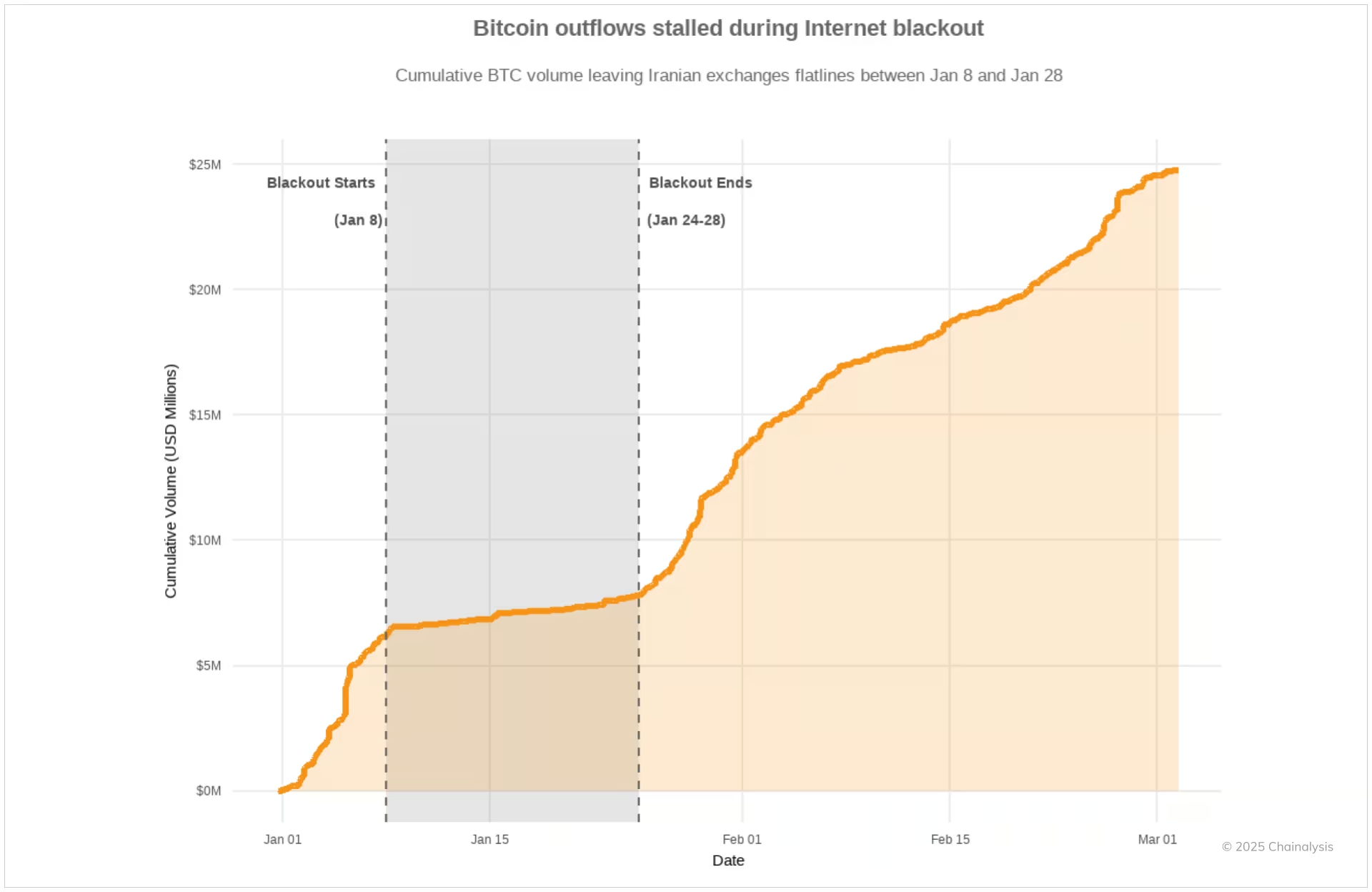
The graphs show relatively modest, choppy activity in the hours leading up to the strikes, followed by a sudden jump where hourly withdrawals approach or exceed roughly 2 million dollars and cumulative outflows climb to about 10.3 million dollars by March 2.
For many ordinary Iranians, Bitcoin and stablecoins now function as a hedge against currency collapse and capital controls, while addresses tied to the Islamic Revolutionary Guard Corps (IRGC) account for roughly half of on‑chain activity, highlighting crypto’s dual role as both a survival tool and a sanctions‑evasion channel.
However, it is worth noting that while some observers praise Chainalysis for helping exchanges and regulators track hacks, scams, and sanctions evasion, civil‑liberties advocates criticize its tools as opaque and potentially overreaching in terms of financial surveillance.
What This Means For The Future Of Iranians
For ordinary users, digital assets may remain a pressure valve against inflation and capital controls, even as regulators tighten the screws on Iran‑linked platforms and wallets. For policymakers, the question now is whether new rounds of enforcement will meaningfully curb sanctions evasion or imply push more of Iran’s crypto activity into harder‑to‑track channels.
What is for sure is that the the latest spike in Iranian exchange outflows comes to show, once more, how quickly crypto reacts to geopolitical shocks and sanctions risk: the market is, after all, in the hands of the people.
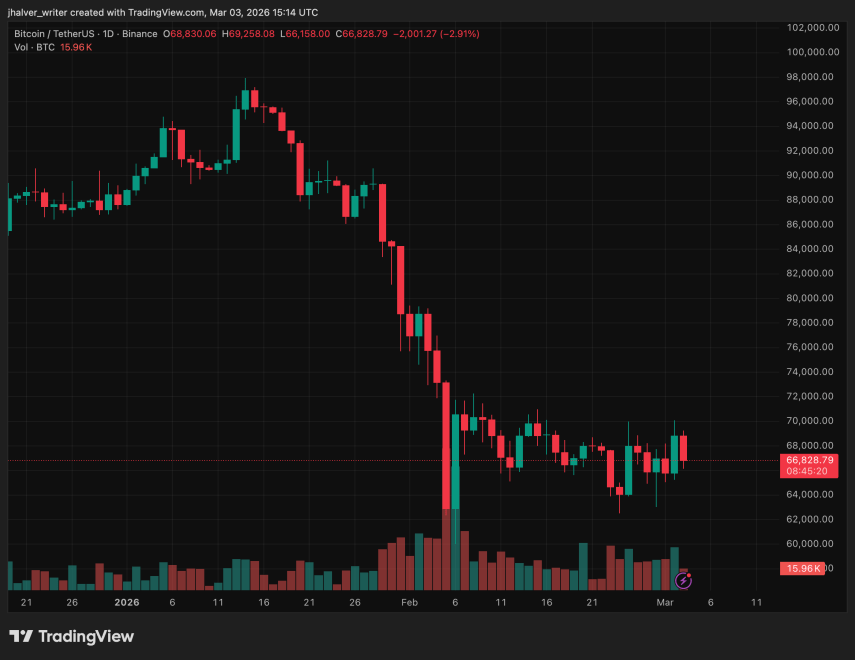
Cover image from ChatGPT, BTCUSDT chart from Tradingview
