UK Lawmaker Demands Temporary Ban: Is Crypto Funding a Political Risk?

Digital assets are shaking up more than just finance—they're rattling the halls of Westminster. A UK lawmaker is pushing for a temporary ban on cryptocurrency political donations, citing a 'clear and present danger' to electoral integrity. The call to action throws a spotlight on the opaque world of crypto-funded campaigns.
The Regulatory Grey Zone
Current election finance laws, drafted in a pre-blockchain era, struggle to trace the origin of crypto donations. Unlike traditional bank transfers, digital asset transactions can bypass conventional oversight, creating a potential backdoor for foreign influence or undisclosed funding. The lawmaker's proposal aims to slam that door shut until proper guardrails are built.
Innovation vs. Scrutiny
Proponents argue crypto donations democratize political support, allowing smaller, tech-savvy contributors to participate. Critics fire back that anonymity features, while not absolute, complicate 'know-your-donor' checks to a degree that would make a compliance officer's head spin. It's the classic tech clash: disruptive potential versus the need for accountable systems.
The Global Precedent Puzzle
The UK isn't navigating this alone. Several jurisdictions are grappling with the same dilemma, trying to balance innovation with protection. A temporary ban, the argument goes, provides breathing room to craft rules that protect democracy without stifling a new form of civic engagement—because nothing says 'modern democracy' like needing a hardware wallet to fund your MP, right?
The move sets up a high-stakes debate: is pausing crypto's political role a prudent safeguard or a knee-jerk reaction that misunderstands the technology? One thing's clear—when campaign funds can be stored on a USB stick, the rulebook needs a serious update. After all, in the fine tradition of political finance, if there's a loophole, someone will find a Lamborghini-sized way to drive through it.
Six Agencies, No Clear Leader — And A Problem That Keeps Growing
Western’s concern runs deeper than just donations. He pointed out that enforcing rules around political funding and foreign interference is currently split across six separate bodies — the Electoral Commission, the Metropolitan Police Service, Counter-Terror Policing, the National Crime Agency, MI5, and local police forces.
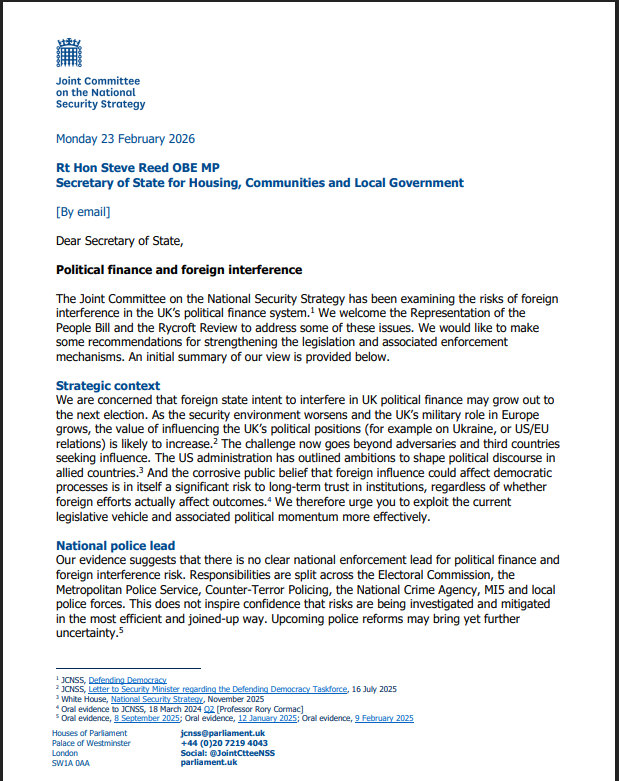
No single agency is clearly in charge. According to Western, that gap in leadership leaves the UK exposed. His letter recommends creating a dedicated national police unit focused entirely on political finance oversight and foreign interference risks — a longer-term fix to what he sees as a structural weakness in the current system.
“We are concerned that foreign state intent to intervene in UK political finance may grow out to the next election,” Western wrote.He added that as the UK’s military role in Europe expands and its positions on issues like Ukraine and relations with the US and European Union become more consequential, the incentive for outside actors to meddle in British politics will only increase.
Strict Rules Proposed For Any Crypto That Does Get Accepted
Western did not call for a permanent ban. The moratorium he proposed WOULD stay in place only until the Electoral Commission releases formal statutory guidance on how crypto donations should be handled.
Once that guidance is issued, the freeze would be lifted. But the rules he wants attached to any future crypto donations are strict. Reports say Western’s recommendations include requiring political parties to use only cryptocurrency platforms registered with the Financial Conduct Authority, the UK’s financial services watchdog.
Donations traced back to mixing services — tools commonly used to obscure the origin of funds — would be banned outright. Any crypto received by a political party would need to be converted into regular currency within 48 hours.
Western also pushed for stricter oversight of political donations, including checks on the source of donors’ wealth. He urged tougher penalties for breaking election finance laws and called for broader authority for the Electoral Commission to require banks and other institutions to disclose where donated funds originate.
Featured image from Alamy, chart from TradingView
