Terraform’s $40B Implosion Haunts Wall Street: Jane Street Faces Insider Trading Fallout

Remember the $40 billion that vanished? Terraform's ghost just rattled Wall Street's cage.
A new lawsuit throws Jane Street—the quantitative trading giant—into the harsh spotlight, accusing the firm of capitalizing on non-public information ahead of the ecosystem's historic collapse. It's a legal tremor that echoes the systemic shockwaves felt across global crypto markets.
The Lawsuit's Core Allegation
The complaint hinges on sophisticated trading activity that allegedly bypassed public knowledge. Plaintiffs argue Jane Street's moves weren't just smart hedging—they were a step ahead of the crowd with an unfair advantage. The suit seeks to connect dots between private data flows and precise market positioning.
Why This Case Matters Now
Regulators globally are sharpening their claws. This case lands as watchdogs from the SEC to international financial authorities demand clearer rules and tougher enforcement. It's a test of how traditional finance laws apply to the digital asset frontier's gray areas.
The outcome could set a precedent, defining what constitutes insider trading in the complex, cross-border crypto economy. For institutional players, it's a stark reminder: the compliance playbook is being rewritten in real-time.
The Ripple Effect
Beyond the courtroom, the case fuels the narrative that crypto's wild west days are numbered. It pressures all major players—from hedge funds to market makers—to audit their internal controls and information barriers. Transparency is no longer optional; it's a survival tactic.
For the broader market, it's a painful but necessary cleanse. Each high-profile case like this cuts through the hype, separating robust, compliant innovation from the reckless schemes that give the whole sector a bad name. Sometimes, the market needs a scandal to grow up—just ask traditional finance, where 'mature' often means 'better at hiding the bodies.'
The ghost of Terraform isn't going away. It's becoming a permanent fixture in the regulatory architecture, ensuring that a $40 billion lesson won't soon be forgotten.
Allegations of Insider Trading During Terra’s Final Days
According to the lawsuit, Jane Street obtained material non-public information through contacts within Terraform. The filing claims that a former Terraform intern working at the trading firm helped establish private communication channels that allegedly became a source of sensitive operational details.
Central to the case is a series of transactions on May 7, 2022, days before TerraUSD lost its dollar peg. Terraform quietly removed 150 million TerraUSD from Curve’s 3pool liquidity pool, a MOVE that had not yet been disclosed publicly. Less than ten minutes later, a wallet linked to Jane Street allegedly withdrew 85 million TerraUSD from the same pool.
The administrator argues that this timing allowed the firm to unwind large exposures and position trades before panic spread across the market. The lawsuit claims these actions intensified liquidity stress and contributed to the rapid loss of confidence that followed.
Jane Street has strongly denied the accusations, describing the lawsuit as baseless and arguing that Terraform’s own management, not outside traders, was responsible for investor losses.
Revisiting the $40 Billion Crypto Meltdown
Terraform’s collapse remains one of the defining crises in cryptocurrency history. When TerraUSD lost its peg in May 2022, its sister token Luna entered a death spiral that wiped out roughly $40 billion in market value within days.
The fallout triggered widespread liquidations and contributed to broader industry instability, later exposing weaknesses across several crypto firms.
Terraform filed for bankruptcy in 2024, while Kwon later pleaded guilty to criminal charges and received a prison sentence. The current lawsuit follows earlier legal action against another trading firm, signaling an ongoing effort to recover funds for creditors.
Broader Implications for Crypto Market OversightThe case spotlights growing concerns about information asymmetry in markets often promoted as decentralized. Regulators have increasingly focused on trading practices, market manipulation, and the role of large liquidity providers in digital assets.
If the allegations are proven, the lawsuit could set an important precedent for how proprietary trading firms interact with crypto projects and handle non-public information. Even if unsuccessful, the legal battle reopens unresolved questions about accountability during major crypto failures.
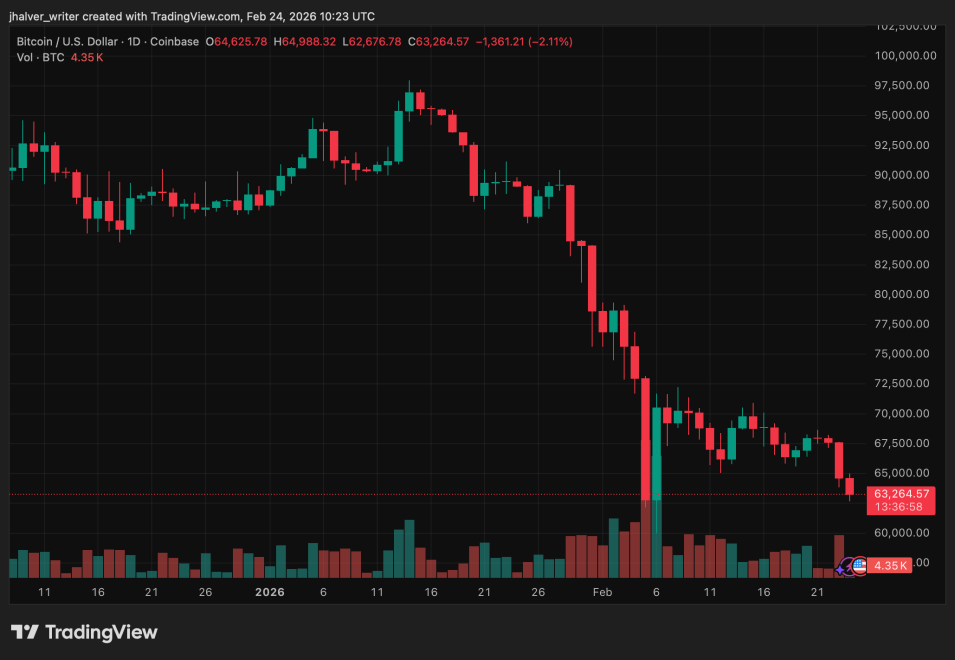
Cover image from ChatGPT, BTCUSD on Tradingview
