Lightning Strikes Big: Bitcoin’s Layer-2 Network Shatters $1 Billion Monthly Milestone

The second layer just became the main event. Bitcoin's scaling solution isn't just humming in the background anymore—it's processing a torrent of value that traditional payment rails can only dream of matching.
From Sidecar to Superhighway
Forget the 'digital gold' narrative for a second. This surge in activity paints a different picture: Bitcoin as a functional settlement network. The Lightning Network is cutting transaction fees to near-zero and bypassing the congestion that can plague the base chain, proving that scalability isn't a future promise—it's a present-day reality. Users are voting with their satoshis, moving billions without needing a bank's permission or a three-day ACH delay.
The Infrastructure Quietly Built Itself
While Wall Street debates ETFs and rate cuts, the real engineering happened in the open. A sprawling ecosystem of nodes and channels materialized, not from a corporate roadmap, but from pure utility. It turns out when you build a system that actually works better and cheaper, people use it—a concept that seems to elude most legacy fintech boards, who are still trying to patent the concept of a database.
What a Billion Dollars Actually Means
That number isn't just vanity metrics. It represents millions of micro-transactions—coffee, content tips, cross-border remittances—flowing on a network that operates 24/7. It's the kind of organic, fee-efficient growth that makes a central banker's spreadsheet model look embarrassingly simplistic. The old guard is busy optimizing for quarterly earnings, while this new financial layer optimized for throughput—and just won.
The base blockchain remains the fortress of value. But Lightning is its economic bloodstream, proving that Bitcoin's second act might be far more disruptive than its first. The trillion-dollar question for traditional finance isn't if they'll adopt this tech, but if they even have the institutional agility to catch up.
Adoption Driven By Bigger Players
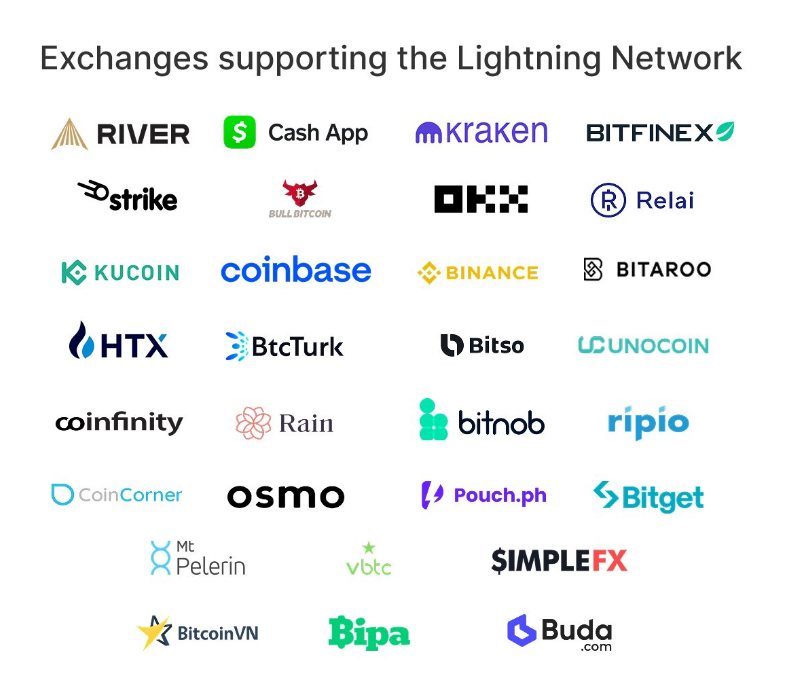
Reports say many of the biggest gains were not from tiny tips or in-app experiments this time. Exchanges and merchant integrations are carrying a lot of the load.
Back in 2023, monthly transactions peaked at 6.6 million as apps tried out micropayments in gaming and chat. Now the shape of use looks different. Average payment sizes appear larger and the profile of users has shifted toward trading desks and businesses.
https://t.co/5Kmor1eA1n
— Sam Wouters (@SDWouters) February 19, 2026
Institutional Transfers Show Network Muscle
A striking example came when Secure Digital Markets routed a million-dollar Lightning Network transfer to Kraken. That MOVE showed big sums can be shifted quickly without waiting for on-chain confirmation.
Network capacity, which measures BTC tied up to keep channels open, reached 5,606 BTC in December. That increased liquidity matters for larger deals because it lowers the chance a large payment will fail for lack of routed funds.
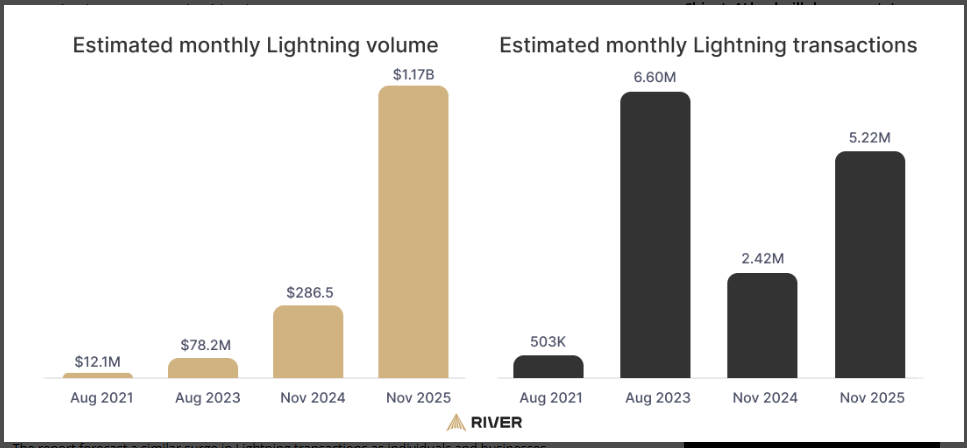
Market conditions were mixed as the network grew. Bitcoin slid under key levels this week, and traders grew cautious as geopolitical headlines piled up.
Volume in spot markets has been muted at times, yet Lightning traffic ROSE despite that. Price swings still happen, and low trading days tend to amplify those moves, but the network’s payment activity did not simply mirror price spikes. In short, payments rose while BTC sometimes moved sideways.
The Lightning Network moves payments off the main chain by opening channels between parties. Transactions inside a channel settle almost instantly and at a fraction of the cost of a typical on-chain transfer.
Only the channel’s net balance is posted to Bitcoin when it’s closed. That design makes small and frequent payments practical, and it removes the 10-minute wait that can ruin buying something at a store.
Reports say Lightning transactions could climb if AI systems begin making automatic micro-payments for data and computing, but that shift still needs better software and clearer business models.
For the time being, the network’s growth signals progress toward everyday Bitcoin payments, though broader exchange support, deeper liquidity, and stronger merchant use will decide whether it becomes a common payment rail or stays a niche tool.
Featured image from Unsplash, chart from TradingView
