Ethereum Exodus Accelerates: ETH Supply On Exchanges Hits Multi-Year Low, Signaling Major Shift

Ethereum is vanishing from trading platforms at a record pace. The amount of ETH held on centralized exchanges has plunged to its lowest point in years—a clear signal that investors are moving their assets off the sidelines.
The Great Withdrawal
Forget day-trading; this is a strategic retreat. The dwindling exchange reserves mean less immediate sell pressure is sitting in order books. It's a classic case of supply and demand: when available tokens shrink, even modest buying interest can push prices higher. Traders aren't just holding—they're staking, locking into DeFi protocols, or simply parking funds in self-custody wallets, betting on the network's long-term future over quick profits.
Beyond the Price Chart
This isn't merely a bullish price indicator. It reflects a maturation in investor behavior, echoing Bitcoin's earlier journey from a speculative toy to a 'digital gold' held off-exchange. The move reduces systemic risk for holders (your keys, your crypto) while potentially increasing market volatility due to thinner liquidity—a trade-off the market seems willing to make.
The Bottom Line
The exodus from exchanges cuts both ways. It builds a stronger foundational base of long-term holders but also sets the stage for sharper moves when those dormant coins eventually decide to re-enter the market. For now, the trend is clear: Ethereum is being pulled from the speculative casino floor and put to work—or simply tucked away. As one cynical fund manager might note, it's the closest thing crypto has to a 'diamond hands' metric, proving that sometimes the best trade is to stop trading altogether and just wait for the traditional finance guys to finally figure it out.
Exchange-Held Ethereum Hits New Low
Ethereum is becoming less prevalent on centralized exchanges at a rate that is difficult to ignore, indicating a significant change in the way investors are placing themselves. A CryptoQuant report from Arab Chain, a market expert and author, reveals that ETH exchange supply is steadily declining, reaching one of the lowest levels in years.
Specifically, the metric has dropped to its lowest levels since 2016, indicating a shift towards long-term holding and less selling pressure. As more ETH shifts from trading platforms to long-term storage or self-custody, the amount of available sell-side liquidity keeps getting tighter.
Arab Chain highlighted that the current state of ETH reflects a significant change in supply behavior across crypto exchanges, as indicated by the Exchange Supply Ratio across all platforms. The metric shows that the percentage of ETH held in exchanges has been steadily declining, which is important to comprehend the present supply and demand equilibrium.
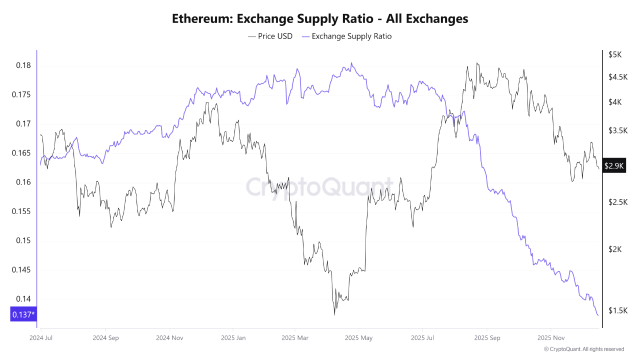
According to the chart reading, the Exchange Supply Ratio is currently at the 0.137 level, marking one of the lowest points since 2016. This decline points to a rise in ETH outflow from exchanges to external wallets, which suggests demand for immediate selling has decreased.
Historically, such behavior signaling a growing preference for long-term holdings often emerges during periods of reaccumulation. It also manifests in the lead-up to more stable price movements following periods of volatility.
ETH Withdrawal Highly Evidenced On The Binance Platform
On Binance, the world’s largest cryptocurrency exchange, the Exchange Supply Ratio has dropped to around 0.0325, a relatively low level in comparison to previous months. What this implies is that there is a noticeable ETH withdrawal from Binance‘s wallets, which is the biggest exchange in terms of liquidity.
As a result, the supply of ETH available on the platform for immediate sale in the spot market decreases. Arab Chain noted that this dynamic reflects growing trader caution and a decline in short-term selling pressure. An interesting aspect of this trend is that withdrawals are rising even while ETH’s price is facing heightened volatility.
During the time of the research, ethereum was trading near $2,960, a mid-range level that reflects a relative balance between supply and demand. The decreasing supply on exchanges, coupled with price stability, indicates that there is not much selling pressure on the market. Rather, it is going through a process of repositioning and absorbing liquidity.
