Bitcoin Makes The Cut: Brazil’s Largest Private Bank Issues 2026 Guidance, Signaling Major Crypto Adoption

Brazil's financial establishment just placed a major bet on digital gold.
The Institutional Embrace
Forget niche crypto exchanges—the real validation comes when traditional banking giants start setting targets. Brazil's largest private bank didn't just acknowledge Bitcoin; it carved out a formal place for it in its strategic roadmap stretching to 2026. This isn't a side experiment; it's a calculated move into a new asset class, signaling to the entire Latin American market where value is expected to flow.
Beyond the Hype Cycle
The guidance cuts through the noise of daily price swings and gets down to brass tacks: institutional infrastructure. We're talking custody solutions, portfolio integration, and regulatory frameworks—the unsexy plumbing that makes mainstream investment possible. While speculators chase the next meme coin, serious capital is building the on-ramps for the long haul. It's a classic case of the suits quietly building the highway while everyone else is racing go-karts.
A Regional Domino Falls
Brazil's economy doesn't just lead South America; it often sets the tone. When its top financial institution issues multi-year guidance that includes Bitcoin, it sends a signal that reverberates across borders. Other major banks in the region now face a choice: follow suit or risk being seen as laggards in a rapidly digitizing financial landscape. It pressures regulators, influences competitors, and legitimizes crypto for millions of conservative investors who trust their local bank more than any flashy app.
The 2026 Horizon
Setting a target two years out is a statement of conviction, not speculation. It implies a belief that the current regulatory and technological trajectory will hold—or that the bank is powerful enough to help shape it. This moves the conversation from 'if' to 'how' and 'when.' The guidance essentially bets that by 2026, Bitcoin will be a standard, if not essential, component of a diversified institutional portfolio—a remarkable shift from its fringe status just a few years ago.
The bottom line? While Wall Street analysts debate quarterly earnings, a banking powerhouse just winked at 2026 and placed Bitcoin squarely in the picture. Sometimes the most bullish signal isn't a price prediction—it's a line item in a boring old strategic plan. After all, nothing says 'serious asset' like getting a slot in a banker's PowerPoint deck right between wealth management and insurance.
Itaú Backs Small Bitcoin Positions
The bank’s note points to Bitcoin’s low correlation with many traditional assets and to currency risks that hit local investors hard this year. Itaú also moved to build the infrastructure behind that view: in September 2025 it created a dedicated crypto division and named former Hashdex executive João Marco Braga da Cunha to lead the team. That new unit sits alongside the bank’s existing products and is meant to help clients access regulated crypto tools.
Access Through Local Products
Brazilian savers can already reach bitcoin via products tied to Itaú. The bank is part of the team that launched the IT Now Bloomberg Galaxy Bitcoin ETF, known by its ticker BITI11, which began trading on November 10, 2022. The ETF gives investors a spot-like route to Bitcoin inside the local market, and it sits alongside unit trusts and pension products that offer crypto exposure.
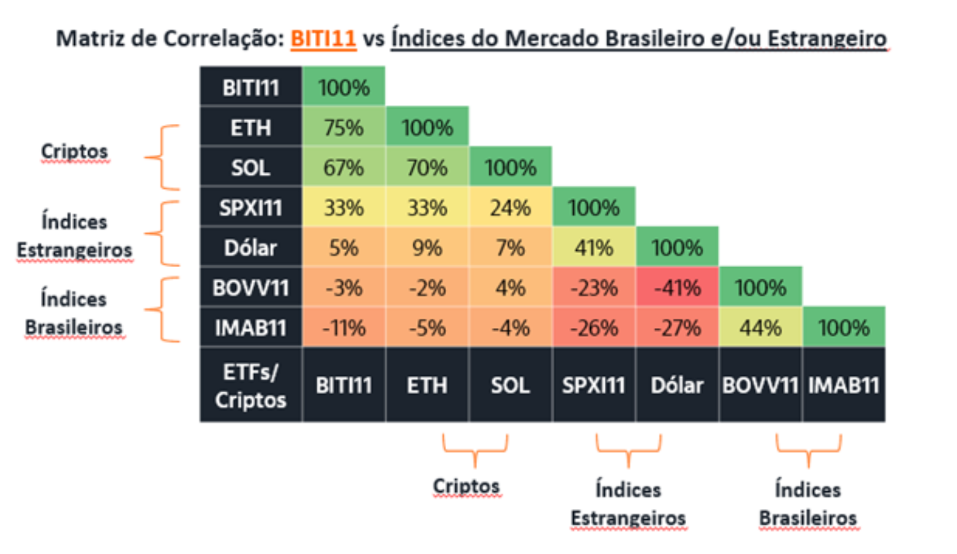
Itaú says its regulated crypto suite manages roughly R$850 million across several funds and ETFs, a modest amount compared with its wider business but still a clear signal of product readiness. The bank’s asset arm is large: it manages more than 1 trillion reais for clients, which helps explain why its guidance on allocations draws wide attention.
Itaú’s MOVE arrives after a year in which currency swings amplified losses for some Brazilian holders of foreign assets. That reality appears to be part of the math behind recommending a 1%–3% position — a small buffer for those worried about local-currency shocks, not a bet meant to replace stocks or bonds. The bank frames the position as a disciplined, long-term allocation, not a short-term trade.
What This Means For InvestorsFor ordinary investors the guidance is simple to read: keep exposure small and controlled. A 1% position will hardly change a diversified portfolio on its own, while 3% is still within what many institutions have called a “satellite” slot. Based on reports, Itaú expects to offer more choices — from low-volatility wrappers to riskier strategies — through the new unit as demand grows.
Featured image from La Nación, chart from TradingView
