Solana Integration Supercharges Kalshi’s Push Into Tokenized Event Contracts & Crypto Liquidity

Kalshi just plugged into crypto's speed demon.
By integrating Solana's blockchain, the event-trading platform isn't just dipping a toe—it's diving headfirst into the deep end of tokenized contracts and on-chain liquidity. This move bypasses traditional finance's sluggish plumbing, connecting prediction markets directly to one of the fastest-growing digital asset ecosystems.
The Mechanics of a Merge
Think of it as building a new highway between two bustling cities. Kalshi's event contracts—bets on everything from election outcomes to inflation figures—get tokenized, wrapped as digital assets, and set loose on Solana's high-throughput network. It cuts settlement times from days to seconds and opens the door to a tidal wave of crypto-native capital. Suddenly, traders can move between speculative positions and DeFi yield farms without ever leaving the chain.
Why Liquidity Is the Real Prize
Forget the niche appeal of betting on the weather. The endgame here is liquidity—vast, programmable, 24/7 capital flows. Solana's ecosystem acts as a force multiplier, pulling in algorithmic traders, liquidity pools, and institutional players who've been waiting for a credible bridge between real-world events and crypto markets. It turns abstract contracts into composable financial legos.
One cynical finance jab? Wall Street has spent decades building fortresses around market data; now, it's being commoditized and traded on-chain by anyone with a wallet—proving once again that in finance, the most valuable gates are the ones getting torn down.
This isn't an experiment. It's a direct shot across the bow of legacy systems, proving that speed, transparency, and open access aren't just nice-to-haves—they're the new table stakes.
Prediction Contracts Move On-Chain
Kalshi’s event markets now operate as Solana-based SPL tokens rather than entries on a centralized exchange. Through an integration with Solana protocols DFlow and Jupiter, users can trade “yes” and “no” positions via crypto wallets, tap automated liquidity, and settle outcomes through on-chain logic.
The shift enables contracts to be traded, borrowed, lent, or used as collateral within DeFi systems. Kalshi is supporting developer participation with a $2 million grants program and a new Builder Codes system that rewards teams for driving trading volume through custom applications.
Executives describe tokenization as the platform’s long-term strategy, arguing that on-chain access offers speed, transparency, and programmability while preserving Kalshi’s CFTC-regulated framework. The hybrid model links decentralized liquidity with an off-chain matching engine.
Will the Move Capture Liquidity and Challenge Polymarket?
Prediction-market activity has surged in 2025, with sector-wide volume nearing $28 billion by late October. November saw Kalshi record $5.8 billion in trading, while Polymarket handled $3.7 billion following rulings that reopened U.S. access.
Liqudity has become the Core competitive factor. By issuing markets as standard Solana tokens, Kalshi expects automated market makers, trading bots, and cross-protocol liquidity systems to tighten spreads and improve pricing accuracy.
Enhanced privacy is another draw, with tokenized markets offering wallet-based trading rather than identity-verified accounts. Industry analysts note that the MOVE puts Kalshi in direct competition with Polymarket’s fully on-chain model.
Solana Expands Multi-Chain Prediction EconomyKalshi believes Solana is the first step toward a broader on-chain architecture. The company plans to add EVM-compatible networks and deeper integrations with DeFi protocols to build a multi-chain forecasting ecosystem.
Additional partnerships, including earlier collaborations with Zero Hash and stablecoin custody support from Coinbase, reflect an effort to streamline global accessibility.
With its valuation recently rising to $11 billion after a major funding round, the company is signaling confidence that tokenized prediction markets will become a standard format for forecasting and derivatives tied to real-world events.
As prediction markets evolve toward decentralized models, Kalshi’s Solana rollout marks a turning point in how regulated platforms interact with crypto liquidity and sets the stage for intensified competition across the sector.
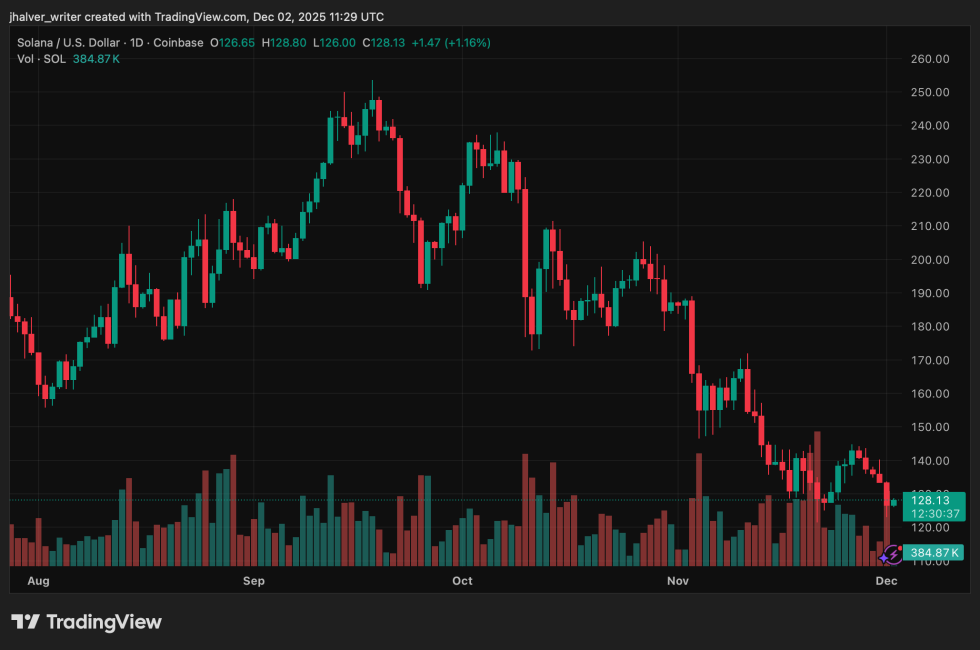
Cover image from ChatGPT, SOLUSD chart from Tradingview
