Breaking: First-Ever Spot XRP ETFs Set to Go Live This Week – Here’s Why It Matters

The crypto world braces for a watershed moment as regulatory filings confirm the imminent launch of spot XRP exchange-traded funds. Wall Street’s late to the party—again.
After years of regulatory limbo, XRP finally gets its mainstream moment. These ETFs represent more than just another investment product; they’re a de facto endorsement of Ripple’s embattled asset.
Expect fireworks as institutional money meets a token that retail traders never abandoned. The real question? Whether traditional finance will finally understand what ‘use case’ means.
Spot XRP ETF Launch This Week?
The timing hinges on fast-moving developments in Washington. On Monday, November 10, Senate leaders advanced a funding package intended to reopen the government, a step that WOULD bring furloughed Securities and Exchange Commission staff back to work and unfreeze routine registration processing.
Even as the shutdown lingers, infrastructure for prospective spot funds is materializing. DTCC’s official “Exchange Traded Funds – Active and Pre Launch” file—updated November 7—now includes several applicants: Bitwise XRP ETF, Canary XRP ETF, CoinShares XRP ETF, 21Shares XRP ETF, and Franklin XRP ETF. DTCC’s own disclaimer on that page is explicit: the file lists both active ETFs and “pre launch” products that “are not yet active” and cannot be processed “unless and until such securities have received all necessary regulatory and other approvals.”
The convergence of DTCC listings with a prospective government reopening is why Geraci—one of the most closely followed voices in the ETF industry—frames the next several days as a potential inflection point. His post also nods to the legal mechanism that could enable a near-term debut: the Securities Act of 1933’s Section 8(a) pathway to automatic effectiveness.
In recent weeks, several crypto ETF issuers have removed the traditional “delaying amendment” from their S-1 registration statements, which—absent SEC action—allows a filing to go effective automatically after 20 days.
None of the above, however, substitutes for an approval order or the passage of the Section 8(a) waiting period. DTCC listings historically function as plumbing—CUSIP, symbol, and processing readiness—rather than a regulatory blessing.
The presence of Leveraged or strategy products tied to the token on the same DTCC sheet and the mix of “Y/N” notations in the “Create/Redeem” column further underscore that DTCC is cataloging what could be processed, subject to regulatory status, rather than declaring anything active. The agency’s own header language leaves no ambiguity on that point.
The policy backdrop matters. Multiple newsrooms reported across the weekend and into Monday that the Senate has taken concrete steps toward reopening the government. If the House follows and the President signs, SEC staff would return, potentially accelerating routine correspondence and any last-mile logistics for issuers that chose not to rely on 8(a) automatic effectiveness.
Until then, issuers that did remove delaying amendments technically do not need an affirmative SEC declaration to become effective after the 20-day clock, but they remain exposed to potential SEC comments or interventions once operations normalize.
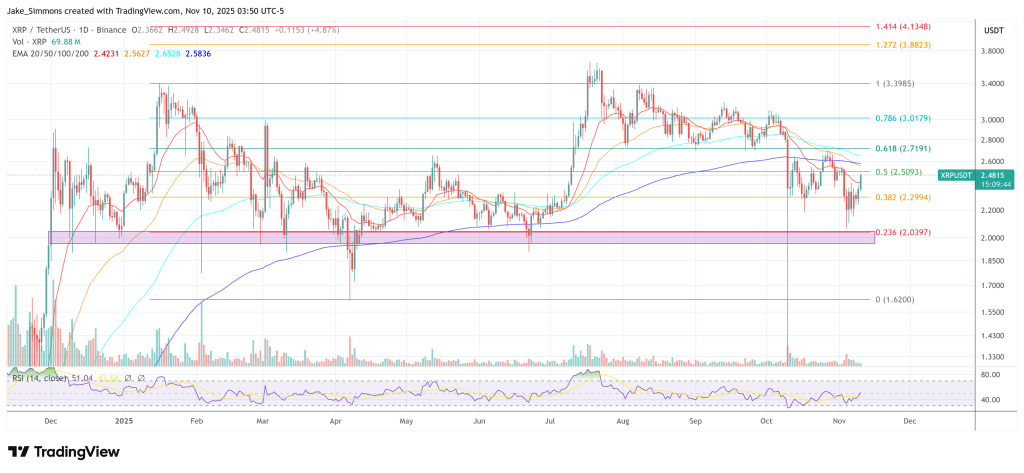
At press time, XRP traded at $2.48.