$345 Million in Bitcoin Vanishes — FBI Cleared by Judges in Stunning Crypto Heist

Another day, another crypto mystery—except this one’s got a $345 million price tag.
Judges just handed down a verdict that’ll make your jaw drop: The FBI didn’t lose the Bitcoin. So who did?
The Great Bitcoin Disappearing Act
No hacks. No arrests. Just a nine-figure pile of digital gold—gone. The feds are off the hook, but the real question is who’s laughing all the way to the (decentralized) bank.
Finance pros are already spinning this as 'asset reallocation'—because losing $345 million sounds better when you call it 'strategic liquidity redistribution.'
One thing’s clear: In crypto, the only thing harder than keeping your keys safe is finding someone to blame when they vanish.
FBI Not To Blame For 3,443 Bitcoin Hard Drive Wipe
The case, United States v. Prime, No. 23-13776, arose from a 2019 arrest that uncovered extensive counterfeiting and identity-theft paraphernalia. Michael Prime ultimately pleaded guilty to access-device fraud, aggravated identity theft, and illegal firearm possession. In the investigation’s early days, agents tried and failed three times to locate cryptocurrency tied to his activities under federal warrants; by sentencing in June 2020, Prime and his counsel had walked back earlier references to thousands of bitcoin, representing instead that his remaining crypto was trivial. The government proceeded accordingly.
As Judge Grant summarized, Prime “at least three times” represented he owned “very little bitcoin,” and after release he still did not identify any device as holding valuable keys when he sought the return of property. The government followed its “ordinary practices,” wiping devices it could after notice; the rest—including the orange external drive at issue—were destroyed. “Only later did Prime claim to be a Bitcoin tycoon,” the court wrote. “By then it was too late.”
Although headlines have centered the FBI, the record shows it was the US Secret Service that contacted Prime in mid-2022 offering to wipe and return certain devices if he provided passwords. He asked for a pickup time, then filed pro se motions instead; none of those filings mentioned bitcoin or a hard drive. The drive was later destroyed with other electronics because Prime refused to cooperate in removing contraband data.
The Eleventh Circuit underscored causation and prejudice: “We have little difficulty concluding that the government WOULD not have destroyed the hard drive if it had thought that it contained millions of dollars in bitcoin.” With the drive gone, “the government cannot return it,” and to the extent the bitcoin ever existed—“and we have our doubts”—ordering the United States to “find and hand over almost 3,443 replacement bitcoin” would be prejudicial “now to the tune of over $345 million.”
The panel was openly skeptical of Prime’s attempts to reframe his disclosures. He argued, for example, that when he reported “$200 to $1,500 in bitcoin” in February 2020, he meant the then-market price of a single bitcoin, not his holdings. “We don’t buy it,” the court wrote, noting that in February 2020 BTC traded between “about $8,500 and $10,500” and that Prime had promised “complete, accurate and truthful” asset disclosures encompassing any asset in which he had “any interest” or control. The opinion quotes defense counsel’s own admission at sentencing that the original claim to “some great amount of bitcoin” was “not supported by the evidence.”
Having affirmed on laches, the Eleventh Circuit did not reach broader questions, such as whether any BTC—if it existed—would have been forfeitable. The court also noted Prime forfeited any challenge to the factual finding that the drive was destroyed by failing to raise it below.
The narrow holding is that equitable relief is unavailable where a claimant’s multi-year denials induced the government to stop searching for assets and to process seized electronics in the ordinary course—conduct the panel repeatedly tied to his non-cooperation and delay rather than to any governmental bad faith. As Judge Grant summarized the district court’s bottom line, “laches barred his bitcoin request. We agree and affirm.”
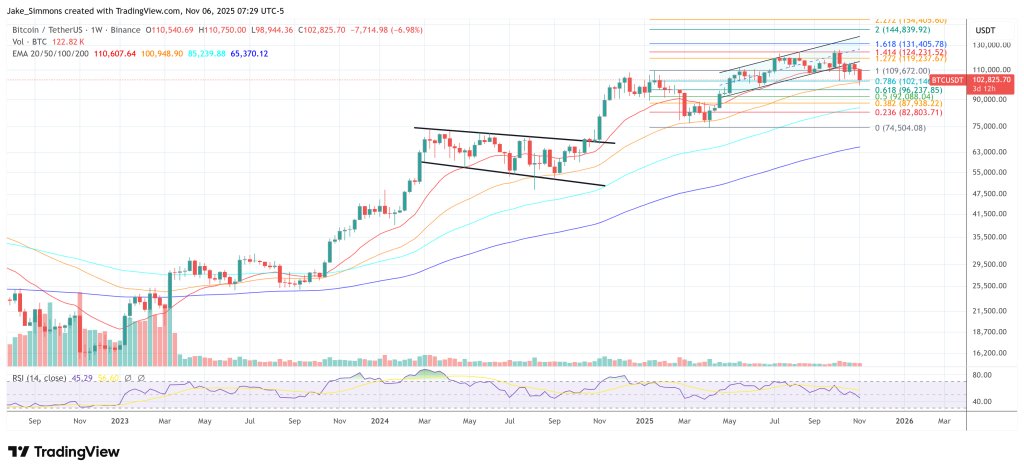
At press time, BTC traded at $102,825.