Fed Rate Cut Showdown: How 25 vs 50 bps Could Reshape Bitcoin and Crypto Markets

The Federal Reserve's interest rate decision looms—and crypto markets are holding their breath. Two scenarios dominate trader discussions: a cautious 25 basis point cut versus a bold 50-point move.
The Liquidity Lifeline
Smaller cuts signal gradual easing—enough to keep traditional markets stable but leaving crypto hungry for more capital inflow. The 25bps camp argues for measured optimism without spooking regulators.
The Rocket Fuel Scenario
A full 50bps slash would send risk assets soaring. Bitcoin historically thrives when cheap money chases high returns—and this could trigger the next leg up in the crypto bull market.
Market Mechanics Exposed
Watch bond yields and dollar strength as leading indicators. When traditional finance stumbles, digital assets often pick up the momentum—proving once again that while Wall Street debates basis points, crypto builds the future.
Remember when 'transitory inflation' was a thing? The Fed's finally catching up to what crypto traders knew years ago—sometimes you need to cut rates before the economy cuts itself.
Fed Policymakers Clash on Rate Cut Size
The Federal Reserve remains split. Governor Chris Waller supports a modest 25 basis-point rate cut due to economic uncertainty and delayed government data. He favors caution, observing that growth persists even as the labor market softens.
“Based on all of the data we have on the labor market, I believe that the FOMC should reduce the policy rate another 25 basis points at our meeting that concludes October 29,” Waller noted.
Meanwhile, Stephen Miran argues for a sweeping 50 basis-point cut, concerned by US-China trade tensions and tariffs impacting consumers.
“My view is that it should be 50 basis points. However, I expect it to be an additional 25 and I think that we’re probably set up for three 25-basis-point cuts this year, for a total of 75 basis points this year,” Miran emphasized in his televised remarks.
Minneapolis Fed President Neel Kashkari also supports prudent action. He sees cuts as “insurance” against economic downturns.
The Fed’s interest rate decisions have a profound impact on the value of the US dollar and on the relative attractiveness of risk assets like Bitcoin, Ethereum, and other cryptocurrencies.
When the Fed cuts rates, it effectively lowers borrowing costs and increases liquidity in the financial system. This tends to weaken the dollar, making alternative assets more appealing to investors seeking higher returns.
Bitcoin, in particular, has developed a strong narrative as a hedge against fiat currency debasement and inflation. Lower interest rates typically reduce the opportunity cost of holding non-yielding assets like Bitcoin.
25 vs. 50 bps: What’s the Difference for Crypto?
A 25 basis point cut may be viewed as a moderate move, enough to provide some support for crypto prices but not strong enough to ignite a full-blown rally.
It signals a Fed that is still somewhat cautious and data-dependent. For Bitcoin and Ethereum, this could mean steady gains but no dramatic shifts in dynamics.
Meanwhile, a 50 basis point cut could represent a more urgent pivot by the Fed to ease monetary conditions. This scenario has the potential to spark a sharper rally in crypto markets as liquidity floods back into risk assets.
However, it could also raise red flags about the economy’s underlying health, injecting some uncertainty into the market.
The Death of the 4-Year Bitcoin Cycle and the Rise of Liquidity
The crypto market often relied on the 4-year Bitcoin cycle and its halving events to forecast price trends. Now, many analysts and traders question its relevance, focusing instead on liquidity shifts as central banks update policies.
“THE 4-YEAR bitcoin CYCLE IS DEAD? Bitcoin never moved on schedule. What truly drove every peak? – Liquidity – Easing – Capital rotation The Fed just flipped. The real driver is here again. And it’s monetary easing. That changes everything,” a crypto analyst wrote on X.
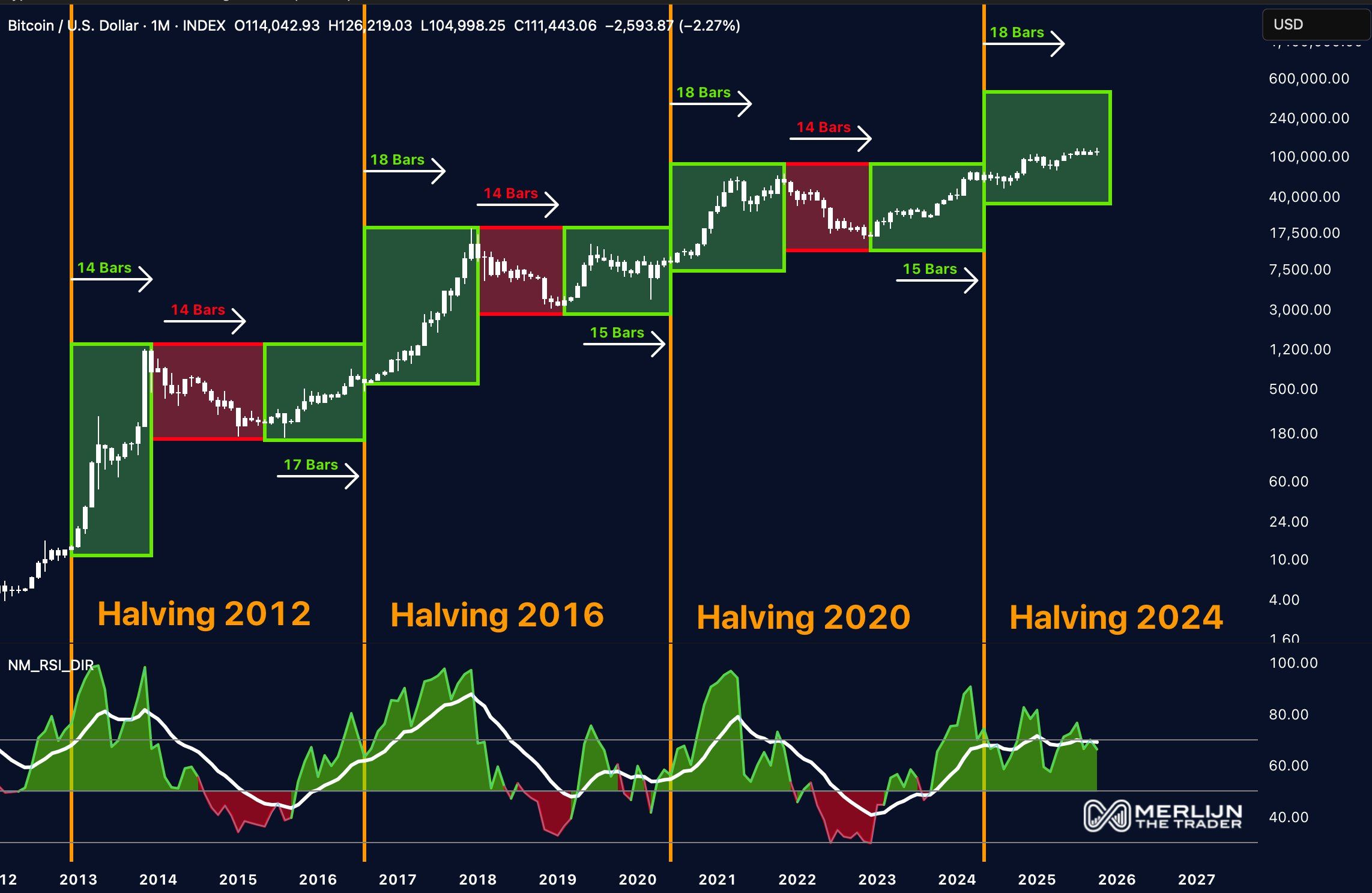
Another trader stated the Bitcoin 4-year cycle is likely over. These views illustrate a growing belief that Federal Reserve liquidity, not the programmed Bitcoin cycle, sets the stage for major rallies.
“The Fed has now started to do monetary easing, which means Bitcoin could peak in 2026. Always remember that it was never about a 4-year cycle but about liquidity,” investor Ted posted.
Recent data support these arguments. Bitcoin’s price declined in recent weeks while funding rates turned negative and then partially rebounded.
❒ In 2025, everything is playing out according to the familiar script
❒ The Fed is laying the groundwork for a policy reversal and massive QE
❒ October 29 rate cut will mark the official start of a new cycle
❒ And crypto will finally receive its strongest impulse in years pic.twitter.com/s6Qm5tIbtV
These shifts reveal trader uncertainty and suggest strong market moves could result if rate cuts affect risk appetite.
Liquidity, Signals, and the New Crypto Playbook
The current policy debate is more than a short-term issue. Historically, a dovish Fed sends capital into crypto, fueling prices.
However, a rapid shift might signal a weakening macro economy, so risks remain in both directions.
Looking forward, the 4-year Bitcoin cycle seems less relevant than ever. Market attention centers on policymakers, liquidity, and global economic currents. As central banks prepare for their next moves, the crypto markets wait for the next big catalyst.
