US Government Shutdown Threatens Crypto Markets: Brace for Potential Sell-Off

Washington gridlock sends shivers through digital asset markets as political dysfunction threatens to trigger massive crypto liquidations.
The Domino Effect
When government paychecks stop flowing, investors panic-sell their most liquid assets first. Cryptocurrencies—with their 24/7 markets and reputation as risk-on investments—often become the first casualty in liquidity crunches. Traditional finance veterans call it 'flight to safety,' while crypto natives call it another example of legacy system failure contaminating innovation.
Liquidity Crisis Looms
Market makers pull back during uncertainty, creating thinner order books and exaggerated price moves. The last government shutdown saw Bitcoin volatility spike 40% within days—and that was before institutional adoption reached current levels. Now with billions in crypto ETFs and corporate treasuries exposed, the potential contagion effect multiplies.
Regulatory vacuum doesn't help either. No SEC guidance means institutional players operate blind, defaulting to risk-off positions. Meanwhile, the Fed's hands are tied—no economic data releases during shutdowns create information blackouts that terrify algorithmic traders.
Silver lining? Crypto's decentralization means the network keeps running while politicians bicker. The blockchain doesn't care about congressional approval for continuing resolutions—it just keeps validating transactions. Maybe that's the ultimate irony: the 'risky' asset class maintains operations while the 'safe' system grinds to halt. Typical government efficiency—can't even collapse properly without taking markets down with it.
A Political Impasse
Congress is working against the clock to avoid the first government shutdown in six years. Republicans and Democrats are gridlocked over legislation to fund the government for the 2026 fiscal year.
Though Republicans have a majority in both chambers of Congress, they do not currently have sufficient votes in the Senate to pass their spending bill.
Democrats are refusing to approve the legislation, arguing that millions of Americans will see their healthcare costs rise if Congress does not extend temporary tax breaks that expire at the end of this year.
“We believe that simply accepting the Republican plan to continue to assault and gut healthcare is unacceptable,” House Democratic Leader Hakeem Jeffries said during a Monday press conference.
Yesterday, Vice President JD Vance said an agreement seemed unlikely.
VP JD Vance: “I think we’re headed toward a government shutdown.” pic.twitter.com/bFYmscJRHF
— Iris TAO (@IrisTaoTV) September 29, 2025“I think we’re headed into a shutdown because the Democrats won’t do the right thing,” he said.
Should this scenario remain unchanged until midnight tonight, crypto markets can prepare for a downturn.
Why a Shutdown Spells Risk-Off for Crypto
The extent of a government shutdown’s impact on crypto markets depends on its duration.
A prolonged one can slow economic activity and potentially harm the wider economy. This uncertainty directly translates to a “risk-off” environment in global financial markets.
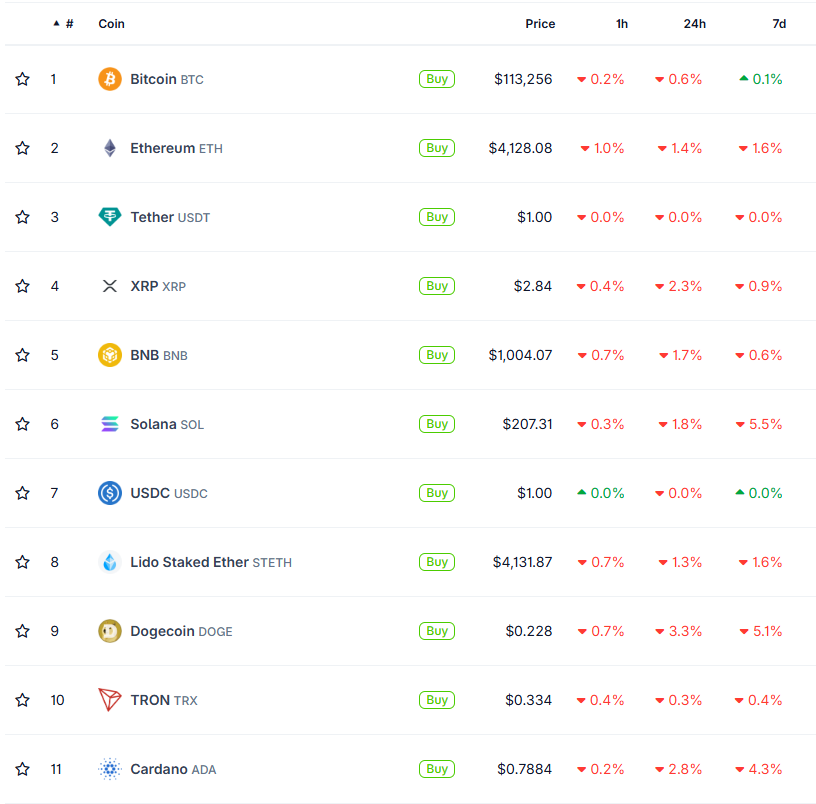
Since cryptocurrencies are still generally considered higher-risk assets, this sentiment can trigger selling pressure. In such a scenario, major cryptocurrencies like Bitcoin and ethereum can experience price declines and increased volatility.
Crypto products may also be affected.
SEC Closure to Halt Crypto Approvals
A government shutdown would severely limit the non-essential operations of the Securities and Exchange Commission (SEC).
The most significant consequence for investors would be the immediate halt of critical regulatory decisions on highly anticipated events.
Specifically, the approval and launch of new crypto exchange-traded products (ETPs) would face postponements, which could dampen market enthusiasm and potential price rallies.
This regulatory gridlock would affect various products, including delays in final or intermediate decisions on spot ETFs for cryptocurrencies like Solana and XRP. The SEC would also be unable to decide whether to permit staking features for the already approved spot Ethereum ETFs.
Even though the regulator recently approved generic listing standards to fast-track new commodity-based ETPs for assets like Dogecoin and XRP, a shutdown would still interrupt the final necessary paperwork, delaying the expected wave of new ETP launches.
Meanwhile, any progress on crypto-related market structure bills or other essential legislation moving through Congress would likely halt.
