September Rate-Hike Uncertainty Builds: Could the Fed Still Change Course at the Last Minute?
 BTCCAuthor: furrykon
Following the Jackson Hole meeting, the prospect of another rate hike has once again moved to the center of market attention.
According to Reuters, Federal Reserve Chair Kevin Warsh struck a hawkish tone at the Jackson Hole symposium, stressing that the Fed still “has work to do” if policymakers cannot be confident that inflation is returning to the 2% target at a sufficient pace.
After his remarks, expectations for a September rate hike rose sharply. CME FedWatch showed the probability of a September hike climbing above 60%, while Kalshi produced a similar forecast. The renewed prospect of monetary tightening has once again weighed on equities, bonds and crypto assets.
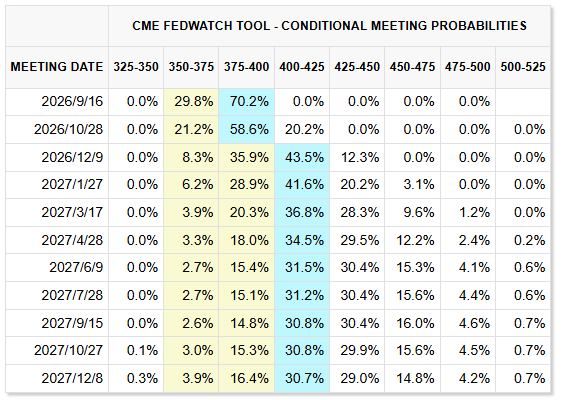
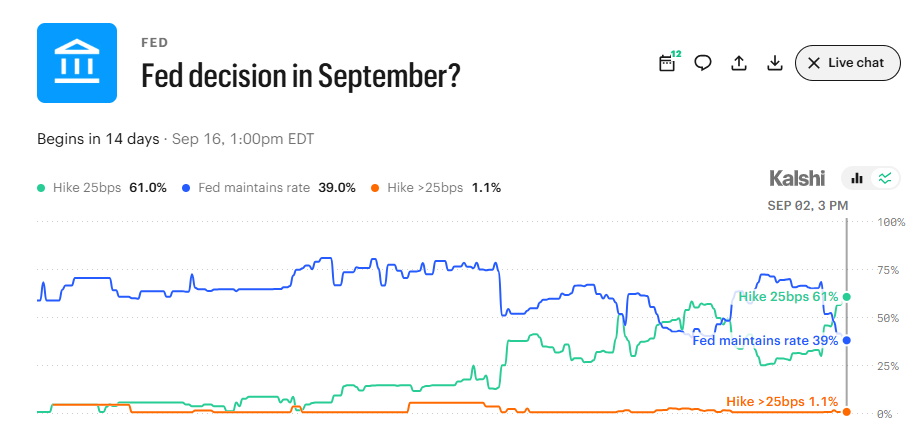
With roughly two weeks remaining before the September policy meeting, the key question for markets is now: With rate-hike expectations already elevated, could the outlook still reverse at the last minute?
1. Historical Precedent: The Fed Has Changed Course Close to Meetings Before
Historically, market expectations tend to become more accurate as an FOMC meeting approaches.
Since 2016, market pricing three weeks before an FOMC meeting has correctly predicted the Fed’s eventual decision 93% of the time, with only five misses. One week before a meeting, the accuracy rate rises further to 96%, with just three incorrect forecasts. In other words, large last-minute misjudgments of the Fed’s direction have been relatively rare.
Still, a handful of exceptions are worth watching. Since 2016, there have been seven occasions when expectations for the number of rate hikes or cuts changed between three weeks and one week before an FOMC meeting. These episodes broadly fall into three categories:
● Major external shocks, such as the March 2020 pandemic, which brought much of the U.S. economy to an abrupt halt and prompted markets to rapidly price in aggressive rate cuts.
● Economic data reinforcing the existing direction, such as September 2022, when stronger data pushed markets to price in even more tightening.
● A reversal in market expectations that ultimately aligned with the Fed’s decision, including June 2016, March 2023 and June 2023.
June 2023 offers the most relevant precedent. The key catalyst was Fed official Jefferson’s introduction of the concept of a “skip” — the idea that pausing rate hikes in June would simply give policymakers more time to assess incoming data, rather than signal the end of the tightening cycle. Harker later publicly backed the approach, prompting markets to quickly reprice expectations.
The lesson for today’s market is clear: close to an FOMC meeting, it is often not the data alone that changes expectations, but whether Fed officials are willing to provide a new framework for interpreting that data.
2. A September Hike Is Not Certain: Data, Oil and Political Pressure Remain Key Variables
The probability of a September rate hike is already elevated, but historical comparisons suggest the outcome is not yet fully locked in.
Markets are currently pricing roughly 0.67 of a 25-basis-point hike in September. Historically, ahead of meetings that ultimately resulted in a 25-basis-point increase, markets three weeks before the meeting generally priced more than 0.7 hikes, with an average of about 0.9. Current pricing therefore remains somewhat lower, leaving room for further adjustment.
Economic Data
Inflation remains the most important variable. After Jackson Hole, Warsh put inflation back at the center of the policy debate, suggesting CPI may now matter more than payrolls. If core CPI begins to show a clear downward trend, it could still become the key factor that changes market expectations.
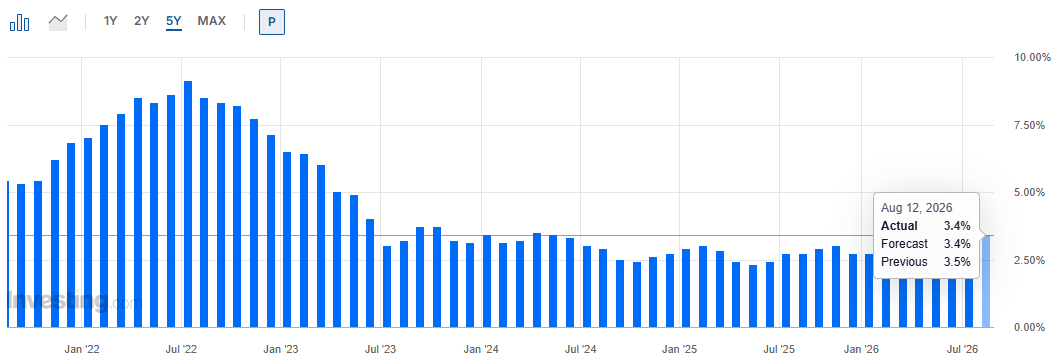
On employment, a sharp weakening in nonfarm payrolls combined with a further rise in unemployment would leave the Fed facing a more difficult policy choice. Continuing to raise rates would increase downside risks to the economy, while risk assets could begin shifting toward a recession trade.
Geopolitical Conflict
Recent instability in the Middle East means oil prices continue to play a major role in both inflation expectations and market sentiment. As of September 2, Brent crude had climbed back to $90 a barrel, objectively increasing the probability of a September hike.
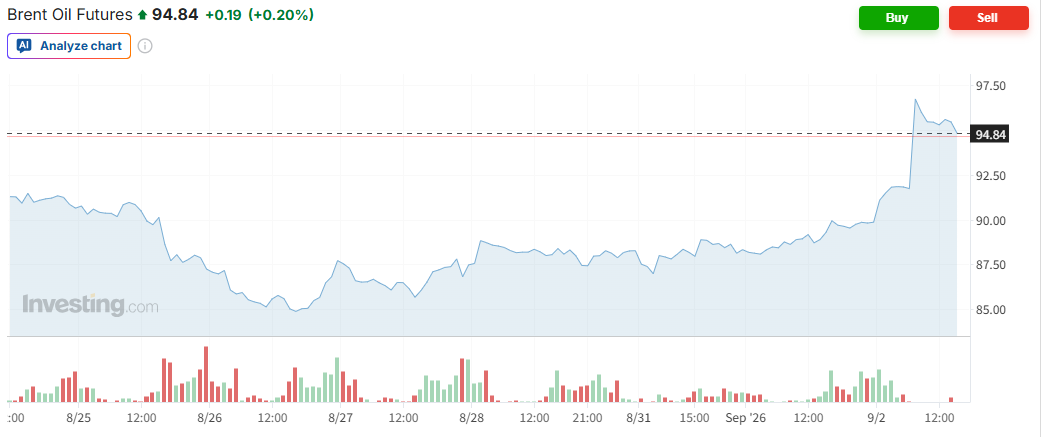
However, if an oil-price shock simultaneously weakens consumer demand and corporate profits, markets could instead begin pricing in “stagflation” or recession. In that scenario, the probability of a rate hike may not continue rising in a straight line.
Political Pressure
Warsh has repeatedly stressed that monetary policy is independent of the White House, but markets remain unconvinced given Donald Trump’s long-running public pressure on the Fed to cut rates. With the midterm elections approaching, pressure from the Trump administration on Warsh could intensify.
On the other hand, if Warsh unexpectedly pauses at a time when markets are heavily pricing in a hike, it could raise questions over whether political pressure influenced the decision, potentially undermining the Fed’s policy credibility.
3. Have Stocks, Bonds and the Dollar Already Priced In a Rate Hike?
Following Warsh’s speech, the policy-sensitive 2-year Treasury yield rose sharply, while longer-term yields remained elevated. The U.S. dollar strengthened, gold came under pressure, and volatility increased across growth stocks and crypto assets.
This is the classic market pattern associated with rising expectations for tighter monetary policy: short-term yields rise, the dollar gains support and higher-valuation assets face greater discount-rate pressure.
The equity market’s response is more complicated. U.S. stocks have already absorbed part of the expected impact of another rate hike, particularly across AI, semiconductors, cloud computing and other long-duration growth sectors. When long-term yields remain elevated, investors reduce the present value assigned to future earnings, weighing on technology companies that depend heavily on cash flows far into the future.
If the Fed ultimately raises rates in September, markets may initially trade the decision as an event that is finally “out of the way.” Since expectations are already relatively well established and Treasury yields have risen significantly, the immediate shock may be limited. A hike could even reduce concerns about a rapid sequence of additional tightening moves.
If the Fed does not hike, however, the implications will depend on why.
The first scenario is one in which CPI, payrolls or oil prices cool before the meeting and markets have already reduced the probability of a hike. In that case, a Fed pause would likely have limited negative impact and could even trigger an easing trade.
The second scenario would be more challenging: markets continue to price a high probability of a hike, but Warsh ultimately insists on pausing. If the Fed cannot provide a sufficiently clear explanation, long-term Treasury yields could continue rising as investors question the central bank’s ability to control inflation and bond-market volatility. Such an outcome could resemble the market reaction following the July FOMC meeting, with elevated rates putting significant pressure on U.S. equities, gold and other assets.
For crypto markets, the impact of the September meeting will likewise depend on the path of interest rates. If the Fed hikes but the dollar and Treasury yields subsequently decline, BTC and ETH could benefit from a recovery in risk appetite. If real yields continue rising, however, crypto assets would remain under pressure.
Stablecoins, on-chain dollar liquidity and RWA-related assets could attract greater attention because they are more directly connected to U.S. dollar interest rates, capital flows and demand for on-chain financial services.
This content is for informational and educational purposes only and does not constitute investment advice related to BTCC. BTCC makes every effort but cannot guarantee the truthfulness, accuracy, or originality of the content above.