


2026 Memecoin Gold Rush: How to Avoid Being Exit Liquidity
 Odaily
Original author: Route 2 FI
Original translation: Chopper, Foresight News
After enduring the long silence of the bear market, the Memecoin frenzy cycle has returned once again.
Risk appetite across the market has fully recovered, feeling just like 2024. This is happening not only on Solana but now also on Robinhood Chain (RHC), an L2 blockchain that launched just two months ago. Beyond the hot on-chain Memecoin trading, real revenue-generating business models have already emerged within the Robinhood Chain ecosystem.
For example, Pons is the main token issuance platform on Robinhood Chain, where users can issue and trade brand-new tokens. It has now entered the top ten revenue rankings in the crypto industry, second only to the leading token issuance platform Pump.fun.
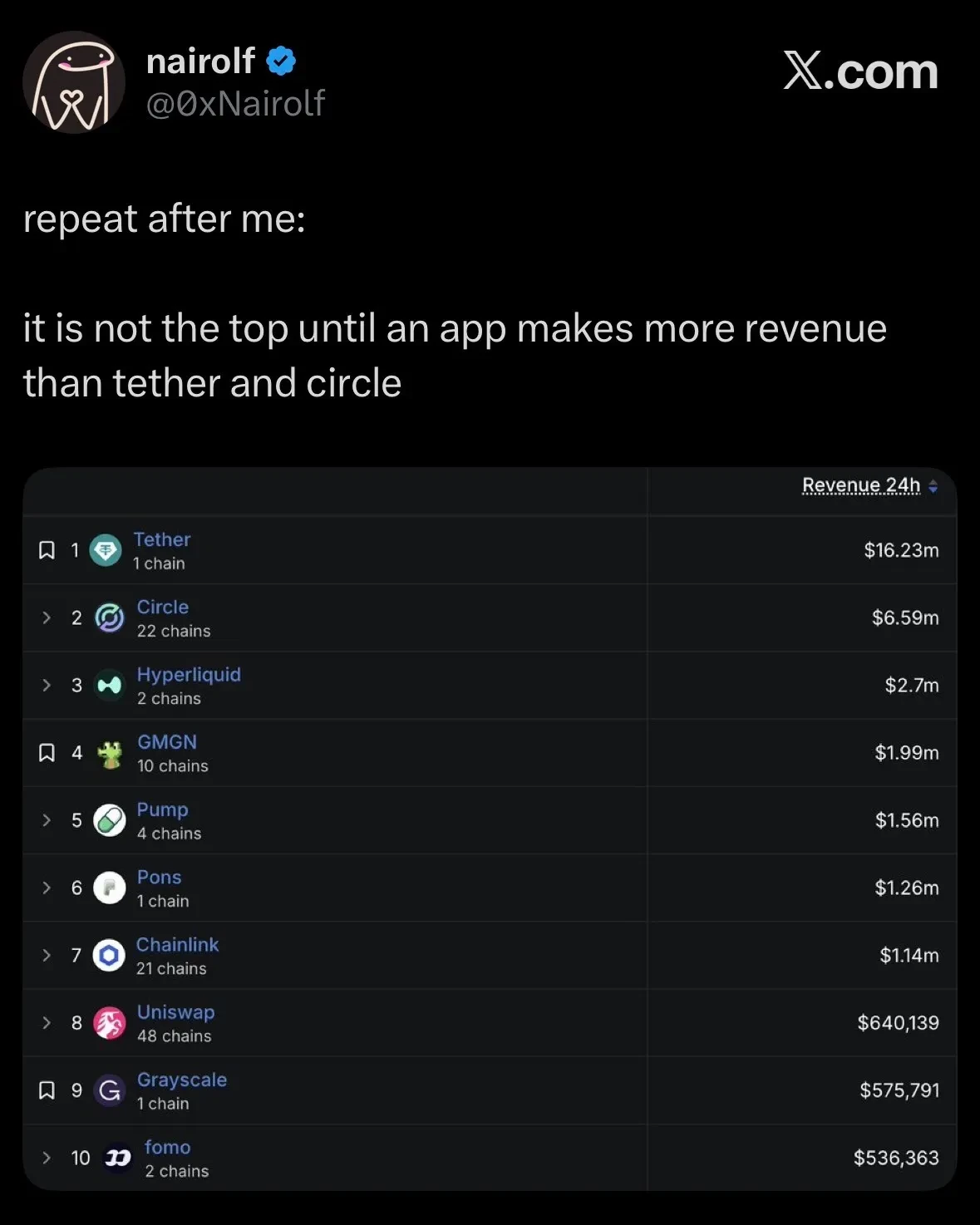
As platform revenue skyrockets, the Pons token has formed a positive self-reinforcing loop, with its market cap once surpassing $900 million. Early investors have reaped huge gains, and it has become a benchmark asset for the entire ecosystem and even the broader market. Cashcat is the first Memecoin from this public chain to break out, while Pons has lowered the barrier for ordinary people to issue Memecoins.
After that, the market saw a large batch of coins with astonishing gains, attracting back a group of veteran players who had once declared the end of the crypto industry.
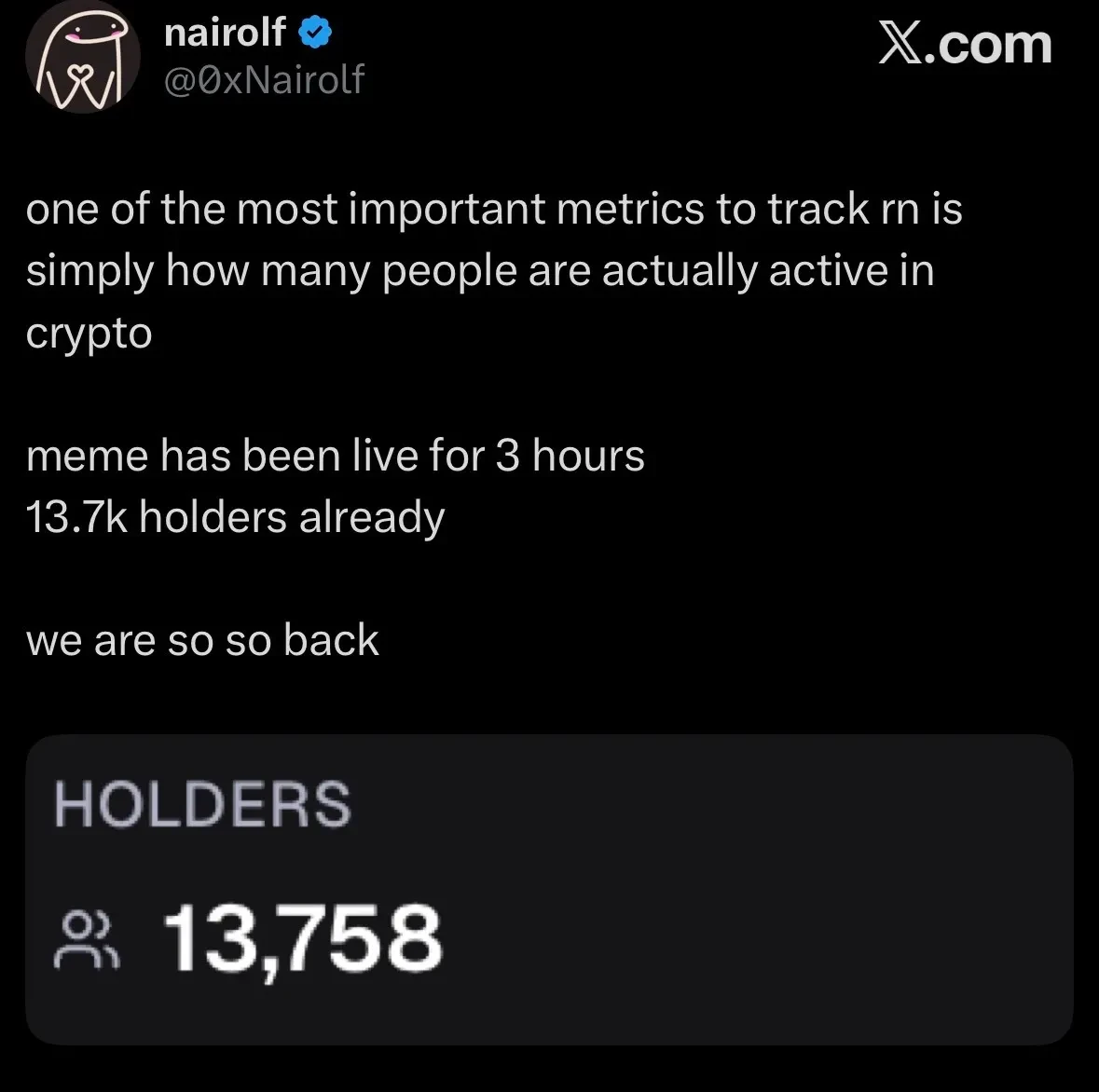
The current market is indeed full of money-making opportunities, with profit and loss screenshots being shared everywhere, but in fact, the vast majority of profit screenshots are not real.
Trading Memecoins is the most volatile investment activity: gains of a hundredfold in the morning can retrace 99% by nightfall. Ordinary investors often enter too late, while insiders, front-runners and snipers, and early buyers have already secured low-priced chips.
Others' rich profits do not mean you can profit the same way. Memecoin liquidity is extremely thin, and paper profits do not equal realized gains.
This article will teach you how to trade steadily in this speculative market, avoid massive losses, earn your own profits, and not become the exit liquidity for whales dumping their bags.
To trade Memecoins well, you must develop a complete trading plan. Blindly entering just because you see others posting profits is the wrong start. You need to clarify your trading direction, otherwise you will only chase trends aimlessly and end up with nothing.
Choose a Fixed Trading System
The Memecoin sector is extremely saturated with competition, and new projects change rapidly. If you cannot manage your attention, the massive amount of noise will only drain your energy.
You need to identify the specific trading sub-strategy you focus on, control your attention, and continuously improve your trading skills, which is especially important for beginners. There are various trading styles in the market:
- Conviction traders: Lock in a trading thesis, hold heavy positions over a time period, and wait for the market to play out.
- Copy trading: Track the wallets of many top traders. When multiple tracked wallets buy the same coin simultaneously, conduct in-depth research and leverage others' trading logic to build your own judgment.
- Short-term quick in-and-out traders: Get in early on small coins with a market cap of only $100,000, and take profits at target prices. For example, sell 50% of the position after the coin doubles, and let the remaining position ride for higher gains.
- Single-chain specialists: Lock onto one public chain where you have an information edge, continuously scan newly issued Memecoins, and capture asymmetric return opportunities.
There are many more approaches. For experienced traders, multiple strategies can be tried simultaneously, but beginners must avoid spreading themselves too thin. Prioritize mastering one or two trading models and concentrate your efforts.
As trading experience accumulates and skills improve, then try expanding into other trading styles. The most effective way I improved my trading skills early on was to keep a complete record of every trade, whether profitable or losing.
Why did I lose? What was the core logic behind the profit? What were the conditions for stopping out? What was the bullish thesis for this trade, and what risk points could break that logic?
A trading journal is the best way to hone your Memecoin trading skills. Stop blindly aping into shitcoins; every operation should have sufficient trading logic. Traders who have experienced full bull and bear cycles and caught countless sleeper coins have even more trading principles.
Some may think frequent short-term trading is easier. But for beginners, short-term trading without clear logic is hard to achieve consistent profits. It is better to choose early quality targets and hold long-term based on your own judgment, which often yields higher returns than frequently trading shitcoins.
With the popularization of copy trading models, traders no longer need to manually scan on-chain data or pay gas fees separately to complete trades. Some veteran players still keep traditional trading methods, but trying new tools is also a good choice, as convenient tools can lower the barrier to making money.
Below are two mainstream social trading apps: Pump.fun and Fomo App.
Fomo App
If you have been active in crypto communities recently, you must have seen many users posting their Fomo App trading profits and losses, using the software to trade Memecoins. The product became popular because it simplifies the complex process of Memecoin trading: gas fees, token approvals, and other cumbersome steps are all encapsulated and simplified, allowing you to buy Memecoins with one click.
The product supports buying tokens directly with bank cards, a feature that has driven massive mainstream adoption. Currently, Fomo App has surpassed 500,000 users and entered the top ten crypto revenue rankings.
Fomo App's truly standout innovation is that it breaks down closed circles. In the past, players who could make big money in Memecoin markets were mostly in private communities; now you can directly track profitable traders, view the trading logic behind each coin, and if you agree with their views, you can copy trade with one click.
When I first downloaded Fomo App, I followed about 20 crypto community KOLs, then switched back to X. My phone notifications kept popping up, one after another...
The overwhelming push notifications left me at a loss, not knowing which coin to buy. In the end, I had to turn off the app's notifications to focus on studying the market. Later, I figured out a correct way to use the tool.
Profit screenshots are only superficial; do not blindly copy trade based solely on posted gains.
The most common mistake beginners make with Fomo App: opening the leaderboard and bulk-following 20 top traders.
Then comes an endless stream of trade push notifications, just like what I encountered. Emotional random buying and impulsive trading ultimately lead to losses.
Most of these impressive gains are just paper profits, not actual realized profits. In the past 60 days, only 0.25% of traders have profited more than $500. These profit screenshots do not reflect the true profitability of the market.
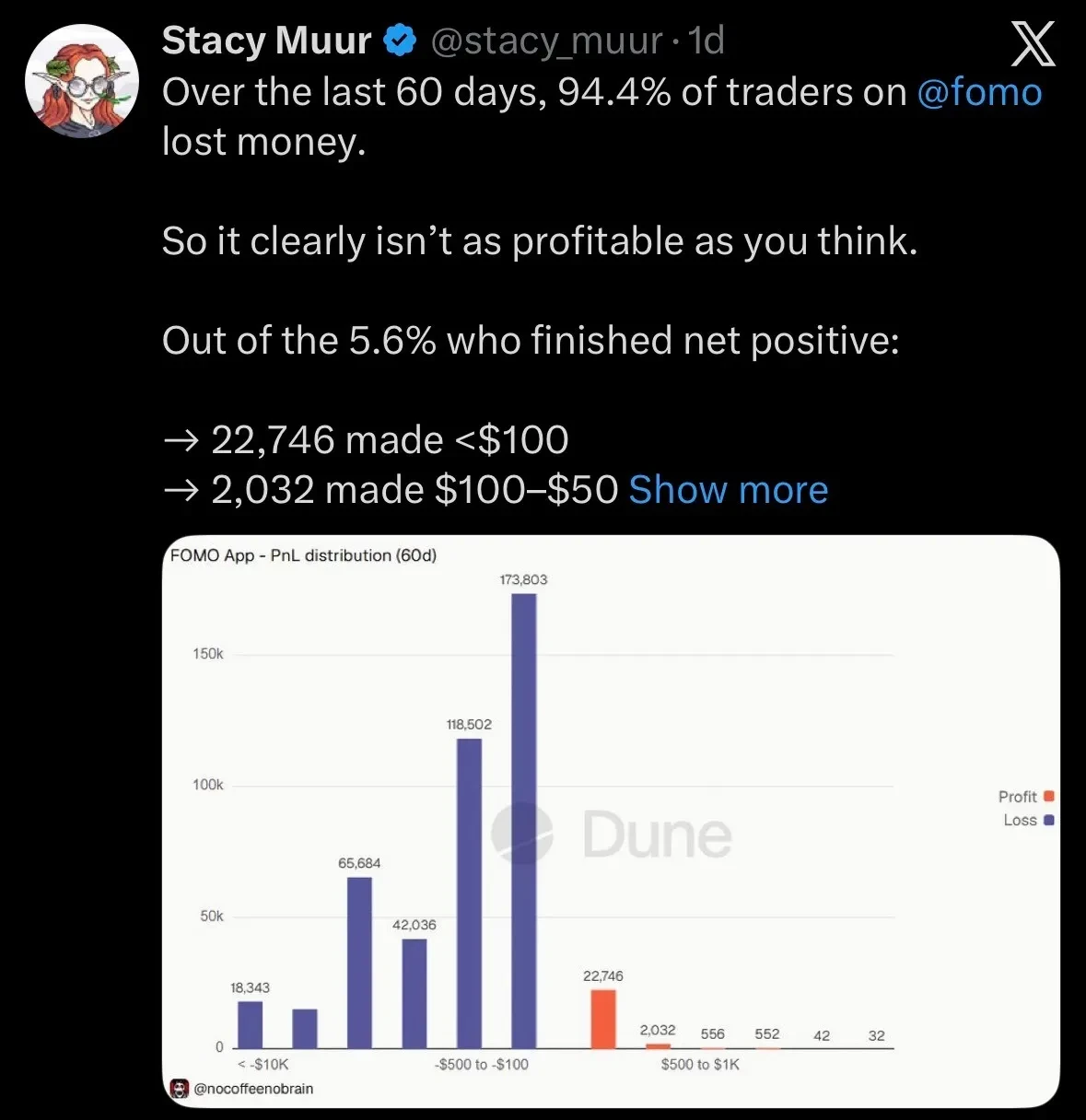
Personally, I pay more attention to the 30-day leaderboard and all-time leaderboard, filtering for traders with long-term stable profits, rather than those who got rich in a single day or appear on short-term 7-day leaderboards.
The core purpose of checking leaderboards is to learn from top traders and analyze why they can always catch new narrative coins early.
When filtering traders, prioritize familiar quality traders: those with publicly recorded long-term stable profits and who fully explain their trading logic, so we can learn from their analytical thinking.
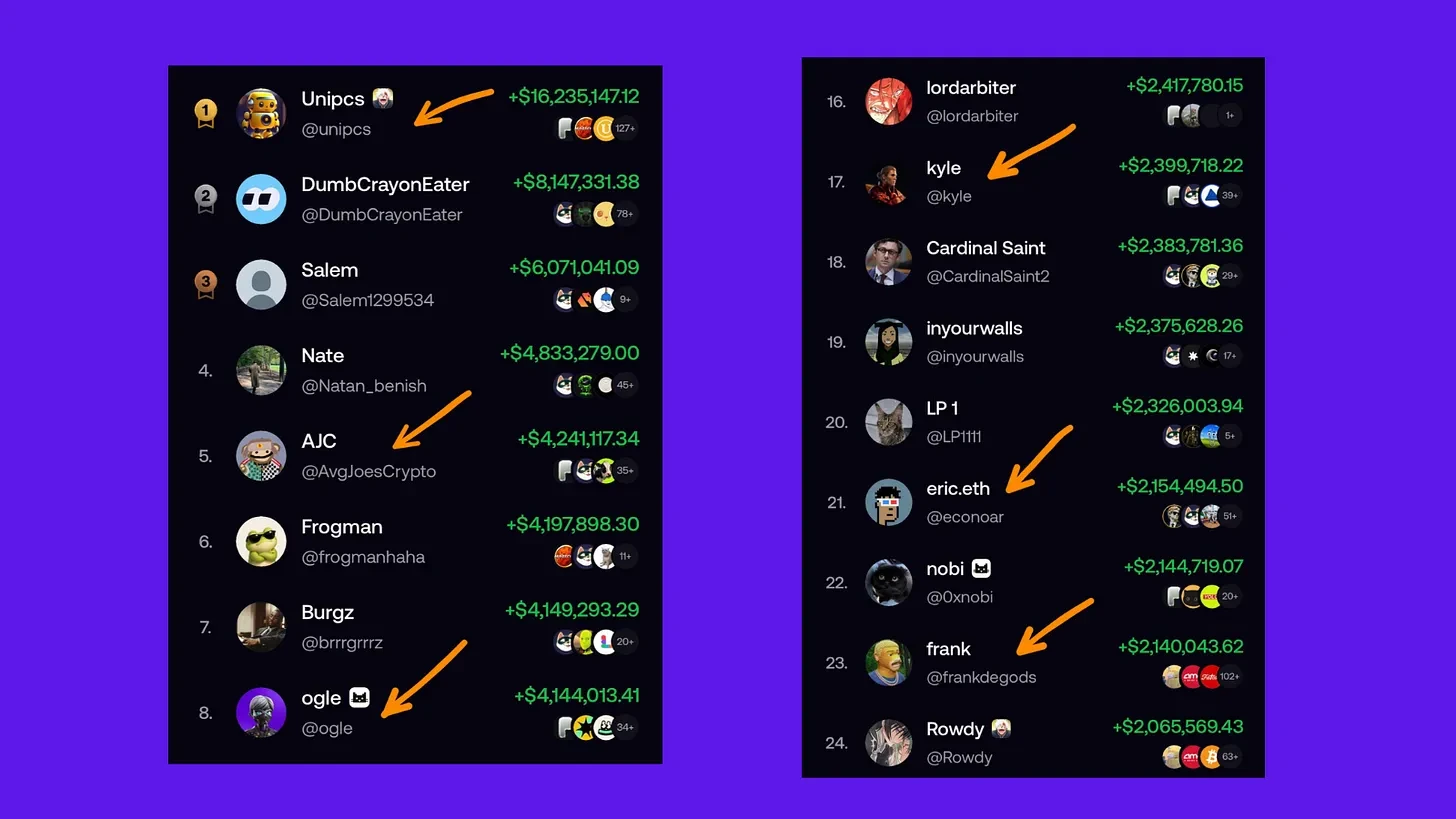
Do not follow traders in bulk; select at most 5-7 quality accounts to avoid diluting your attention. Quality traders who truly trade on logic do not open positions frequently, and every trade push has reference value rather than being useless noise.
Kyle is a well-known trader in the crypto community with impressive gains on Fomo App. Looking at his holdings, $PONS is his heaviest position. Clicking on the coin allows you to view his complete trading logic. After reviewing his four core trades, I summarized his trading strategy:
- Hold positions firmly for the long term, building heavy positions early in the trend
- Publicly share complete bullish logic for others to reference
Once his strategy is confirmed, copy trading becomes much easier, but it is not simple. Fomo App's well-known player Rasmr has also shared trading insights: how to identify market catalysts and screen coins with upside potential.
Your trading speed must be ahead of other copy traders.
The biggest mistake beginners make with Fomo App is: following everyone else in one-click copy trading. If your only advantage is mindlessly syncing orders, your returns will be the same as the vast majority of retail traders. You need to act earlier than ordinary copy traders.
Automated trading is the best solution; you don't need to build tools from scratch, as ready-made apps can achieve this. This approach is not suitable for pure beginners, but for investors who don't have time to stay up late watching notifications and want to automate Memecoin trading.
Select the top trader accounts you want to track, search for their usernames, set automated copy trading parameters, and the strategy runs automatically. Important reminder: this method carries extremely high risk, and your capital's profit or loss depends entirely on the skill of the traders you follow.
Fomo App also has some practical features that are easily overlooked.
Trending leaderboard: This is my favorite feature, as it intuitively shows the hottest narratives in the current market, helps predict the next market direction, and shows which assets market funds are concentrated in, assisting us in deciding whether to enter. I usually prioritize checking the top ten coins on the leaderboard, researching the reasons behind short-term declines, and judging whether there are rebound opportunities.
The trending tokens feature is similar, showing the tokens with the highest current attention. Tokens with the highest holdings mostly have higher market caps. As the name suggests, funds are concentrated in these tokens. But on the trending page, you will see more lower market cap tokens, because they are only trending for the day, but they could also become the most held tokens.
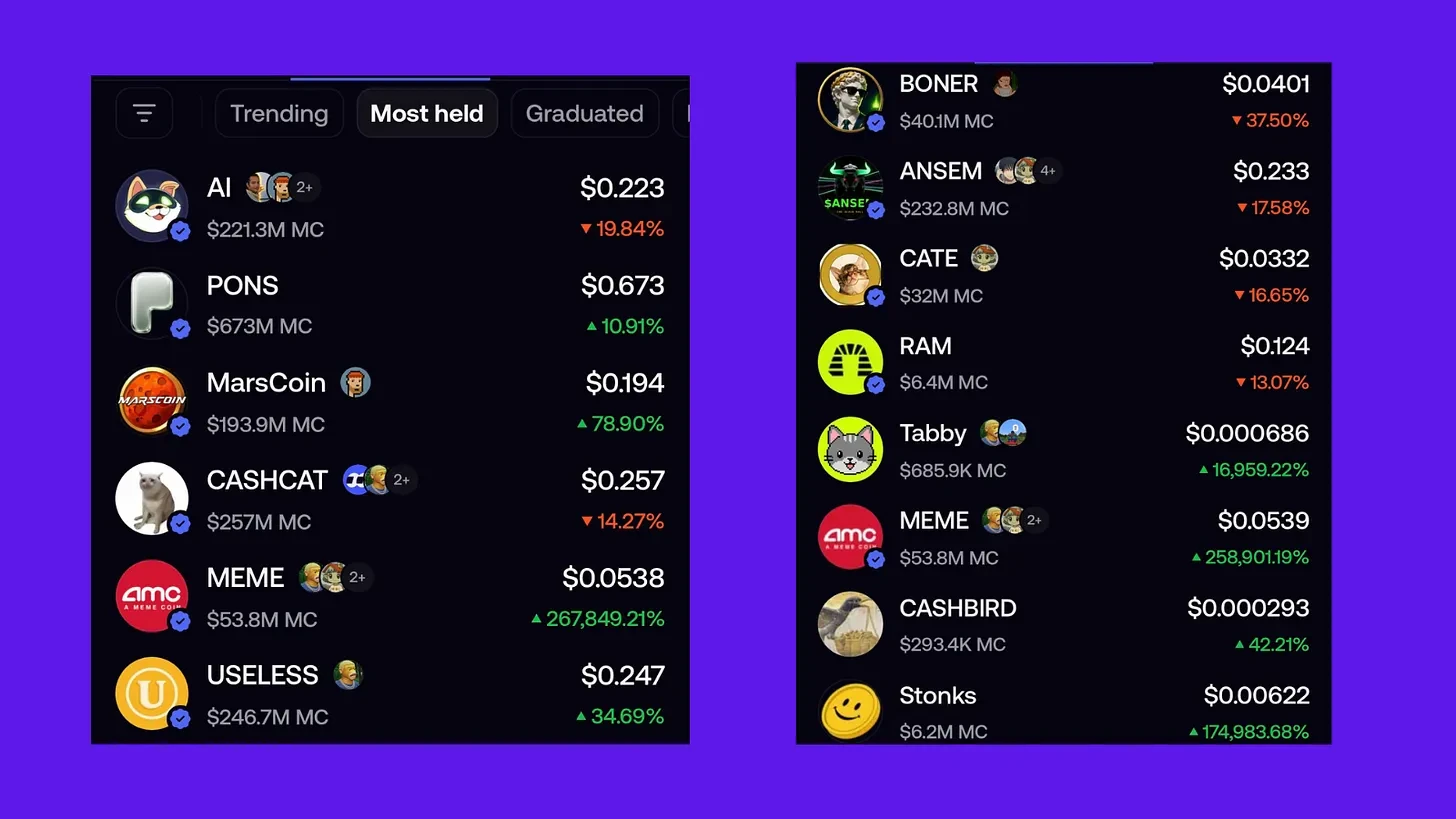
That is why I pay special attention here, carefully studying the narrative logic, as it is easy to catch sleeper coins here. Ultimately, the core driving force behind a coin's rise is the community consensus built around the narrative.
Pump.fun
Pump.fun's logic for filtering quality traders is largely the same as Fomo App. Pump.fun's leaderboard is divided into three categories: total profit, realized profit, and unrealized profit.
Fomo App's leaderboard only counts unrealized profits. Combining the three data points, I place more weight on traders who can consistently take profits and realize gains; at the same time, I observe the profit-taking points and chip accumulation methods of traders with unrealized profits, applying the same approach we used to analyze Fomo traders.
Trading on Pump.fun also has an additional profit incentive mechanism: Callout referral rewards. If you are bullish on a coin, you can post a recommendation to show to all your followers. Pump.fun distributes Callout rewards daily to incentivize users to post high-quality content, and the reward amount is tied to the buy volume generated by your recommendation. Data shows that 87% of users who received rewards have fewer than 250 followers, meaning small and medium accounts have more opportunities.
A reminder: do not spam tokens on the platform to farm rewards, as the activity has strict user agreements.
If you have read this far, it shows you are serious about diving deep into on-chain Memecoin trading. Copy trading has completely changed the trading model from the previous Memecoin bull market in 2024.
Although I have some other tools in mind to list, there is really no need to overwhelm yourself with too many tools. In fact, top trader Smartestmoney, who earns millions of dollars annually, once said he has never used TradingView. This shows that tools are ultimately just tools.
Your persistence, mindset, experience, and more are the keys to success in trading. Wishing you catch the bullish moves!
This content is for informational and educational purposes only and does not constitute investment advice related to BTCC. BTCC makes every effort but cannot guarantee the truthfulness, accuracy, or originality of the content above.