Warren Buffett Just Poured $400M+ Into These 2 Forever Stocks - Here’s Why They’re Unshakable

Oracle of Omaha doubles down on conviction plays while traditional finance scrambles for yield.
The $400 Million Bet
Buffett's Berkshire Hathaway just deployed over four hundred million dollars into two cornerstone positions. No speculative swings—just vintage value investing with permanent portfolio status. The moves signal relentless confidence in these companies' durable competitive advantages while bond markets offer pathetic returns.
Forever Assets in a Flip-Flop Market
While day traders chase crypto pumps and AI hype cycles, Buffett keeps buying businesses that print cash through economic cycles. These additions aren't quarterly trades—they're generational holds. The kind of positions that outlive market frenzies and Fed policy errors.
Buffett's Silent Commentary on Modern Finance
The timing speaks volumes. While Wall Street peddles structured products and synthetic ETFs, Berkshire buys actual companies. Funny how the greatest capital allocator alive ignores crypto and sticks to businesses he understands—almost like he prefers cash flows to memes.
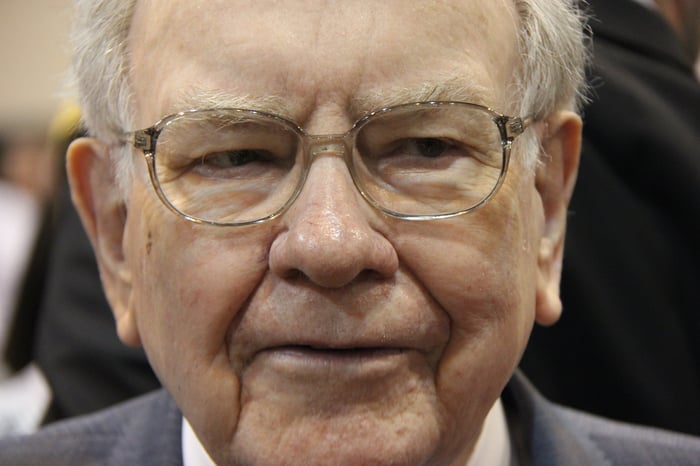
Image source: The Motley Fool.
Finding great value in today's market
Warren Buffett's biggest challenge over the last few years has been finding good value in the stock market. Stock prices, as a group, have climbed faster than financial results, leading to record-high valuations. The S&P 500, which represents 500 of the biggest U.S.-based companies, now sports a forward PE of 22.4, well above its historical average in the mid-teens.
As early as last February, Buffett was lamenting, "There remain only a handful of companies in this country capable of truly moving the needle at Berkshire." With $344 billion in cash to deploy, Buffett's universe of investable stocks is limited to only the biggest companies in the world, which have climbed in valuation faster than smaller companies.
But Buffett has found one set of companies that are big enough to absorb a significant amount of capital from Berkshire. And he deployed over $400 million worth in late August. That's when the company added to its stakes in(MSBHF 1.51%) (MTSU.Y 1.47%) and(MITSY 1.30%) (MITSF 4.00%), two of the five big Japanese trading houses, which also includes,, and. The trading houses are massive conglomerates with businesses in just about every industry you can think of.
Mitsubishi may be best known in the United States for its automotive company. And while that's a significant holding of the parent company, the firm also holds assets in energy, natural resources, and retail. If you've ever been to Japan and seen Lawson convenience stores on every other block, that's a company 50% owned by Mitsubishi. Berkshire subsidiary National Indemnity increased its stake in Mitsubishi by half a percentage point in late August. The purchase likely cost between $400 million and $450 million based on the stock price at the time.
Mitsui is almost as big as Mitsubishi with a heavy weighting in its operations toward liquefied natural gas and other natural resources and metals. Other notable holdings include a 20% stake in. Management said National Indemnity had also increased its stake in the trading house the same day as the Mitsubishi disclosure, but no details of the purchase were released.
There's clear value in these two stocks. Mitsubishi currently trades below 1.5-times book value, trading below 1.4-times book value until the disclosure in late August. Mitsui has an even lower valuation, trading below 1.4-times book and closer to 1.25-times in August. Those valuations were likely weighed down by tariff fears, but the U.S. and Japan reached a trade agreement in early September, removing the overhang from the stocks. That's another example of Buffett successfully becoming greedy when others are fearful.
What makes them forever holdings?
Buffett has praised each of the five big Japanese trading houses, noting they all operate in a manner similar to Berkshire Hathaway itself. They maintain strong balance sheets and only return about one-third of their earnings to shareholders as dividends. While they'll occasionally execute share repurchases when the stock offers good value, the bulk of their capital goes toward building their businesses and finding new investment opportunities. Buffett also points out they're all reluctant to issue new shares of their stocks.
In other words, the management at these companies is "outstanding," fitting the bill for Buffett's preferred holding period. On top of that, Buffett foresees potential opportunities to partner with the large conglomerates. Their management teams bring expertise across many more industries and markets and Berkshire has plenty of capital to back new investments. Buffett said he expects his successor Greg Abel to "work productively with the five companies in the future."
With the stocks of the Japanese trading houses all trading at attractive valuations, it wouldn't be a surprise to see Buffett and Abel continue adding to Berkshire's holdings. Berkshire received permission to exceed the 10% stake threshold for all of them. It already surpassed that level for Mitsubishi (and likely Mitsui) with its recent purchases. But the opportunity is still there for additional purchases.
