Intel’s Bold Bet: Custom Silicon Ignites Comeback Engine

Intel just placed its biggest chip on the table—custom silicon. The legacy chipmaker's betting its entire turnaround on bespoke processors designed for hyperscalers and AI workloads.
Why Custom Wins
Generic chips don't cut it anymore. Every major cloud provider—AWS, Google, Microsoft—now demands hardware tailored to specific workloads. Intel's finally listening. Their new custom division isn't just chasing trends; it's chasing survival.
The Financial Reality
Wall Street's watching—skeptically. Because let's be honest: betting the farm on customers who might just build their own chips anyway? That's the kind of bold move that either makes CEOs look like visionaries or gets them laughed out of the C-suite. But with margins shrinking and competitors eating their lunch, Intel's playing the only hand they've got left.
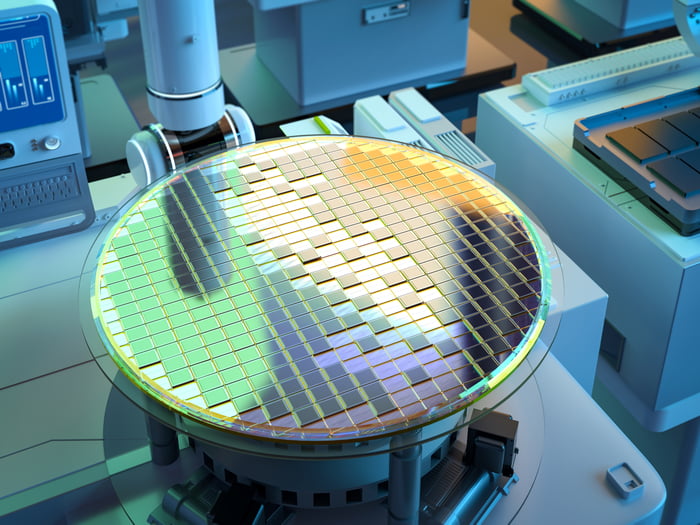
Image source: Getty Images.
Why custom silicon is a big deal
Not long ago, data centers were filled with Intel CPUs. Today, with demand for AI infrastructure booming, data centers have evolved dramatically. Graphics processing units (GPUs), largely from, power AI workloads. Hyperscalers and other large tech companies have been increasingly designing their own chips, both AI accelerators and server CPUs.
It was recently reported that OpenAI is working withto develop custom AI chips in a $10 billion deal. For a company like OpenAI, reducing its dependence on Nvidia is critical to bring down costs.has designed its own server CPUs and AI chips. So haveand.
Intel's foundry business can tap into the growing custom chip business, but the company has so far struggled to win many external customers. A dedicated custom silicon business can help this situation by optimizing custom chips for Intel's manufacturing processes and funneling customers to the foundry.
Intel's opportunities extend beyond the data center. Custom smartphone chips based on the Arm architecture could be on the table, as could custom chips for future game consoles. One driver of's comeback over the past decade was that company's semi-custom chip business getting its products into the major game consoles.
A major shift in strategy
In the past, before Intel kicked off its foundry strategy and kept its manufacturing operations to itself, it made little sense to go after custom chip orders. Intel could make more money from its own first-party products. Intel's server CPU business used to be so dominant that profit margins were incredibly high. In 2019, Intel's data center group reported an operating margin of 44%.
Those days are now long gone. AMD is far more competitive, and custom Arm-based server CPUs are making inroads. Intel needs external customers for its foundry to be sustainable, partly because its market share in server and PC CPUs has declined, and partly because building leading-edge foundries has become more expensive. Given these developments, a custom silicon business now makes a lot of sense.
Intel didn't disclose much about this new endeavor, but Tan will likely have more to say when Intel reports its third-quarter results next month.
