Shocking Trade Deal Disrupts Ford and GM—What’s Next for Auto Giants?

Ford and GM just got blindsided by a trade deal nobody saw coming. The auto titans—already grappling with supply chains and EV wars—now face a fresh curveball that could rewrite their playbooks overnight.
Here’s the fallout.
Tariffs, Tech, and Trouble: The fine print hits Detroit where it hurts. Battery sourcing rules? Tightened. Semiconductor clauses? Brutal. Analysts whisper 'margin squeeze' as legacy automakers scramble to adapt.
EV Arms Race Heats Up: With China and Europe locking in sweetheart terms, Ford’s F-150 Lightning and GM’s Ultium bets just got pricier. ‘Innovate or evaporate’ isn’t a slogan—it’s survival.
Wall Street’s Cold Shoulder: Shares dipped faster than a crypto meme coin. ‘But fundamentals!’ cried one CFO, right before hedge funds started shorting his optimism.
One thing’s clear: In the high-stakes game of global trade, Detroit’s old playbook is obsolete. Adapt or get lapped—by rivals, regulators, and reality.
What's going on?
As maybe only President Donald TRUMP would do, the announcement was made via social media: "We just completed a massive Deal with Japan, perhaps the largest Deal ever made," President Trump announced on Truth Social, according to Yahoo Finance. Trump added that Japan would pay a "reciprocal" tariff on imports of 15%, as well as invest $550 billion into the US "at my direction," Trump said, without further details.
So, what does this mean, you ask? The 15% tariff rate will apply to cars and car parts, meaning that Japanese automakers will be able to import vehicles from Japan cheaper than U.S. automakers, such as Ford and General Motors, can import vehicles from Mexico or Canada at a 25% rate. While Canada's tariff rate was recently raised to 35% for Canadian imports, goods that comply with the United States-Mexico-Canada Agreement, including most vehicles and auto parts, are exempt.
Further, not only does the trade deal with Japan lower the costs for their imports, but it only reduces the incentive for them to build more cars in the U.S. region. Adding insult to injury, U.S. automakers are also paying more for crucial components such as steel, aluminum, and copper because of the administration's tariffs on imported metals.
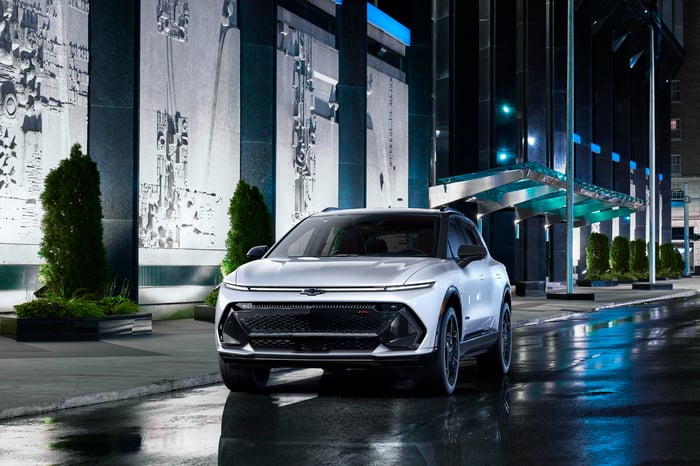
Image source: General Motors.
What was the goal?
President Trump's goal was to have more production and jobs FLOW to the U.S., but this policy could end up making it more expensive for U.S. automakers compared to foreign automakers paying a lesser tariff on imports. Another goal was also to open access to the Japanese automotive market, but that comes with serious caveats.
For instance, it WOULD take several years to build infrastructure to sell even a small amount of vehicles in Japan. U.S. automakers sold only 16,000 vehicles in Japan last year, which is less than 1% of the total market, compared to Japanese automakers selling 5.3 million vehicles in the U.S. market last year, roughly one-third of the market, and half of those were imported, according to Barron's.
Trying to bulk up the Japanese manufacturing capacity in the U.S. market isn't the worst of goals -- the Center for Automotive Research estimates that Japan's automotive sector supports around 1.6 million U.S. jobs. That said, any deal that charges Japanese imports, with barely any U.S. content in the vehicles, less than tariffs of Ford or GM vehicles coming from Mexico raises more questions at best, and is simply a bad deal for U.S. autos at worst. And this entire development could change again before automakers even have time to grasp the potential impact from this trade pact, as President Trump's tariff threats and negotiations are ongoing.
Ultimately, for investors, this development is just the latest signal that patience will be required in the NEAR term as automakers grapple with the changes and try to offset increased costs while figuring out what production changes to make within an incredibly complex supply chain. It's likely to be a bumpy ride, especially if the administration agrees to more trade deals that could benefit U.S. rivals more than domestic autos.
