Warren Buffett Dumps Berkshire’s Entire Stake in This Mind-Blowing Stock That Soared 3,980% Since Initial Purchase

Buffett's Berkshire Hathaway makes shocking exit from legendary performer.
The Oracle's Surprise Move
Warren Buffett just executed one of his most surprising portfolio maneuvers in recent memory—completely exiting a position that delivered nearly 4,000% returns since Berkshire first bought in. The legendary investor cashed out at what appears to be peak valuation, leaving market watchers scrambling to understand the timing.
Numbers Don't Lie
That staggering 3,980% gain represents one of Berkshire's most successful investments of the past decade, making the complete exit particularly noteworthy. While Buffett famously prefers to hold stocks "forever," this move suggests even the Oracle of Omaha knows when to take profits off the table.
Market Implications
The sale sends shockwaves through traditional finance circles, raising questions about whether Buffett sees storm clouds gathering for high-flying equities. Or perhaps it's just another case of Wall Street overthinking what amounts to simple profit-taking—after all, even billionaires like to cash winning tickets occasionally.
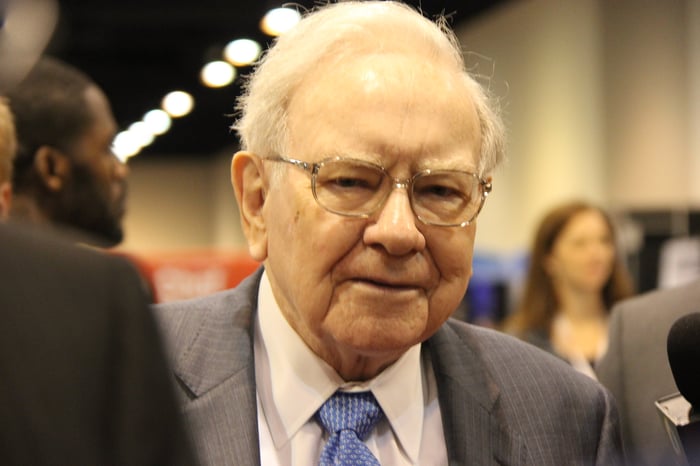
Image source: The Motley Fool.
Powering massive returns for investors
In late September 2008, as the global stock market was reeling amid the Great Recession, Buffett and Munger took the opportunity to buy a 10% stake in a Chinese auto company called(BYDDY -0.94%) (BYDD.F -1.20%). They gradually increased Berkshire's stake in the business, reaching about 20% at one point. Today, the company is the largest EV manufacturer in the world, surpassing.
It was Vice Chairman Charlie Munger who brought the company to Buffett's attention. He found CEO Wang Chuanfu's engineering and managerial skills extremely impressive. He had developed one of the largest battery manufacturers in the world before transitioning to the automotive business in the early 2000s. With its battery expertise and other vertically integrated components made through acquisitions, BYD looked poised to do well in the nascent electric vehicle market.
Sure enough, BYD has developed a broad lineup of vehicles sold around the world. Its global sales of fully electric vehicles surpassed Tesla's in the fourth quarter of 2023 and for the full year of 2024. It's not just success in its home country, either. BYD's European sales surpassed Tesla's in April this year. Management aims to sell half of its cars outside of China by 2030. It's worth noting BYD has yet to enter the U.S. market due to tariffs and the political environment.
It's no surprise, then, that BYD's stock price has soared amid its success. With the acceleration in sales over the last few years, BYD's stock is up more than eightfold since the start of 2020.
Buffett started decreasing Berkshire's stake in BYD starting in August 2022, after Berkshire's initial investment had already climbed about 20-fold. At one point, Berkshire's shares were worth $9 billion. Based on financial reports from Berkshire Hathaway subsidiary, Berkshire Hathaway Energy, the company gradually sold off shares until completely divesting its stake in the first quarter of this year.
Is the competition too much?
Buffett may have missed the absolute peak of BYD's stock price, but shares have certainly struggled in the latter half of the year, as Chinese competitors take market share from its domestic business. BYD's August deliveries were flat year over year, as were July's. Not only has the intense domestic competition hurt unit sales, but it's also hurt BYD's margins.
But the company stands at a distinct advantage over the competition thanks to its significant vertical integration. As mentioned, BYD is one of the leading battery manufacturers in the world. That, in and of itself, is a significant advantage over other EV makers who need to source batteries from third parties. But BYD also makes many other components in its vehicles, including the motors, semiconductors, and practically everything else except the tires and glass.
That allows the business to adapt quickly and maintain better margins than its competitors. With plans for an aggressive international expansion, it'll have to replicate its manufacturing capabilities all around the world. But management has proven quite adept at building systems and scaling them.
After the pullback in price, investors can buy shares for just 1 times sales and less than 16 times forward earnings expectations. That's an attractive price for the leader in a growing industry, even if it's seeing some pressure from the competition weighing on revenue growth and margins. It's certainly a better valuation than investors could get with Tesla. While Buffett may have sold out of the stock, it might still deserve a spot in your portfolio.
