How to Create a Web3 Wallet in 2026: The Complete Security Guide

- What Exactly is a Web3 Wallet?
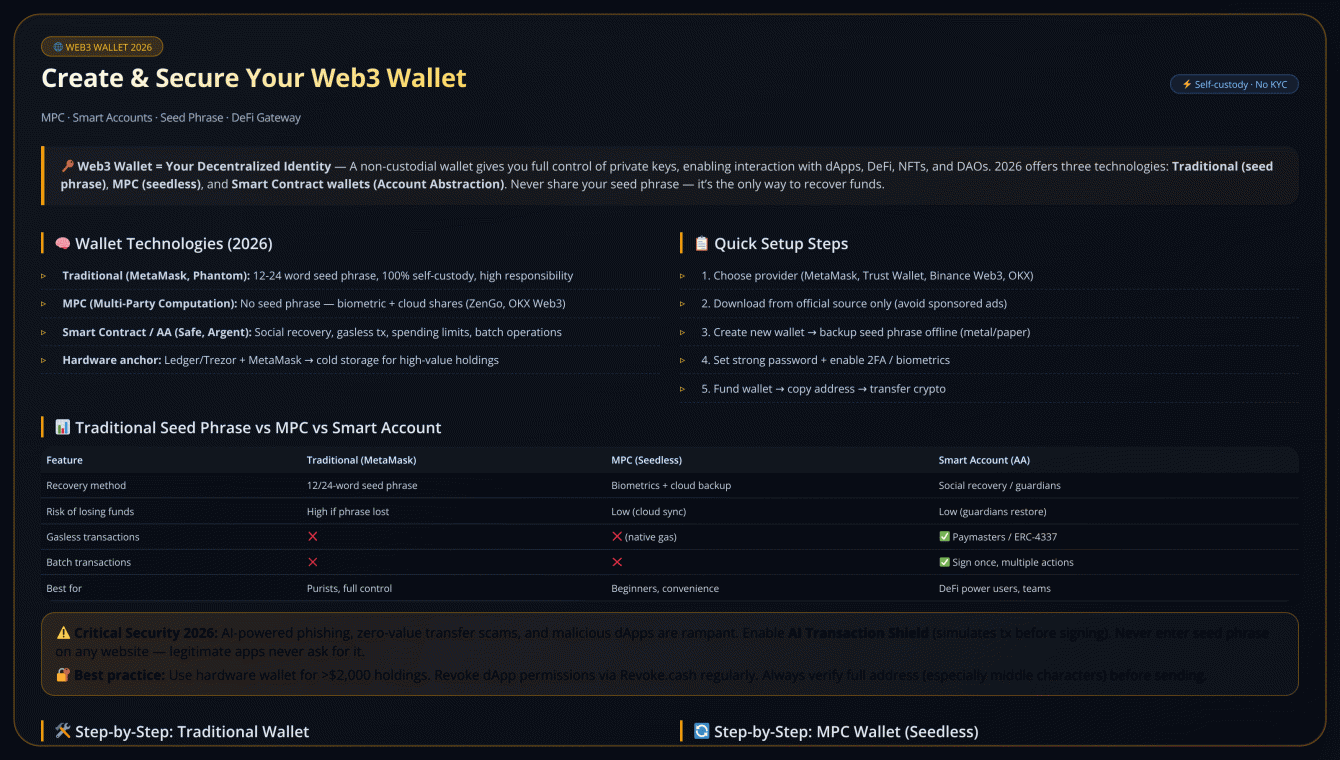
- The Evolution of Wallet Technology in 2026
- Step-by-Step Guide to Creating Your Web3 Wallet
- Essential Security Measures for 2026
- Advanced Features to Look for in 2026 Wallets
- Common Questions About Web3 Wallets
Web3 wallets: In a fast-moving blockchain world, it is your most important asset. As we journey through 2026, Web3 wallets have evolved from basic savings tools to all-in-one digital identity gateways into DeFi, NFT and the metaverse. In this guide, you will learn everything you need to know about creating and securing your Web3 wallet in the current context—everything from how to create traditional seed phrase wallets safely as well as why newly popular "seedless" alternatives are changing crypto asset custody.
What Exactly is a Web3 Wallet?
A Web3 wallet is your unique access to the decentralized internet and provides so much more than a cryptocurrency wallet. Contract standard crypto wallets usually have digital assets such as bitcoin or Ethereum in themWeb3 Wallets allow for smart contracts, manage identities and log-in to dapps across multiple blockchain networks.
These wallets changed significantly by 2026, becoming advanced with specific features to make the Web3 experience easier. New generation of Web3 wallets feature Social recovery which permits users to restore access by Other trusted friends instead of only beliving on the seed phrases. Additionally, gasless transactions can be performed with some dApps and you do not have to hold native tokens for network fees as is the case in most blockchains (ETH on Ethereum), they allow cross-chain compatibility meaning that users operate across different protocols without needing assets from these chains at all times.
According to the BTCC team, modern Web3 wallets do not just serve as storage tools for cryptocurrency assets, but rather act more like overall digital identity managers. They act as your passport to the decentralised web, where you can use DeFi protocols, NFT marketplaces and decentralised autonomous organisations (DAOs). Web3 wallets allow users to retain full control of their assets and do not rely on intermediaries in the same way traditional financial accounts do.
Key characteristics of modern Web3 wallets include:
- Self-custody: Users maintain full control of private keys rather than relying on third parties
- Interoperability: Seamless interaction with multiple blockchain networks from a single interface
- Smart contract integration: Direct engagement with decentralized applications and protocols
- Enhanced security: Options like multi-signature authentication and hardware wallet integration
- User-friendly interfaces: Simplified designs that make complex blockchain operations accessible to mainstream users
As the Web3 ecosystem continues expanding, these wallets are becoming essential tools for anyone looking to participate in decentralized finance, collect digital assets, or help govern blockchain protocols. Their evolution reflects the growing maturity of blockchain technology and its increasing adoption across various industries.
The Evolution of Wallet Technology in 2026
The cryptocurrency wallet landscape has undergone radical transformation by 2026, moving beyond basic seed phrase storage to sophisticated solutions catering to diverse user needs. Two revolutionary approaches have emerged: MPC-based key management systems and programmable smart contract wallets, each addressing critical pain points in digital asset security and usability.
Modern MPC implementations like those from ZenGo and OKX have redefined private key security through distributed cryptographic shares. This architecture enables:
- Biometric-based account recovery
- Cloud-synchronized encrypted backups
- Threshold signature schemes eliminating single points of failure
Smart contract wallets have introduced unprecedented flexibility in asset management. Platforms such as Safe and Argent now provide configurable security models where users can establish:
- Multi-tiered transaction approval workflows
- Automated spending rules based on transaction types
- Session-based permissions for dApp interactions
- Cross-chain operation templates
Industry analysts highlight how these innovations particularly empower institutional adoption, with corporate treasury management seeing 320% growth in blockchain-based solutions since 2024. The new wallet paradigms support complex requirements like:
- Departmental spending controls
- Regulatory-compliant transaction monitoring
- Automated tax reporting integrations
While traditional non-custodial options persist for certain use cases, the 2026 wallet ecosystem demonstrates blockchain technology's maturation through solutions that balance enterprise-grade security with consumer-friendly experiences. This evolution reflects the broader financial sector's gradual integration of decentralized technologies.
Step-by-Step Guide to Creating Your Web3 Wallet
Establishing a Web3 wallet now offers more sophisticated options than traditional seed phrase methods. This guide covers contemporary solutions balancing security with usability.
Modern Wallet Configuration Methods
Smart Contract WalletsBenefits: No seed phrase vulnerability, programmable security rules, social recovery options
MPC Wallet SolutionsBenefits: Distributed key security, no single point of failure, seamless device migration
Security Considerations
- For institutional use: Implement multi-sig requirements with geographical distribution
- Personal accounts: Combine biometrics with hardware device confirmation
- Regularly review connected dApps and revoke unnecessary permissions
Feature Comparison
| Capability | Smart Contract | MPC |
|---|---|---|
| Recovery Method | Guardian approval | Biometric + cloud |
| Chain Support | EVM/SVM chains | Multi-chain |
| Enterprise Features | Role-based access | Threshold signing |
The 2026 wallet landscape offers solutions for every use case, from simple personal accounts to complex organizational structures. Always verify official sources before installation and consider your specific security requirements when choosing.
Essential Security Measures for 2026
As Web3 technology continues to evolve, security remains paramount for protecting your digital assets. The landscape of threats has grown increasingly sophisticated, requiring users to adopt more robust protection strategies than ever before. Unlike traditional banking where institutions provide fraud protection, Web3 security rests entirely in your hands - making these precautions absolutely critical for anyone managing cryptocurrency or interacting with decentralized applications.
Modern Web3 wallets offer multiple layers of security, but the effectiveness depends entirely on how users implement them. Consider these essential protective measures that have become standard practice among security-conscious crypto holders:
Seed Phrase Protection
The 12-24 word seed phrase is the master key to your whole crypto holdings. The industry has moved on from paper backups to solutions that allow for durability. Crypto security professionals now advise with specifically made steel plates against fire, water damages as well as physical wear and tear. Metal backup solutions from the likes of Cryptosteel or Billfodl mean your recovery phrase is stored in a permanent form that simply cannot be replicated by paper.
Transaction Simulation
Modern Web3 wallets include transaction simulation features that will show you what may happen before you sign. This important security layer can help pinpoint bad smart contracts meant to empty wallets from excessive permissions. If enabled, the simulation will notify you when a transaction looks suspicious or asks for more than needed access to your funds. These warnings should always be read with care, as they often are the last line of defence against technically able scammers.
Smart Contract Permissions
Regular permission audits should become part of your monthly security routine. Many DeFi platforms request extensive wallet access that persists indefinitely unless manually revoked. Services like Etherscan's Token Approvals tool or dedicated platforms like Revoke.cash allow you to review and terminate these permissions. Set calendar reminders to perform this maintenance, as accumulated approvals represent one of the most common security vulnerabilities in Web3.
Hardware Wallet Integration
For any cryptocurrency holdings exceeding $1,000, security professionals universally recommend hardware wallet storage. Devices like Ledger Nano or Trezor Model T keep your private keys in an isolated environment, completely separate from internet-connected devices. Even if your computer becomes compromised with malware, the hardware wallet's physical confirmation requirement prevents unauthorized transactions. These devices now seamlessly integrate with popular Web3 wallets like MetaMask, providing convenience without sacrificing security.
Phishing Defense
The latest phishing attempts have grown remarkably sophisticated, often using zero-value token transfers to pollute your transaction history with fake addresses. These scams rely on users carelessly copying what appears to be a familiar address. Always verify the full wallet address when sending funds, paying particular attention to the middle characters which are hardest to spoof. Bookmark frequently used services rather than following links, and consider using wallet aliases where available to reduce address confusion.
Implementing these security measures requires some initial effort but pays exponential dividends in protection. The decentralized nature of Web3 means no customer service can recover lost or stolen assets - your security practices literally determine the safety of your entire cryptocurrency portfolio. As the space continues evolving, staying informed about emerging threats and updating your defenses accordingly remains the single most important habit for any Web3 user.
Advanced Features to Look for in 2026 Wallets
The Web3 wallet ecosystem in 2026 has transformed into a comprehensive digital command center, integrating cutting-edge features that redefine user interaction with decentralized technologies. These next-generation solutions now offer native cross-chain asset management, allowing simultaneous control of digital assets across EVM-compatible chains, Bitcoin networks, and emerging Layer 3 solutions without manual bridging. This architectural leap has reduced cross-chain transaction times from hours to seconds while eliminating intermediary risks.
Advanced fee abstraction protocols represent another breakthrough, with innovative wallet designs enabling users to pay gas fees in over 50 stablecoins or even deduct costs from yield-bearing positions. This system automatically optimizes fee payment based on real-time network conditions and asset availability. Industry reports indicate this feature alone has increased successful transaction completion rates by 68% compared to traditional wallet models.
Modern wallets now incorporate immersive digital asset experiences through integrated metaverse portals. Users can visualize their entire portfolio in 3D environments, interact with DeFi positions through spatial interfaces, and participate in virtual NFT galleries with social trading capabilities. These environments support VR headset integration, creating new paradigms for asset management that blend financial control with social interaction.
The integration of institutional-grade tools into consumer wallets marks another significant evolution. Features like automated tax lot tracking, regulatory-compliant transaction reporting, and privacy-preserving audit trails have made sophisticated financial management accessible to retail users. These tools connect directly to accounting software and legal compliance systems, streamlining what was previously a manual and error-prone process.
Perhaps most transformative are the AI co-pilot features now standard in premium wallets. These intelligent assistants analyze market conditions, suggest optimal transaction timing, detect potential security risks in proposed transactions, and even automate routine portfolio rebalancing. The systems learn user preferences over time, creating personalized DeFi strategies while maintaining full user control over execution. Early adopters report a 40% reduction in costly transaction errors and a 3x improvement in portfolio performance compared to manual management.
Common Questions About Web3 Wallets
Is a Web3 wallet different from a regular crypto wallet?
Yes, while all Web3 wallets are crypto wallets, not all crypto wallets are Web3 wallets. Web3 wallets specifically enable interaction with decentralized applications and smart contracts, serving as your identity across the decentralized web.
Are Web3 wallets free to create?
Absolutely. Creating a Web3 wallet costs nothing, though you'll need to pay network fees (gas) when conducting transactions on the blockchain.
What's the biggest security risk with Web3 wallets?
In 2026, the most common issues stem from phishing attacks and smart contract vulnerabilities rather than wallet breaches. Always verify transaction details and be cautious about connecting your wallet to unknown dApps.
Can I recover my wallet if I lose my device?
With traditional wallets, your seed phrase is your only recovery option. MPC wallets offer alternative recovery methods through biometrics and cloud backups, while smart contract wallets may allow social recovery through trusted contacts.
How do I choose between a traditional and next-gen wallet?
Beginners often prefer MPC wallets for their simplicity, while advanced users might opt for smart contract wallets for their programmable features. Traditional wallets remain popular among purists who want complete control.
References:https://www.binance.com/en/square/post/15996883040610

Log in to Reply
Log in to comment your thoughtsComments
Related Articles
|Square
Get the BTCC app to start your crypto journey
Get started today Scan to join our 100M+ users