Uzbekistan Plays Both Sides: Joins BRICS While Keeping Western Ties—A Masterclass in Non-Alignment

Uzbekistan just pulled off the geopolitical equivalent of a perfect hedge—joining BRICS without burning bridges with the West. Talk about having your cake and eating it too.
The Diplomatic Tightrope Walk
Tashkent’s move signals a new era of multi-vector foreign policy, where developing nations refuse to pick sides in the escalating Cold War 2.0. No sanctions, no ultimatums—just pure pragmatic self-interest.
Why This Matters for Global Finance
While Wall Street bankers hyperventilate over 'de-dollarization,' Uzbekistan’s playbook reveals the truth: everyone’s chasing optionality. Gold reserves? Crypto? BRICS membership? All just different flavors of risk management for the 2020s.
The cynical take? This is what happens when the 'rules-based order' starts looking more like a buffet than a binding contract. Smart money’s always hedged—now entire nations are following suit.
Understanding BRICS Uzbekistan And The Non-Aligned Movement Strategy
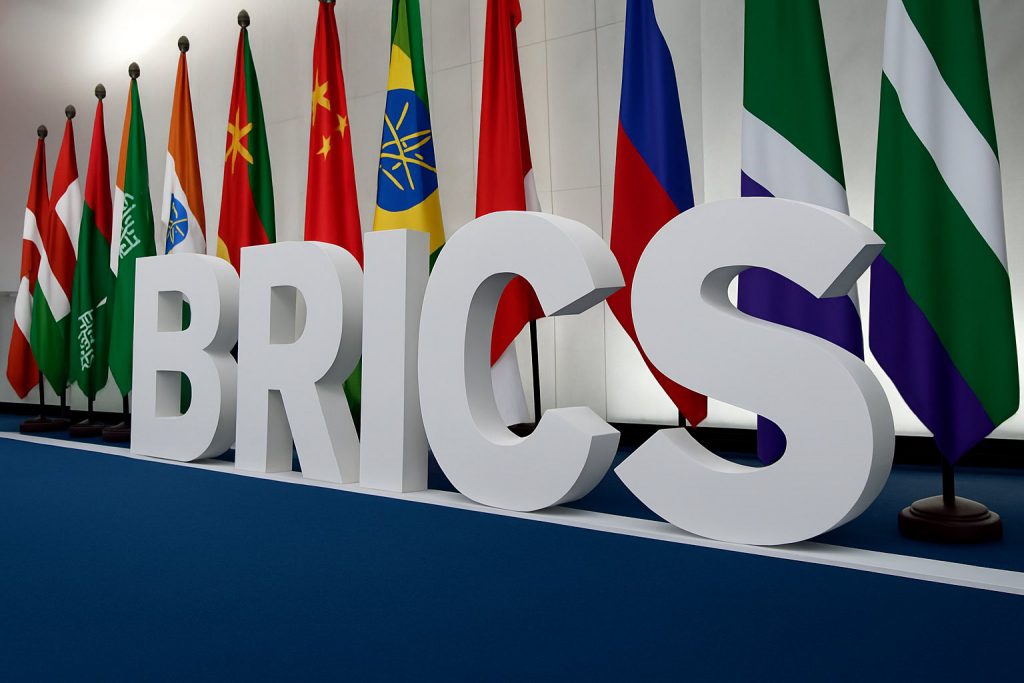
Strategic Partnership Without Full Commitment
The BRICS Uzbekistan arrangement has engineered numerous significant mechanisms to avoid geopolitical entanglements. Right now, it’s optimizing these relationships quite effectively. At the time of writing, Uzbekistan has pioneered a unique position as the only Central Asian state in both the BRICS+ New Development Bank and partner circle. This demonstrates effective geopolitical non-alignment strategies.
What’s particularly strategic is that this approach was crafted with deliberate precision. The Uzbekistan BRICS partner status has Leveraged multiple essential frameworks to unlock a $5 billion investment package through the New Development Bank, catalyzing irrigation modernization, mining expansion, and also infrastructure development. The arrangement has optimized rather than replaced Western partnerships, actually showing how non aligned movement countries can diversify without burning bridges.
Even more significant is how this balancing act is being managed. The country has been orchestrating what some call “institutional choreography” – weaving together cooperation with the United States through the C5+1 platform, accession talks with the World Trade Organization, investment agreements with the European Union, and deepening ties with China, the Gulf States, South Korea, and now BRICS+.
Navigating Great Power Tensions
The BRICS non-aligned movement faces mounting pressures, particularly with President Trump’s proposed 10 percent tariffs on countries “supporting anti-American BRICS policy.” This zero-sum framing complicates geopolitical non-alignment strategies, even for development-focused partnerships.
Certain critical challenges are accelerating though. Washington increasingly views BRICS+ as challenging US global primacy, especially after Iran, Egypt, and also Ethiopia joined the organization. Even if Uzbekistan’s involvement focuses on development, the optics of its BRICS+ affiliation may prove damaging. This is possible if officials don’t carefully manage the relationship.
Brazil’s President Luiz Inácio Lula da Silva had this to say:
Template for Regional Powers
The BRICS Uzbekistan model demonstrates that strategic autonomy remains viable through careful management. It’s actually setting precedent for other nations. This Uzbekistan BRICS partner approach requires what officials term “proactive communication” – clarifying that cooperation stems from development needs rather than bloc politics.
Countries across Southeast Asia, the Caucasus, and also East Africa are examining this template. They want to build resilience without becoming pawns in great-power games. The strategy demonstrates that non aligned movement countries can exercise strategic autonomy by pursuing multi-alignment through pragmatic decision-making.
The factor, which can make this method effective, is the possibility to discuss partnerships as an addition, not as the opposition. Through transparency, the global standard and adherence to ESG codes and protection of the rule of law, the countries will be able to avoid geopolitical misinterpretation and maintain the maneuverability.
