BRICS Divisions Deepen, but India’s Gambit Could Reshape Iran Crisis at Pivotal Talks

NEW DELHI — As the BRICS foreign ministers convene May 14-15 in the Indian capital, a bloc paralyzed by internal discord since US-Israeli strikes on Iran faces its most consequential test. The meeting marks the first time Iran, Saudi Arabia, and the UAE will share a room since hostilities escalated in late February, with Tehran demanding action from a grouping that has so far remained silent on the conflict. India, holding the chair, now carries the delicate burden of mending BRICS fractures while potentially rewriting the narrative around Iran's isolation — a geopolitical recalibration that could spark volatility across energy markets, dollar-denominated trade, and the broader crypto ecosystem tied to BRICS de-dollarization bets.
How the BRICS India Meeting Could Reshape Iran Tensions and Bloc Unity

Why BRICS Went Silent on Iran
India’s foreign ministry confirmed what most observers already assumed — the bloc stayed quiet because it could not agree, with “.” Fine. But that explanation does not really hold up as a long-term position, and the BRICS foreign ministers meeting is where it stops being viable. Iran has been making that argument directly. Araghchi got Jaishankar on the phone and pressed him on the silence — not through a statement, not through back channels, but in a direct call that the Iranian side also made public. The BRICS Iran narrative at that point was already uncomfortable for New Delhi. India BRICS diplomacy was being called out by name, and the May meeting is the response.
Iran’s Foreign Minister Seyed Abbas Araghchi stated:
“It is essential for the institution to play a constructive role at the current juncture in supporting regional and global stability and security.”
India has so far not issued anything along those lines through the bloc. New Delhi called for “,” and Prime Minister Narendra Modi spoke to Iranian President Masoud Pezeshkian, expressing “.” The BRICS India meeting, though, is shaping up to be the moment when that quiet engagement either becomes visible or falls short.
Energy Markets Feel the Hit
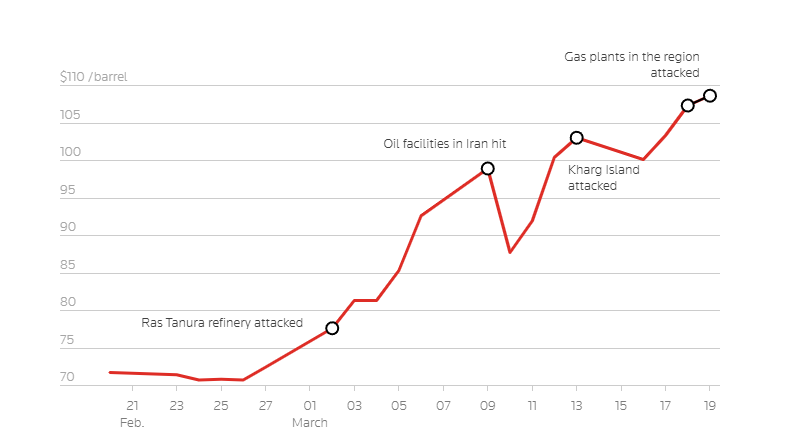
The energy fallout hit hard and fast. QatarEnergy’s CEO told Reuters that Iranian attacks knocked out a sixth of Qatar’s LNG export capacity — worth $20 billion a year — and that repairs would take three to five years. Iran also moved to restrict the Strait of Hormuz, and at the time of writing, operators had rerouted over 1,000 vessels, with global freight costs climbing sharply as a result.
Gulf States Start Looking Elsewhere
The conflict also strained Gulf states’ relationship with Washington. Iranian missiles hit the UAE during the fighting, and GCC governments learned about US strikes on Iran without prior consultation. Bahrain and Kuwait have since signaled interest in joining the bloc. Saudi Arabia appears on BRICS’ own website as a member but has not formally confirmed that status, though Riyadh kept sending ministerial delegations after the 2023 invitation. The BRICS Iran tensions, in short, are also pushing Gulf states to rethink how much they want from the grouping going forward.
India’s quiet posture during the conflict drew criticism. Pakistan ended up hosting US-Iran talks in Islamabad — a fact that landed badly at home and raised eyebrows abroad. Analysts who spoke to The Federal put the stakes around the BRICS India meeting plainly. US-Iran talks in Islamabad — a fact that landed badly at home and raised eyebrows abroad. Analysts who spoke to The Federal put the stakes around the BRICS India meeting plainly.
An expert speaking to The Federal said:
“India was in a much better position to mediate, especially since it has been advocating dialogue and diplomacy. With the BRICS foreign ministers meeting soon and a summit to follow, India could bring countries together and turn this crisis into an opportunity. This summit could turn out to be historic.”
India’s Diplomatic Window in May
The BRICS India meeting also falls close to a Quad foreign ministers session that the US plans to join, giving New Delhi a rare window — simultaneous access to Washington, Tehran, Riyadh, and Beijing within the same diplomatic stretch. India BRICS diplomacy has long run on exactly this kind of positioning: talking to everyone, committing to no one. The May schedule reflects that approach, and also raises the stakes for it.
Groups like BRICS have survived dismissal before. The “disparate quartet” label circulated for years and the grouping outlasted it. Whether the current BRICS Iran tensions turn into a rupture or a reason to meet more often will depend a lot on what the BRICS India meeting actually delivers — and whether India’s months of quiet diplomacy add up to something the room can work with when foreign ministers finally gather in New Delhi.

Log in to Reply
Log in to comment your thoughtsComments
Related Articles
|Square
Get the BTCC app to start your crypto journey
Get started today Scan to join our 100M+ users