Dow Futures Plunge 1,000 Points: Middle East Conflict Sends Shockwaves Through Markets

Geopolitical tremors just hit Wall Street's pre-market pulse.
The Fear Gauge Spikes
Futures aren't just dipping—they're in freefall. A thousand-point nosedive for the Dow signals a market bracing for impact, not adjusting portfolios. This is pure, unadulterated risk-off panic, the kind that turns screens red and has traditional asset managers scrambling for cover. War, it seems, remains the ultimate market disruptor.
The Flight to Safety (and Its Alternatives)
When missiles fly, old playbooks get dusted off. Bonds, gold, the Swiss Franc—the usual havens will see inflows. But watch the digital frontier. This volatility is a stark reminder of traditional finance's fragile, politics-dependent skeleton. It's the perfect breeding ground for narratives around uncorrelated, borderless assets. While traders hide in Treasuries, a segment of the market will be asking if there's a better hedge out there.
A Cynical Reality Check
Let's be honest: for the big funds, a crisis is just another asset class. They'll short the indices, go long on defense contractors, and issue solemn statements about 'market resilience'—all before lunch. The game continues, just with higher stakes and more dramatic headlines.
The opening bell will be a siren, not a chime. Today isn't about earnings or Fed whispers. It's a brutal stress test for global capital, proving once again that in finance, the most powerful force isn't innovation—it's fear.
 Source: CNBC
Dow Futures Today Sink As Oil Prices Surge And War Shakes Markets

Strait Closure Triggers the Selloff
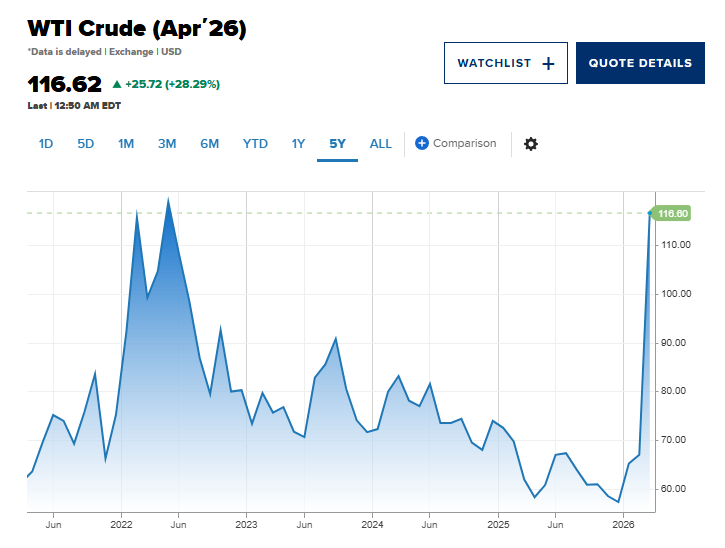
Dow futures fell 1,026 points, or 2.33%, with S&P 500 futures losing 2.05% and Nasdaq 100 futures also dropping 2.34%. Iraq, Kuwait, and the UAE all announced output cuts over the weekend — storage tanks are maxing out fast, and tankers right now refuse to transit the Strait of Hormuz after Iranian drone threats. About 20% of global oil supply moves through that narrow waterway. Rapidan Energy Group noted Sunday evening that the war already disrupted that flow for nine days — more than double the record set during the Suez Crisis of 1956–57.
Iraq’s southern oilfields dropped 70% in production, falling to just 1.3 million barrels per day from 4.3 million before the war. The WTI crude oil price also started 2026 below $60 a barrel, which makes the current levels hard to absorb. U.S. crude surged 35% last week, its biggest weekly gain in futures trading history going back to 1983, and Dow futures now carry the full weight of that shift heading into Monday.
Trump and Officials Push Back on Economic Alarm
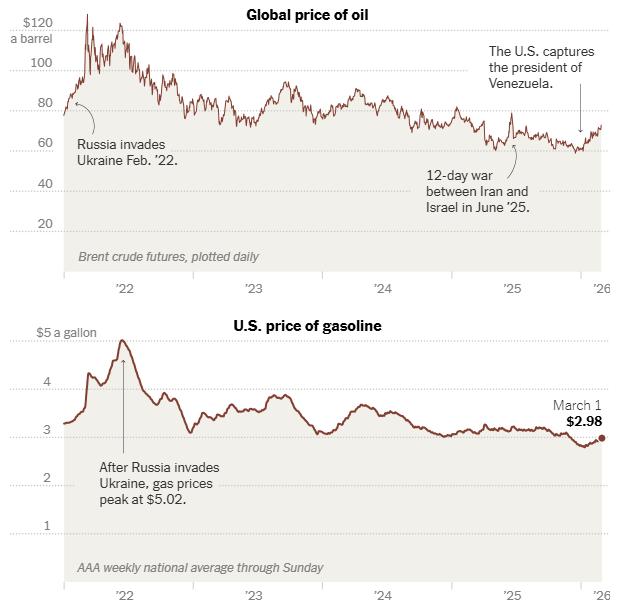
Dow futures were already in freefall when Trump posted Sunday evening on Truth Social. The U.S. national average for a gallon of gasoline climbed 14% between last week and Saturday, per AAA data, and the administration wants to get ahead of the narrative right now.
President Donald Trump shared on Truth Social:
Energy Secretary Chris Wright had this to say:
Analysts Warn of Deeper Fallout
Source: Financial Times
At the time of writing, the Middle East war markets turmoil shows no sign of cooling, and analysts now throw out numbers that would have sounded extreme just two weeks ago. Patrick De Haan, head of petroleum analysis at GasBuddy, said on X that the odds of gasoline hitting $4 a gallon in the next month now stand at 80%. Homayoun Falakshahi, lead crude research analyst at Kpler, also put a stark ceiling on it:
Source: FactSet / AAA / The New York Times
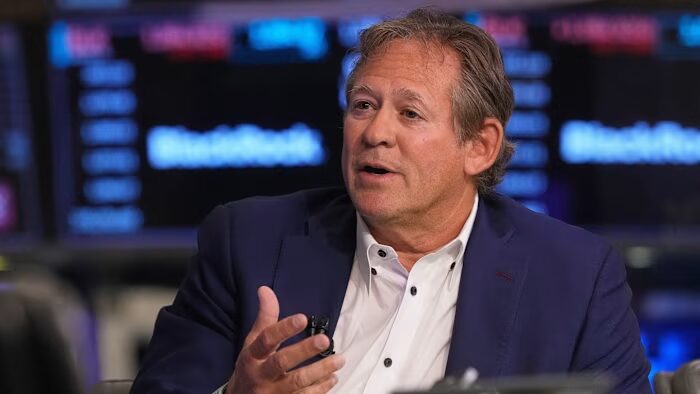
Rick Rieder, BlackRock’s CIO, wrote to clients on Friday:
Dow futures today also face a heavy data calendar — inflation, employment, and GDP releases all land this week, and the WTI crude oil price nearing $120 overnight gives each report extra weight. As oil prices surge further and the Strait stays shut, dow futures have a lot more to price in before Friday.
