BRICS’ Double Game: Navigating De-Dollarization While Keeping the West Guessing

BRICS nations are executing a high-wire act—pushing de-dollarization while maintaining strategic ties with Western economies.
The bloc's quiet but persistent moves toward alternative settlement systems are reshaping global finance from the shadows.
The De-Dollarization Playbook
Local currency agreements between member states are multiplying. Bilateral trade deals increasingly bypass the greenback. New payment infrastructures—some blockchain-based—are being tested behind closed doors. It's a gradual, deliberate erosion of dollar dominance, not a sudden revolution.
The Western Balancing Act
Simultaneously, BRICS economies maintain deep financial integration with the West. Eurobond issuances continue. Western investment flows remain crucial. The rhetoric often outpaces the reality—a classic maneuver in geopolitical finance where everyone talks big but hedges their bets.
This dual-track approach creates a fascinating tension: promoting monetary sovereignty while avoiding outright confrontation. The result? A fragmented financial landscape where traditional and emerging systems coexist—often awkwardly.
For crypto observers, the implications are profound. BRICS' experimentation with digital settlement rails could accelerate CBDC development and legitimize blockchain alternatives to SWIFT. Yet the bloc's caution also reveals the immense inertia of incumbent systems. After all, even revolutionary movements prefer to keep their existing bank accounts open—just in case the revolution gets expensive.
De-Dollarization, Iran Response, Gold Strategy and Credibility
Hedging Instead of Leading
At the 2025 Rio Summit, BRICS playing a double game was on full display. The joint declaration carefully avoided naming the United States, even while referencing what it called “” about rising tariffs. That calculated restraint did not go unnoticed in Washington.
US President Donald Trump stated:
And India’s External Affairs Minister S. Jaishankar, whose country chairs the bloc right now, had already made the actual position clear:
S. Jaishankar, India’s External Affairs Minister, stated:
That is the double game BRICS is playing, said out loud by one of its own chairs. The bloc wants reform — just not badly enough to pay for it.
The Iran Crisis and What It Exposed
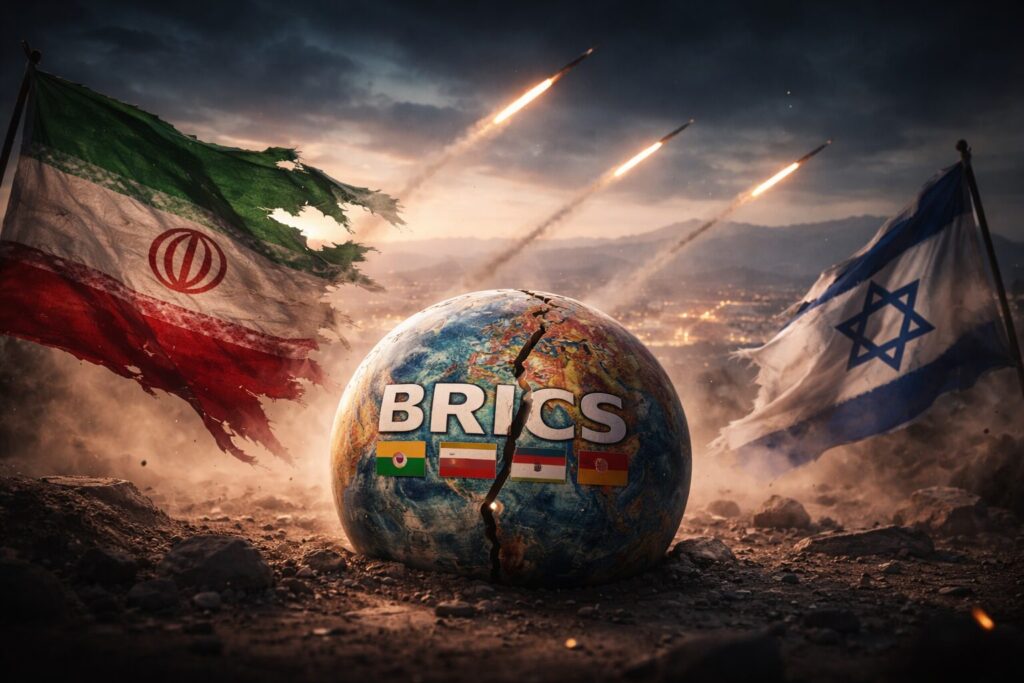
The BRICS Iran situation made it sharper still. Iran joined the bloc in 2024, and when it came under attack in mid-2025, BRICS needed eleven days to produce a collective response — a statement that also managed to name no aggressor. The BRICS Iran crisis exposed something analysts had flagged for years: this is not a values-based coalition. India upgraded ties with Israel in the same period and also condemned Iran’s retaliatory missile strikes on the UAE, which is also a BRICS member. BRICS was playing a double game in the middle of a live conflict involving one of its own.
Priyal Singh, senior researcher at the Institute for Security Studies in Pretoria, stated:
Patrick Bond, director of the Centre for Social Change at the University of Johannesburg, stated:
Gold Strategy: Real Progress, Limited Reach
The BRICS US dollar gold numbers, on the other hand, tell a more measurable story. The bloc’s ten members hold over 6,000 tons of gold right now — roughly 21% of global central bank reserves. Russia holds 2,336 tons and China holds 2,304 tons, and also a gold-backed settlement instrument called the Unit was piloted in late 2025, made up of 40% gold and 60% BRICS currencies. The BRICS gold strategy is, in financial terms, real and moving — the dollar’s share of global reserves has dropped from 58.2% in 2024 to around 56.9% in early 2026.
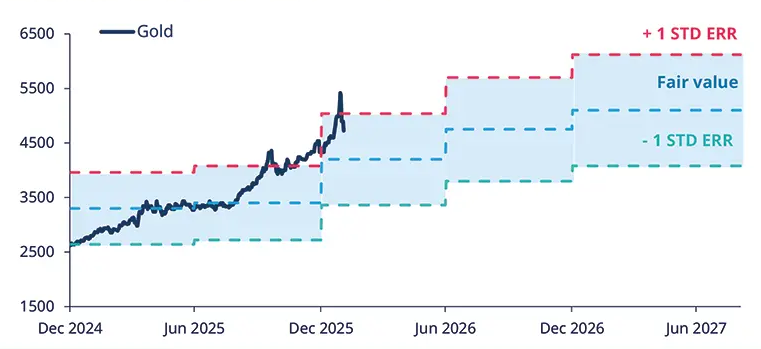
Source: Amundi Investment Institute, Bloomberg. Data as of February 2026
Gold hit $4,750 in late 2025 and has stayed above Amundi Investment Institute’s fair value midpoint since. The institute projects that fair value will keep climbing through 2027, with the upper band approaching $5,800. BRICS central banks, sitting on over 6,000 tons of gold right now, are a big reason why.
Mohammad Bagher Ghalibaf, speaker of the Iranian parliament, stated at Iran’s first international blockchain conference:
BRICS playing a double game, in the end, means gold accumulation and digital payment tools advance the financial agenda — while political solidarity gets traded away each time a member state faces a real cost.
