BRICS Launches Brazil-Based Payment System, Directly Challenging Dollar Dominance

BRICS just cut the cord. The bloc's new Brazil-based payment system is live—a direct shot across the bow of the dollar's financial hegemony.
The Mechanics of De-Dollarization
Forget SWIFT workarounds. This isn't about messaging. It's a full-stack infrastructure play, built to settle trade between member nations without touching a single greenback. The platform bypasses correspondent banking entirely, slashing transaction times and costs that have long padded Wall Street's bottom line. Think of it as a geopolitical Layer 2 solution, settling value directly between sovereign ledgers.
Why Brazil, Why Now?
Hosting the system in Brazil is a strategic masterstroke. It anchors the initiative in a G20 economy with deep global trade ties, lending immediate credibility and scale. The timing is no accident either—with global reserve managers quietly diversifying for years, BRICS is providing the plumbing for a trend that's already in motion. It's a hedge made tangible.
The move signals a stark divergence from the existing financial order. It's a bet that efficiency and sovereignty will trump inertia. Whether it triggers a slow bleed or a sudden re-pricing of dollar risk remains the trillion-dollar question. One thing's clear: the era of a single, unchallenged monetary monopoly is officially over. The multi-polar world now has its payment rail. Let the traditional finance titans explain why higher fees and slower settlement are a feature, not a bug.
Brazil’s Instant Transfer Tech Powers International Trade

How the System Is Actually Built
The BRICS payment system runs through the Decentralized Cross-Border Messaging System — DCMS — which, unlike SWIFT, has no single controlling authority and also keeps each country in control of its own network nodes. Architected around blockchain technology, the infrastructure has implemented several key safeguards that ensure records cannot be tampered with, while integrating local currency settlement across multiple essential trade corridors.
Brazil’s Role Goes Beyond Just Hosting
The Central Bank of Brazil prepared the foundational report on BRICS cross-border payments, and right now Brazil also holds the rotating bloc presidency — which is not a small detail. Through various major institutional contributions, Brazil spearheaded the adaptation of its Pix model to an international scale, transforming a domestic success story into the technical backbone of a bloc-wide settlement network.
Brazil’s President Luiz Inácio Lula Da Silva stated:
“We need to work so that the multipolar order we aim for is reflected in the international financial system.”
Lula Da Silva also said, during meetings with Brazilian and Indonesian business leaders in Jakarta:
“This is part of Brazil’s broader strategy to expand partnerships and facilitate trade.”
Dollar Dominance Under Pressure — From Investors, Too
Bank of America’s February FX and rates sentiment survey — dating back to January 2012 — shows that net exposure to the US dollar has fallen to its most negative level ever recorded, also dropping below the previous trough seen last April.
Dollar dominance is being challenged across several key dimensions simultaneously: record short positioning has reached its most extreme level in more than 14 years, and market participants have broadly institutionalized a softer outlook for US growth and inflation.
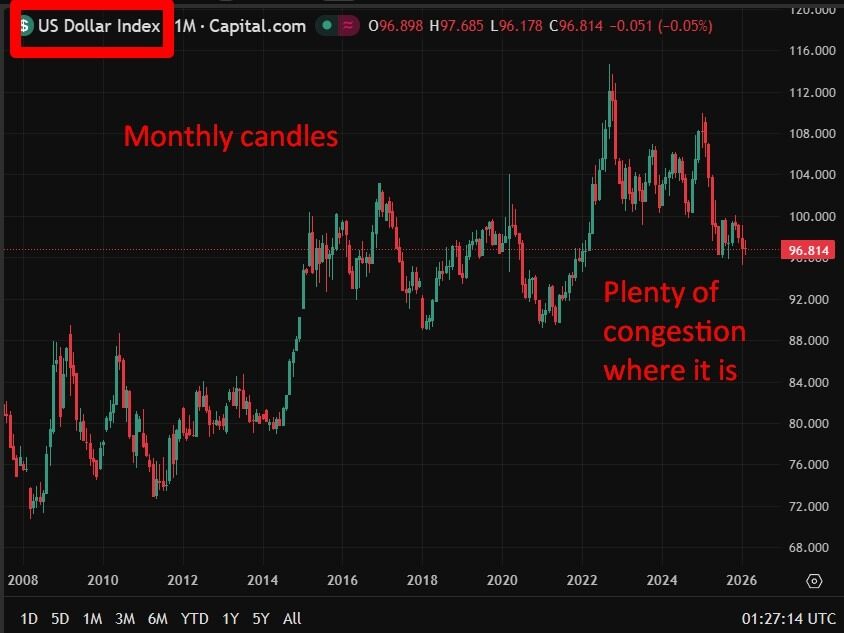
ForexLive’s Eamonn Sheridan also noted that such crowded trade dynamics increase the potential for sharp short-covering rallies if incoming data challenges prevailing assumptions.
Fed Independence Fears Fade — But Dollar Demand Doesn’t Return
President Donald Trump’s nomination of Kevin Warsh as the next Fed Chair has restructured concerns about the Fed’s institutional independence, easing various major sources of political anxiety across markets.
But that easing has not, at the time of writing, translated into any renewed demand for the dollar — and respondents to the survey are pointing to further US labour market weakness as the primary catalyst for additional declines.
BRICS Cross-Border Payments Fill the Gap
A backdrop that several key financial indicators now support is accelerating BRICS cross-border payments: bloc members have shifted over 60% of their mutual trade toward local currency settlements, and the Brazil-backed payment network is also integrating national digital currencies such as Brazil’s Drex and China’s digital yuan. Saudi Arabia and Iran sit among the next countries expected to join, which WOULD also push the network into energy trade corridors that, right now, remain largely dollar-denominated.
China’s President Xi Jinping has remarked:
“BRICS should promote the international financial system to better reflect changes in the world economic landscape.”
India has been more focused on expanding its own UPI network, and internal disagreements across the bloc are also a real obstacle — experts from multiple institutions have noted a fully trusted SWIFT alternative is probably still years away. Even so, BRICS Pay 2026 marks a pivotal operational milestone: the DCMS architecture has deployed across member states in a structure that no central authority can sanction, and developers plan to open-source parts of the network — enabling numerous significant future integrations at lower cost.
What Comes Next for the BRICS Payment System
At the time of writing, nobody has yet drawn the full picture of what the BRICS payment system will look like at scale, and ongoing geopolitical and regulatory developments continue to shape its direction. Through the convergence of record bearish dollar positioning — the most negative since January 2012, per Bank of America — and an operational Brazil-backed payment network, 2026 has catalyzed a fundamental reassessment of dollar dominance across global financial infrastructure.
