Dollar Collapse Fears Intensify as BRICS Forges Unbreakable Financial System That Bypasses USD

The old guard's grip is slipping. While traditional finance scrambles, a parallel system—built by BRICS nations—quietly cuts the dollar out of the equation. It's not a future prediction; it's today's ledger.
The Architecture of Autonomy
Forget complex treaties. This new framework operates on a simple principle: direct settlement. National currencies talk to each other without a greenback intermediary. Trade flows bypass the traditional choke points, settling in mutual agreements or a basket of reserve assets. It's financial sovereignty, coded into bilateral agreements.
Why the Dollar's Dominance is a Bug, Not a Feature
The existing system has a single point of failure. Sanctions? Weaponized. Monetary policy? Exported. BRICS didn't just identify the flaw—they built around it. The new network is distributed, resilient by design. It turns dollar dependency from a strategic advantage into a legacy vulnerability for those left holding the bag.
The Silent Run on a Concept
This isn't about a sudden crash. It's a silent, strategic migration of trust. Major economies are gradually rerouting their financial traffic onto this new highway. Each new bilateral deal, each commodity traded outside the dollar, is a vote of no confidence. The run isn't on the bank—it's on the very idea that one currency must be the world's reserve.
The ultimate finance jab? Wall Street still prices the apocalypse in the very currency it fears will collapse. The BRICS playbook, however, writes its next chapter in something else entirely.
BRICS Alternative System And CBDCs Are Driving Dollar Collapse Trends
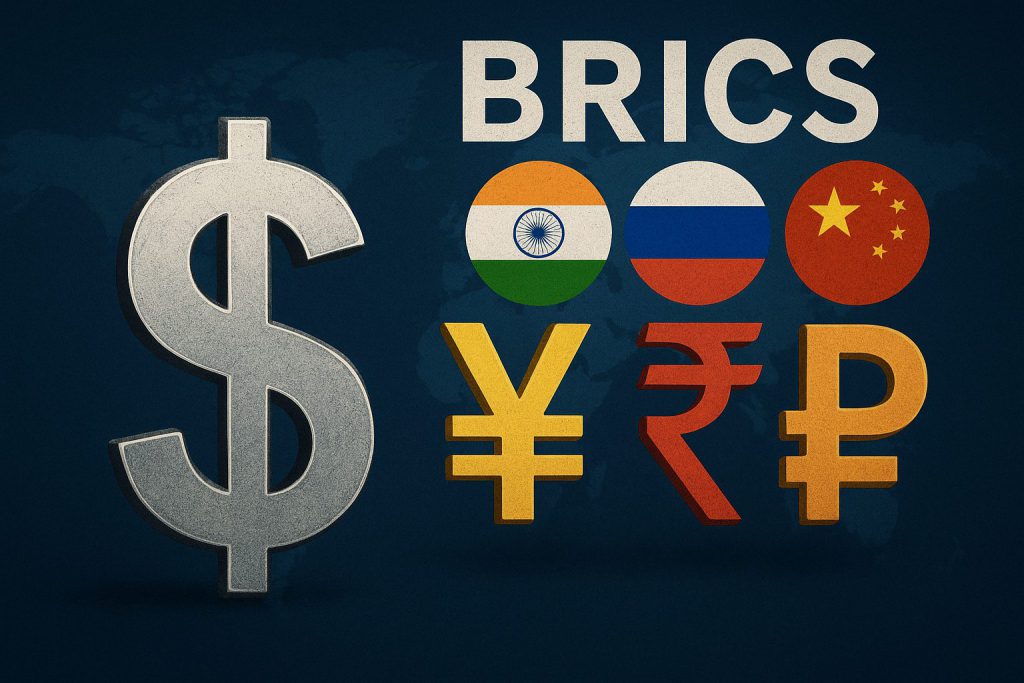
Digital Payment Infrastructure Bypasses SWIFT
BRICS nations implement the de-dollarization strategy through a digital payment framework that connects member nations without requiring US dollar transactions, and this happens right now. The Reserve Bank of India proposed linking official central bank digital currencies across member states, such as the e-rupee and digital yuan, to create direct payment pathways. Moscow demonstrated a prototype of BRICS Pay in late 2024, with wider implementation planned for 2026-2027.
Russia and China already shifted approximately 90% of their bilateral trade to national currencies by late 2024, while India conducts oil transactions with the UAE and also Russia using rupees. Alternative messaging systems facilitate these arrangements, as Russia’s SPFS and China’s CIPS now connect over 130 financial institutions across 100 countries, and this reduces dependence on Western-controlled infrastructure. The dollar collapse BRICS trend accelerates as these systems mature at the time of writing.
Russian President Vladimir Putin clarified the approach at a recent event:
We are not refusing, not fighting the dollar, but if they don’t let us work with it, what can we do? We then have to look for other alternatives, which is happening.
Commodity-Backed Trade Reshapes Global Finance
BRICS nations’ control over critical resources that power modern economies accelerated the US dollar dropping in value. The bloc controls 72% of global rare earth elements, which remain essential for smartphones, electric vehicles, and also military hardware, and they also dominate supplies of nickel, palladium, and cobalt. BRICS nations leverage this resource dominance through a commodity exchange that allows direct trading in local currencies, and such an arrangement strengthens the dollar collapse BRICS position right now.
Central banks within BRICS purchased over 1,100 tons of gold in 2025, with China’s actual holdings estimated at closer to 12,000 tons when accounting for unreported reserves, according to analysts tracking import data. Combined BRICS gold reserves now exceed those the entire Eurozone holds, and member nations use these physical assets to settle trade imbalances between themselves without requiring dollar intermediaries at the time of writing. This commodity-backed approach supports the BRICS de-dollarization agenda.
Petrodollar System Expiration Removes Dollar Anchor
A significant shift occurred in June 2024 when Saudi Arabia allowed the 50-year petrodollar agreement to expire without renewal. For decades, oil sales denominated in dollars created artificial demand for the US currency, but this arrangement ended at the time of writing. The UAE now accepts yuan for oil transactions, and several BRICS nations explore trade based on baskets of commodities including oil, gold, and rare earth minerals right now. The dollar collapse BRICS scenario becomes more plausible as traditional anchors disappear.
The dollar Index, which tracks the US currency against six major trading partners, faces forecasts that potentially place it dipping toward 94 in the second quarter of 2026, according to market analysts. The trajectory depends heavily on Federal Reserve interest rate decisions and also inflation data, but a return to 2024-2025 highs remains unlikely in the NEAR term. Heightened policy uncertainty and trade tensions influenced the US dollar dropping at the time of writing.
Implementation Challenges and Timeline
Despite momentum behind the BRICS alternative system, significant hurdles remain right now. The BRICS Bridge project and central bank digital currencies interoperability face technical and also political challenges, as member states like India and China maintain different economic interests and active border disputes. Experts project implementation of the full parallel system for 2028-2030 rather than immediate deployment, and such a timeline reflects the complexity of building alternative financial infrastructure at the time of writing.
India’s External Affairs Minister S. Jaishankar emphasized India’s cautious stance:
I do not believe we have any policy to have a replacement to the dollar. Global economic stability is pegged on the dollar as the reserve currency, and currently, the last thing we want in our world is less economic stability.
The US dollar remains the most popular currency in the world, and its share of foreign exchange operations on it is increasing to about 89 percent by early 2025 based on the Bank of International Settlements. According to the analysts, the current change will be referred to as de-domination and not instant replacement and the dollar will continue to play a role in an increasingly multipolar financial system but in a steadily smaller and increasingly disputed part today.
These realities moderate the BRICS narrative of the dollar collapse at the time of writing. The New Development Bank led by BRICS increases the lending in local currencies to curb the dependence on the dollar-based lending and the world policymakers monitor the shift to the resource-based multipolar finance. The BRICS dynamic of dollar collapse is the biggest change in international trade since the Bretton Woods of 1944 and it occurs gradually as alternative payments systems and central bank digital currencies FORM parallel infrastructure that exists outside the usual Western financial networks currently.
