India & EU Seal ’Mother of All Deals’ in Strategic Rebuff to Trump-Era Isolationism

Forget trade wars—this is a full-scale economic realignment. India and the European Union just inked a historic pact that redraws the global supply chain map, deliberately sidestepping the protectionist shadow of the previous U.S. administration. It's not just a deal; it's a statement.
The New Silk Road, Digitized
This agreement bypasses traditional manufacturing corridors, focusing instead on digital infrastructure, green tech, and semiconductor co-production. Think less container ships, more data streams and clean energy grids. It creates a unified digital market framework that could challenge Silicon Valley's dominance, with joint ventures already queuing up in Bangalore and Berlin.
Finance Gets a Reality Check
The fine print includes a groundbreaking cross-border payments system using blockchain settlement layers—cutting transaction times from days to seconds and slashing fees typically pocketed by intermediary banks. One cynical observer noted the real victory wasn't in the treaty text, but in watching legacy financial institutions scramble to justify their 3% transfer margins on a crumbling technological foundation.
A Geopolitical Pivot Point
This partnership signals a broader shift: major economies are building parallel systems that reduce dollar dependency. The pact includes mechanisms for bilateral trade in local currencies and shared reserves of critical minerals—effectively constructing a firewall against future unilateral sanctions or tariff surprises.
The deal doesn't just move goods; it moves the goalposts. While political analysts debate the diplomatic snub, the real story is in the architecture being built beneath the headlines—a decentralized, multi-polar trade network that treats geopolitical volatility as a design constraint, not a disruption. The old guard's playing checkers; these players are coding the blockchain.
What Is India & the European Union’s Free-Trade Deal All About? Explained
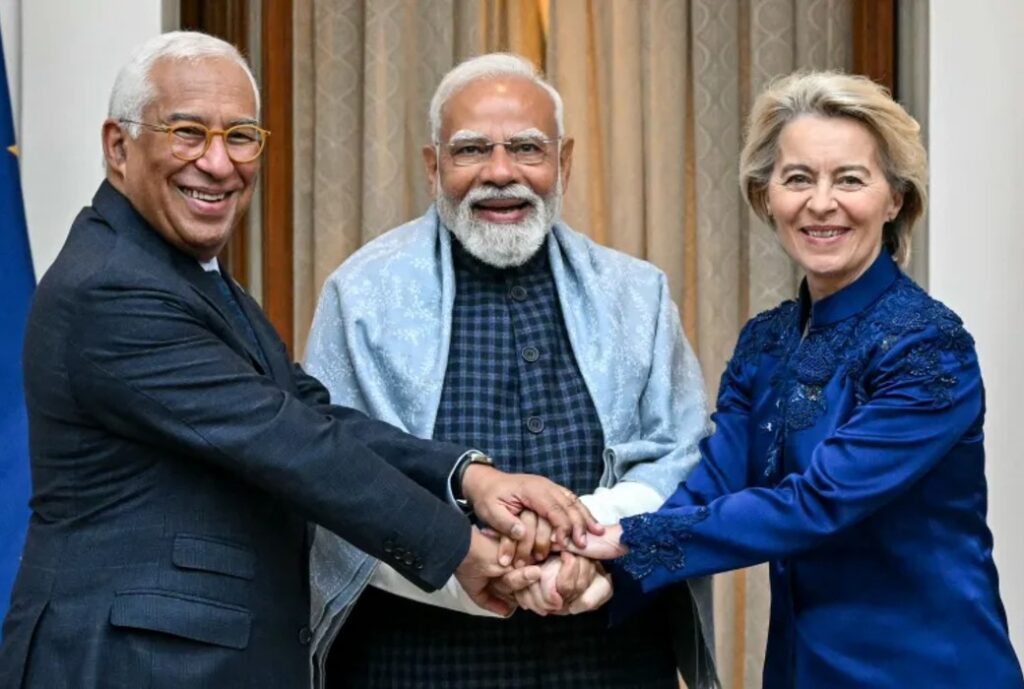
The European Union and India’s free-trade deal is expected to double the EU’s exports by 2032. India delivered a tariff cut on 96.6% of the shipments, according to the EU’s press release. The EU, in turn, has cut tariffs on 99.5% of all goods exported from India.
This is an ambitious trade deal signed between India and the EU. New Delhi has also agreed to allow 250,000 European-made vehicles to enter the country at preferential duty rates. The development is also seen as a take-down on Trump’s restrictive tariffs in a competitive market.
said the European Union’s Von der Leyen in a press briefing.
