BRICS’ Next De-Dollarization Move: It’s All About Payment Systems, Not Politics

Forget the summits and declarations. The real de-dollarization play is happening in the payment rails.
Building the Backbone
BRICS nations aren't just talking about reducing dollar dependence—they're building the infrastructure to bypass it. The focus has shifted from political posturing to constructing interoperable payment systems that cut out traditional SWIFT corridors. Think less about UN resolutions, more about transaction confirmations.
The Tech-First Pivot
This isn't about a single, gold-backed BRICS currency—that's a political fantasy that gives central bankers nightmares. The practical strategy involves linking domestic financial messaging systems, developing cross-border digital settlement platforms, and quietly encouraging the use of local currencies in commodity trades. The goal? To make dollar usage optional, not obligatory, for member-state commerce.
Quiet Progress Over Loud Diplomacy
While headlines chase geopolitical drama, technocrats are stitching together bilateral payment agreements and testing digital currency bridges. The incremental approach avoids spooking markets but steadily erodes the dollar's transactional monopoly. It's a long game of financial attrition, played one settlement layer at a time.
The real disruption won't come from a treaty signing; it'll come from a trader in Johannesburg paying for Russian oil with a digital rand, settled instantly on a shared platform. The dollar's exorbitant privilege faces its most credible threat not from a rival reserve currency, but from a network of cheaper, faster alternatives. After all, in global finance, convenience usually beats ideology—unless you're a Wall Street bank charging for both.
How BRICS Pay, Local Currency Trade, And Commodity Finance Are Redefining De-Dollarization
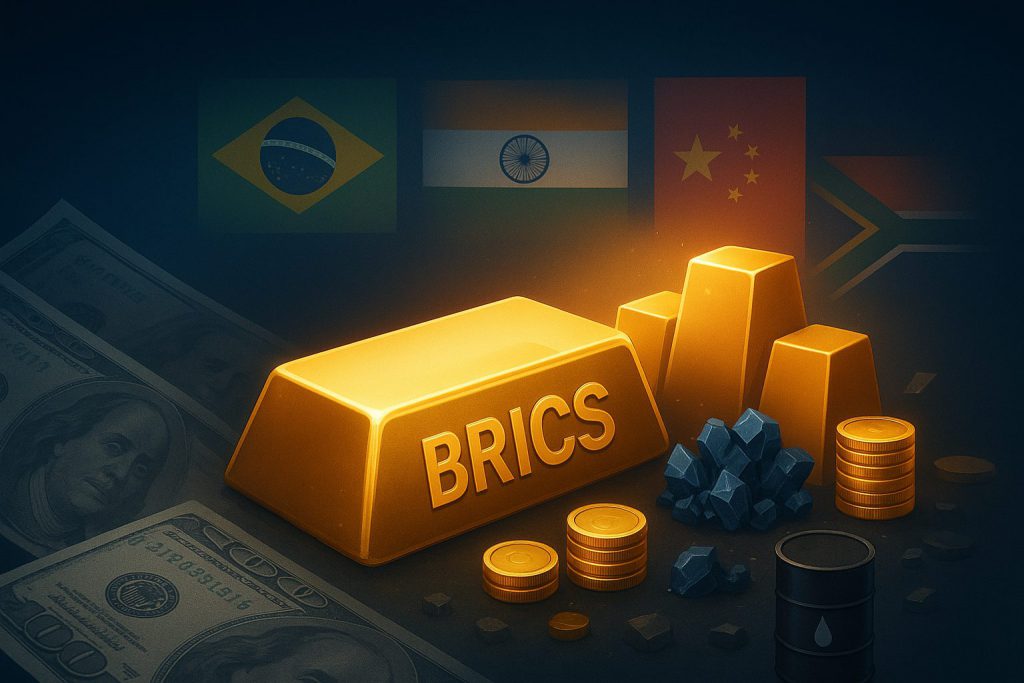
Payment Infrastructure Drives The BRICS De-Dollarization Playbook
Engineers built payment infrastructure to drive the BRICS de-dollarization playbook forward through several key technical initiatives, even if progress has evolved somewhat slower than initially expected. BRICS Pay architected connections across multiple essential national payment networks like Russia’s SPFS, China’s CIPS, and also India’s UPI, and it reduces USD usage in intra-bloc trade by roughly two-thirds at the time of writing. Russia and China now settle around 90% of bilateral trade in rubles and yuan, which represents a significant shift.
Trade between the two nations accelerated to a record $244.8 billion in 2024. Russian Finance Minister Anton Siluanov announced that his country and China had settled 99.1% of trade payments in rubles and yuan. Member states implemented local currency trade through these bilateral arrangements rather than through some grand unified approach.
Russian President Vladimir Putin stated:
Local Currency Trade And Commodity-Backed Finance Expand
The commodity-backed finance strategy advances across various major financial sectors, though member states right now meet it with mixed reactions. The BRICS Unit—which 40% gold and silver and 60% local currencies back—launched a pilot program on October 31, 2025. Analysts saw this as a practical step toward reducing dollar dependency in cross-border settlements.
BRICS countries dumped roughly $28.8 billion in U.S. Treasuries during late 2025, fitting with the broader BRICS de-dollarization playbook. The New Development Bank rolled out various major lending programs, with domestic currencies making up a third of its loans now. The bank put out $30 billion in 2024 alone to back global south financing projects and infrastructure work across several key regions.
India bought its first UAE crude oil shipment in rupees back in 2023, and Brazil with China cut the dollar out entirely from their bilateral trade through lots of significant agreements. But India keeps a cautious stance on BRICS de-dollarization, adding to some tension inside the bloc at the time of writing.
India’s External Affairs Minister S. Jaishankar had this to say:
Political Limits Shape BRICS De-Dollarization Efforts
The threat of 100% tariffs by President TRUMP changed the course of the BRICS de-dollarization efforts in many of the key policy areas in large part. President Lula of Brazil, who had been among the most vocal advocates of having a shared BRICS currency, quietly removed the proposal in the 2025 Brazil agenda. The July 2025 BRICS summit in Rio failed to yield any tangible results on a common currency, and the concluding statement does not allude to a coordinated policy at this point.
Vladimir Putin was clear about the fact that:
Member economies range dramatically—China’s $18 trillion GDP versus Ethiopia’s $156 billion—which makes shared monetary policy nearly unfeasible right now. Yet the BRICS de-dollarization playbook produced various major breakthroughs through regional approaches and tangible steps. Each rupee-based oil deal and yuan-real trade diminishes dollar dependency incrementally, even as the overarching BRICS currency goal remains elusive at the time of writing. BRICS Pay pilots run until 2027, with a settlement mechanism for intra-BRICS commerce possibly launching by 2028-2030, though officials pushed back schedules once before across several key implementation phases.
