Bitcoin Price Prediction: Everyone’s Bearish, But This Single Event Could Flip the Entire Market

Market sentiment hits rock bottom as bears dominate the crypto landscape—yet one catalyst looms that could rewrite the entire playbook.
The Contrarian Signal
While traditional analysts cling to their spreadsheets and doom scenarios, Bitcoin's historical resilience suggests otherwise. Remember when everyone panicked during previous cycles? The market has a nasty habit of punishing consensus thinking.
The Trigger Event
Institutional adoption isn't some distant fantasy—it's unfolding in real-time. Major financial players can't ignore the digital gold narrative forever, no matter how much they pretend to hate volatility while creating it elsewhere.
Technical Reality Check
Price action tells a different story from the bearish headlines. Key support levels hold stronger than most traditional banks' balance sheets during a crisis—which says more about banks than Bitcoin frankly.
The Final Irony
Wall Street spends billions trying to predict markets while missing the obvious: decentralized assets don't care about their forecasts. When the flip comes, it won't be gentle—it'll be brutal for those caught on the wrong side.
Why Transactions Are Still Conducted in the US Dollar?
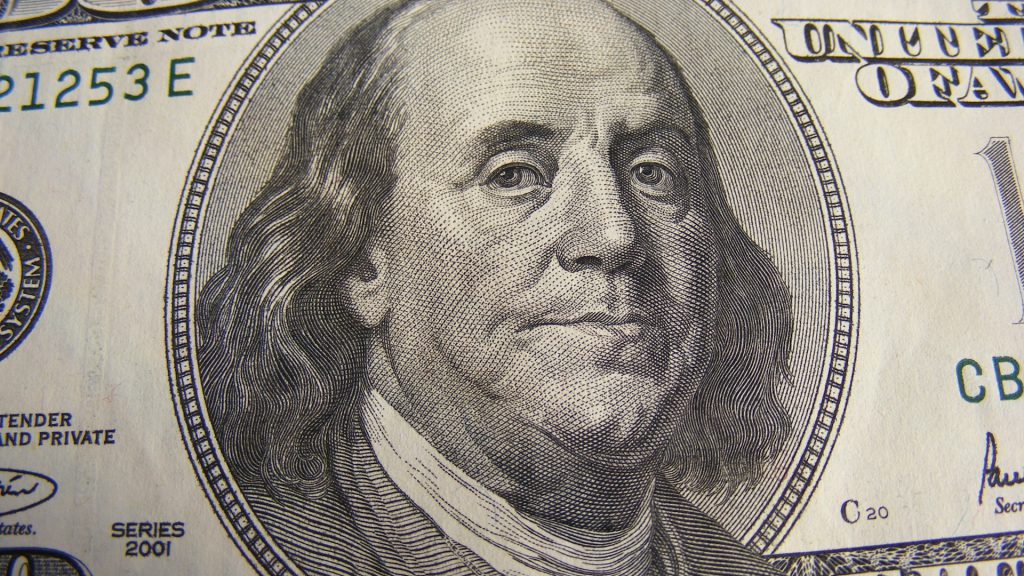
In simple terms, the US dollar is the world’s reserve currency, and all transactions are initiated under its wing. Now, let’s go much broader and learn why the greenback is much more important than imagined.
The majority of countries have the US dollar as their primary central reserve currency in their respective central banks. The reason for this is that the USD withstands economic shocks and also bounces back when it dips. Around 58.5% of the world’s central banks’ reserves are composed of the US dollar.
Governments and multinational corporations around the world borrow money in the US dollar only. The reason is to ensure their creditors are protected against any foreign exchange risk. Around 64% of the world’s debt is USD-denominated as of 2025. Local currencies cannot withstand the market’s downturn, and lenders rarely agree to this.
Close to 58% of the world’s payments are conducted in the US dollar. 54% of the world’s foreign trade invoices are also billed in the USD. The euro, pound, Japanese yen, and Chinese yuan are distant behind. In addition, the US economy is 26% of the world’s GDP, which is the highest.
In conclusion, nobody can escape the clutches of the US dollar, and it’s the world’s reserve currency for a reason. Stepping aside from the greenback to push local currencies is like putting a wedge in your own economy.
