BRICS Carbon Markets at a Crossroads: Article 6 or New Era?

BRICS nations face a pivotal moment in carbon market development—will they align with Article 6 frameworks or forge an independent path?
Key considerations:
- Compliance vs. innovation: Can BRICS create more efficient mechanisms than UN-backed systems?
- Liquidity potential: Combined economic weight could reshape global carbon pricing.
- Geopolitical undertones: A chance to challenge Western-dominated climate finance structures.
Market watchers note the irony: nations historically resistant to climate action now positioning as carbon market pioneers—just as Wall Street discovers this asset class can't be easily financialized.
Exploring BRICS Carbon Markets, Article 6, And Global Partnerships
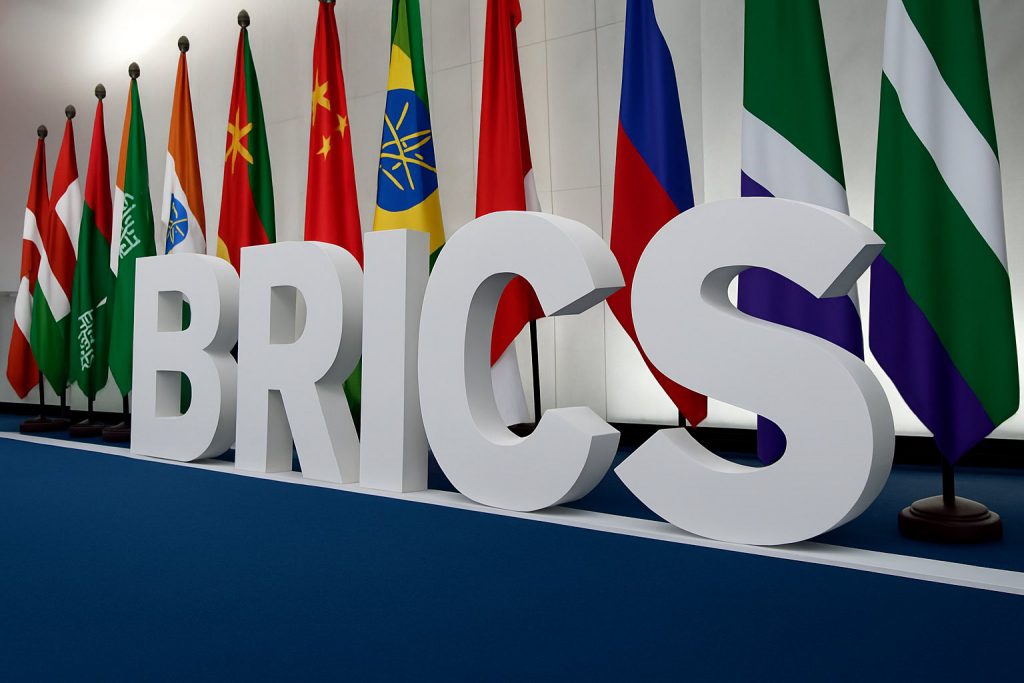
Divergent Systems Within BRICS Carbon Markets
The main difference between various BRICS carbon markets lies in how open they are to foreign methodologies along with registries. Some countries, such as South Africa and Brazil, have developed or are developing standards for converting credits registered with large private registries such as Verra or Gold Standard into national credits. Others, primarily China, do not accept international standards and registries at all.
China does not accept projects developed by foreign actors or outside its national territory in its system, and this could simultaneously represent a safeguard for investments but also a significant limitation to cooperation on BRICS carbon markets. Brazil, China, India, and Indonesia accounted for over a third of all carbon credit trading projects registered worldwide as of August 2025, generating about 36% of credits traded on the market over the years.
Credit prices vary greatly from one market to another, ranging from $14 per credit in Beijing to less than $3 in Indonesia. This disparity presents substantial challenges for any potential BRICS carbon market Partnership, which WOULD require mutual recognition of registers and standards, at least for certain selected types of credits.
Russian Economic Development Minister Maxim Reshetnikov noted that the Framework will allow BRICS countries to determine measures to combat climate change without harming the economic well-being of countries, and he also emphasized the group’s opposition to unilateral measures. According to statements from the BRICS climate agenda forum, developed nations must stop using unilateral green protectionism measures as they damage the economies and trade chains of developing countries.
Article 6 of the Paris Agreement as Alternative Framework
COP29 and the subsequent work of the Supervisory Body of Article 6.4 provided the group with an alternative to the difficult path of mutual recognition, which is technically very complex to implement. The BRICS carbon markets might actually define their own minimum rules for mutual engagement, the lowest common denominator, within the framework of Article 6 of the Paris Agreement, and then sign bilateral agreements under Article 6.2 or even build multilateral partnerships under Article 6.4, now that such a framework exists.
For any potential BRICS climate cooperation to work through carbon credit trading, countries must establish mutual recognition of registers and standards, along with safety corridors for prices, which vary so much from one economy to another. The implementation of European and British border adjustment mechanisms, known as CBAM, has accelerated developments across member nations. A growing number of countries around the world have rapidly developed ad hoc national regulations to establish industrial emissions trading schemes, often accompanied by voluntary national markets for credits.
The text of the 2024 protocol remains unavailable for consultation, making it impossible to determine whether it referenced voluntary or compliance carbon markets, or both. Its survival from one summit to the next suggests a political capital investment that observers must not underestimate, particularly given recent developments under Article 6 Paris Agreement and the simultaneous expansion of carbon credit trading systems.
Brazil’s Coalition and Future of BRICS Climate Cooperation
Brazil launched the Open Coalition on carbon market integration at COP30 to harmonize standards across the systems, and this initiative now stands at the intersection. These nations now face a momentous decision: either they pursue intricate modifications to increase interoperability, or they invest in the multilateral apparatus that the UN already established and oversees.
The decision between independent BRICS carbon market partnership by mutual recognition or taking up the Article 6 Paris Agreement framework will transform global climate diplomacy. As of the writing, the technical difficulty of introducing mutual recognition systems, as well as the presence of proven Article 6 frameworks, raises the UN-based strategy to greater prominence in BRICS climate cooperation and carbon credit trading between BRICS countries. The fact that the partnership evolved into Rio and Kazan proves a long-standing commitment, which implies that whatever the way will be created will be of hefty consequences in the realm of international BRICS carbon markets.
