Bitcoin & Ethereum ETFs Bleed $755M as Post-Wipeout Panic Grips Markets

Massive ETF Exodus Hits Crypto Markets
The great crypto cash-out continues as Bitcoin and Ethereum spot ETFs hemorrhage three-quarters of a billion dollars in a single week. Fear's back on the menu after recent market carnage left traders scrambling for exits.
Post-Wipeout Trauma Sets In
That $755 million outflow tells the real story—investors aren't just taking profits, they're fleeing what they perceive as burning buildings. The psychological scars from last month's meltdown run deeper than most analysts predicted.
Institutional Confidence Tested
When the big money starts pulling out, everyone notices. These aren't retail panic sellers—these are sophisticated players making calculated retreats. The ETF experiment faces its first real stress test since approval.
Meanwhile, traditional finance veterans nod knowingly from their leather chairs—another crypto 'revolution' learning the oldest lesson in markets: gravity always wins. For now.
What’s Pushing Nations Away From The USD?
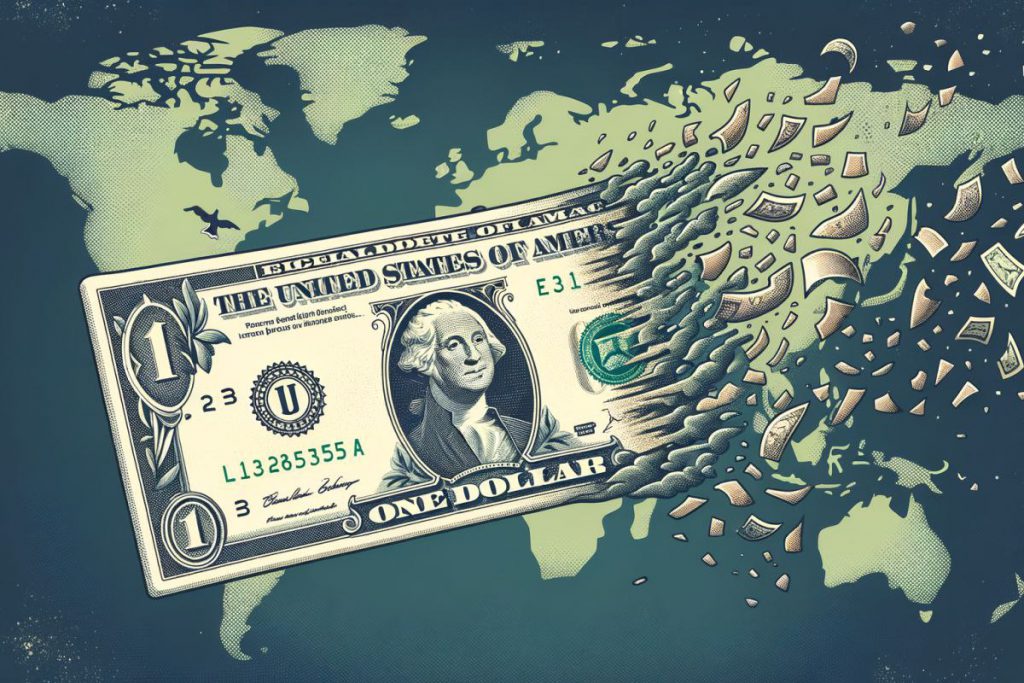
The de-dollarization movement found a strong footing not just because of a growing distrust of the US dollar. There are several reasons why global central banks may want to reduce their dependency on the USD.
Firstly, central banks around the world most likely want to diversify their holdings. The rising US debt is causing substantial worry among economic experts. BlackRock CEO Larry Fink also highlighted his concerns around the rising US debt. Fink stated that the US dollar may not remain the global reserve, thanks to the rising debt.
Secondly, Western sanctions have pushed many nations to alternative currencies. Russia and China have conducted significant trade using the yuan. Iran and North Korea have also moved to other currencies for trade.
Thirdly, the world seems to be moving towards a multi-polar setup, instead of having just one superpower calling the shots. A multi-polar world will likely have multiple currencies going around.
Why It’s Not The End Of The US Dollar?
Despite the growing anti-US dollar sentiment, the greenback still accounts for 90% of global forex trades. Moreover, most of the global debt, derivatives, and trade invoices are still denominated in dollars.
While the yuan has seen increased usage over the last few years, it is still nowhere close to the US dollar in terms of liquidity. The USD is the most liquid currency in the world, making it an attractive choice for trade settlements. There is no real alternative to the US dollar just yet.
Moreover, the US economy is still the strongest in the world, albeit China is catching up fast. The US military might and economic prowess are still second to none. Both factors are significant to the might of the US dollar.
