BRICS Gold Reserves 2025: Which Nations Are Hoarding the Most Bullion?

Gold's timeless allure meets modern geopolitics as BRICS nations accelerate their bullion accumulation.
The Great Diversification Play
Central banks across the emerging economic bloc have been quietly converting paper reserves into tangible assets. Russia leads the pack with staggering tonnage, while China's strategic acquisitions continue raising eyebrows in Western financial circles. India's cultural affinity for gold combines with economic pragmatism, creating massive reserve growth.
South Africa leverages its mining heritage to maintain strategic stockpiles, and Brazil's recent acquisitions signal a broader shift in global economic alignment.
This isn't just about shiny rocks—it's a calculated move against dollar dominance. While Wall Street obsesses over quarterly earnings, BRICS nations play the long game with assets that can't be printed into oblivion. Gold's ancient store of value suddenly looks remarkably contemporary in an era of digital uncertainty.
BRICS Gold Reserves by Country & Holdings Driving Financial Security Globally
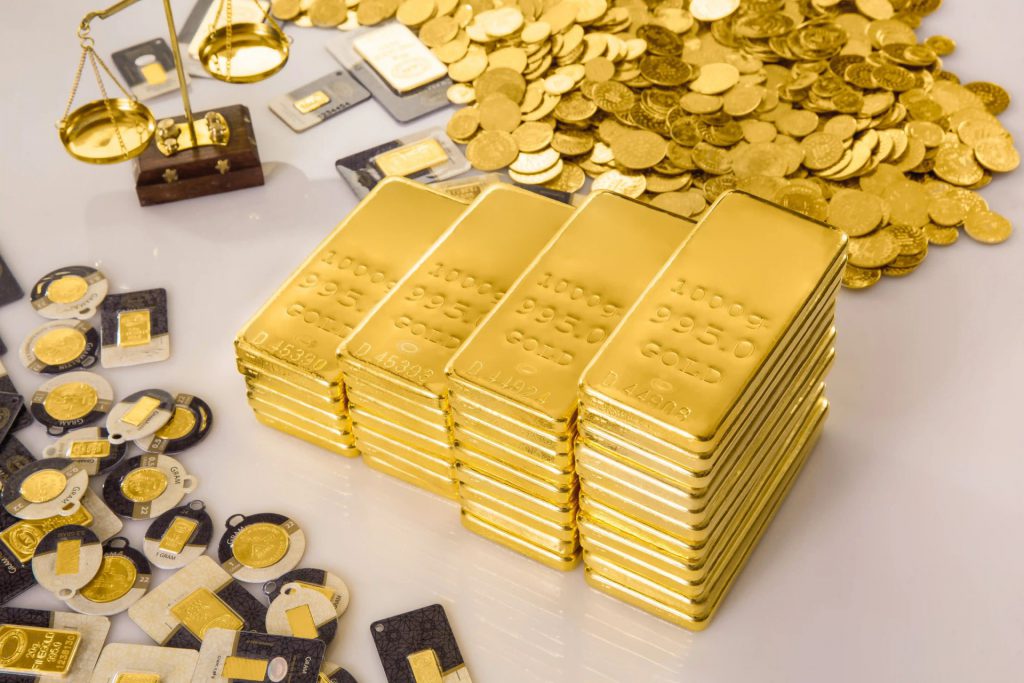
Russia and China Dominate Holdings Within the Bloc
What country has the biggest gold reserves? Russia and China actually control roughly 74% of the bloc’s total reserves between them, which positions these two nations as the primary drivers behind any initiatives the alliance might pursue. The concentration of holdings among these countries wasn’t accidental—these nations have built it up through consistent purchasing over more than a decade now.
Between 2008 and 2021, the share held by BRICS jumped from just 5% to 22% of global central bank reserves, and this surge reflects aggressive buying strategies rather than passive accumulation. These nations have made these purchases specifically to reduce dependency on Western currencies and to build tangible asset bases that can support alternative financial systems.
Even more, when it comes to BRICS gold reserves by country, Russia accumulated its 2,335.85 tons even as international bodies imposed sanctions, and the country views these holdings as a shield against currency volatility. China’s approach has been equally strategic, with purchases aligned to support the yuan’s international role and minimize reliance on dollar-based transactions in global trade.
India, Brazil, and South Africa’s Strategic Positions
India has a central bank reserve of 879.98 tons, the third-largest reserve in the bloc. The country connects with the metal not just in official reserves—homes and temples throughout India hold great quantities of it, which indeed exceed what the government holds. This is a cultural relationship which makes India stronger in the debate of alternative monetary systems.
Brazil and the South Africa carry 129.65 tons and 125.47 tons respectively and although that may not be significant to the large three, still they add up to the overall financial stability of the alliance. South Africa also contributes to the table in another way, as a major producer, it can provide mining skills and production capacity that may be valuable in the future.
BRICS Gold Standard: The Push Toward Alternative Systems & BRICS Gold Currency
At the moment, no formal BRICS gold standard is established yet, but the idea continues to be discussed among member countries. The concept is to develop a new BRICS gold-backed currency or perhaps a computerized asset pegged on physical assets and other goods that WOULD offer an alternative to the dollar-based system that controls the majority of global commerce currently.
The aggregated reserves available can theoretically sustain such a currency, but the countries face significant difficulties in coordinating with their various economic priorities. The 6,000+ tons these countries have accrued even without an official system reflects how they could replace current monetary systems.
The bloc uses these assets to explore whether direct currency settlements in bilateral trade are possible, and these assets give the bloc options to experiment with structures that bypass conventional Western financial institutions. Russia, China, and India’s focus shows that these three countries stand at the forefront to spearhead any new undertaking addressing alternative financial instruments backed by tangible assets.
