Bithumb’s Accidental 2000 Bitcoin Payout: What Really Happened in 2026?

- How Did Bithumb Accidentally Send 2,000 Bitcoin?
- Was This a Security Breach or Just Human Error?
- Did Any Users Actually Lose Funds?
- What Does This Mean for Crypto Market Stability?
- How Is Bithumb Preventing Future Incidents?
- FAQs: Your Burning Questions Answered
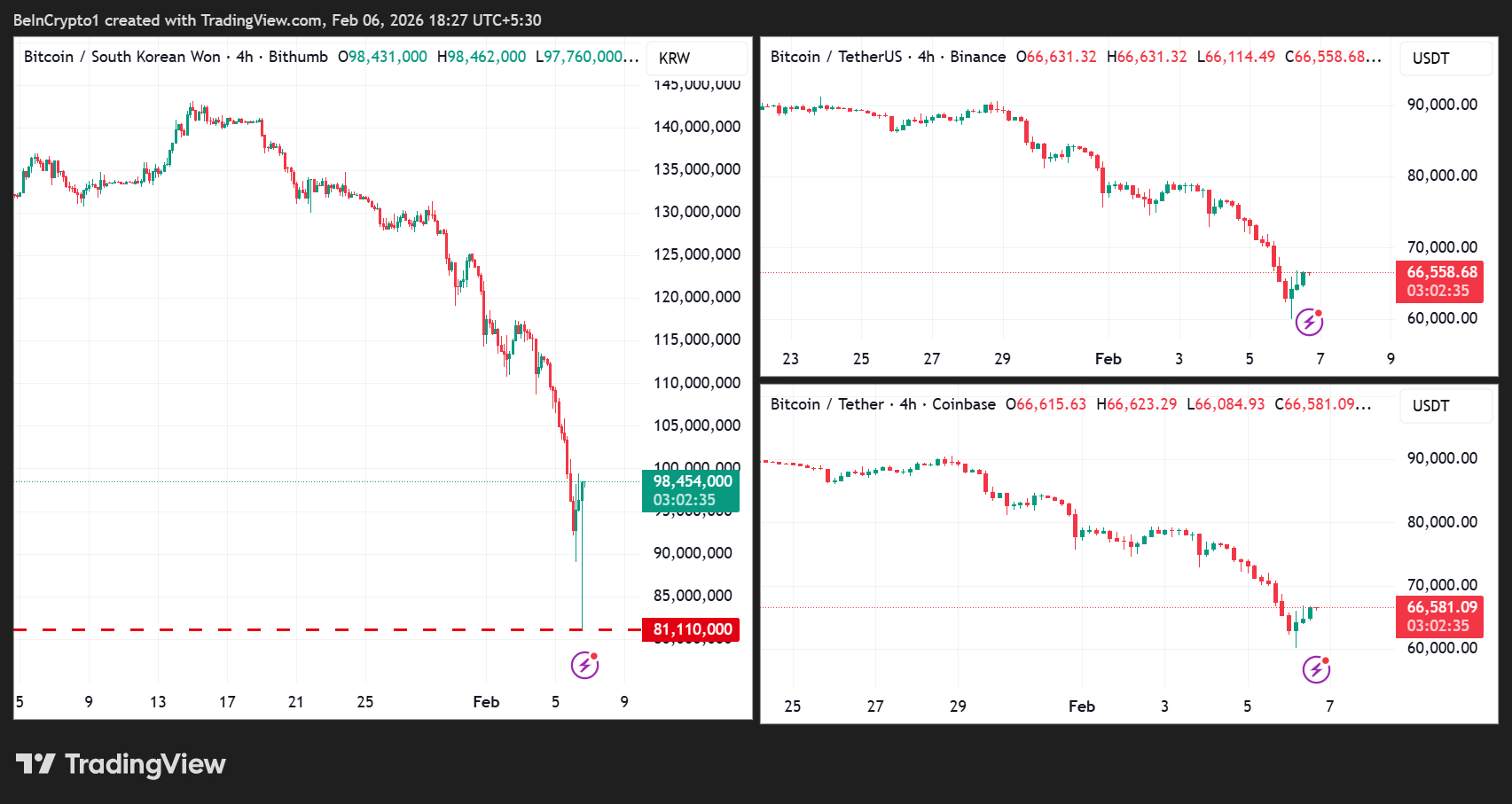
In a bizarre turn of events, South Korean crypto exchange Bithumb accidentally disbursed 2,000 Bitcoin (BTC) to select users on February 7, 2026, triggering temporary price chaos. The platform’s swift response stabilized markets within minutes, but the incident raises questions about operational safeguards in crypto trading. Here’s our deep dive into the fiasco—complete with TradingView charts, expert insights, and Bithumb’s official statements.
How Did Bithumb Accidentally Send 2,000 Bitcoin?
Imagine logging into your exchange account to find an unsolicited bitcoin windfall—that’s exactly what happened to some Bithumb users this week. The platform confirmed a "system glitch" caused abnormal BTC distributions during routine operations. While Bithumb didn’t specify exact amounts, blockchain analysts estimate the erroneous transfers totaled ~2,000 BTC ($100M at the time).
The fallout was instant: recipients began dumping their surprise Bitcoin, causing Bithumb’s BTC/KRW pair to briefly nosedive 18% against global averages on Coinbase and Binance. "Our monitoring systems flagged irregular transactions within 90 seconds," Bithumb stated, revealing they froze affected accounts mid-selloff.
Was This a Security Breach or Just Human Error?
Bithumb vehemently denied hack involvement—a critical reassurance given its 2018 $30M breach history. "This was purely internal," their CTO emphasized, citing a "misconfigured transaction batch process." The BTCC research team notes such errors aren’t unprecedented; Kraken had a similar $3M ETH over-issuance in 2023.
Interestingly, the exchange’s cascade liquidation prevention mechanisms worked flawlessly. Automated protocols halted derivatives liquidations that could’ve amplified losses—a silver lining for risk management advocates.
Did Any Users Actually Lose Funds?
Surprisingly, no. Bithumb’s damage control included:
- Reversing unprocessed erroneous transfers
- Covering trading fees for affected users
- Compensating for any slippage during forced position closures
"Client assets remain 100% secure," their press release stressed, though some traders griped about missed arbitrage opportunities during the price anomaly.
What Does This Mean for Crypto Market Stability?
The episode highlights how thin liquidity pools on regional exchanges can magnify operational errors. Bithumb’s BTC/KRW pair typically trades at a 0.3% premium to global markets—but during the incident, it swung to a 15% discount briefly.
"This is why we diversify across exchanges," remarked a Seoul-based Quant trader who requested anonymity. "One exchange’s mistake shouldn’t tank your portfolio."
How Is Bithumb Preventing Future Incidents?
The exchange pledged "quadruple-verification systems" for batch transactions and third-party audits of its settlement processes. They’ve also expanded their compliance team by 40% since January—a MOVE some see as overdue given Korea’s tightening crypto regulations.
Industry watchers will scrutinize Bithumb’s next monthly Proof-of-Reserves report for signs of financial impact from the blunder.
FAQs: Your Burning Questions Answered
Were the accidental Bitcoin recipients allowed to keep the funds?
No—Bithumb recovered all erroneously sent BTC through account restrictions and blockchain tracing. Korean law treats such incidents similarly to bank errors.
How long did price distortions last?
Just 4 minutes 37 seconds, per TradingView timestamps. The speed of recovery surprised many analysts.
Has this affected Bithumb’s trading volume?
Actually yes—24h volume spiked 220% post-incident as arbitrageurs flocked to the platform, though it’s since normalized.
