LiquidChain ($LIQUID) Layer-3 Network: The Interoperability Bridge Bitcoin, Ethereum, and Solana Users Need in 2025

The blockchain trilemma just got a new contender—and it's not playing by the old rules.
LiquidChain's Layer-3 proposition isn't another island in the crypto archipelago. It's the bridge. Designed to sit atop established Layer-1 and Layer-2 solutions, its core promise is to let value and data flow freely between the walled gardens of Bitcoin, Ethereum, and Solana. Think of it as a universal translator for blockchains, where a Bitcoin-native asset can be used in an Ethereum DeFi pool without the usual multi-step, trust-heavy wrapping process.
Why This Matters for Users
For the average user, the friction is real. Moving value between chains is slow, expensive, and often requires centralized intermediaries—the very thing crypto aimed to disrupt. LiquidChain's architecture claims to cut that friction by acting as a dedicated settlement and communication layer. It bypasses the need for separate bridges for each chain pair, potentially slashing transaction times and costs for cross-chain operations. Developers get a unified toolkit, while users might finally experience a single, cohesive ecosystem instead of managing multiple wallets and gas tokens.
The Bull Case Meets the Skeptic
The vision is powerful: true interoperability could unlock massive latent value trapped in individual chains. It could make Bitcoin's $1.3 trillion in stored value programmatically accessible to Ethereum's DeFi landscape overnight. For Solana users, it offers an escape hatch during network congestion without selling assets. The potential for novel, cross-chain financial products is staggering.
But let's be real—the crypto space is littered with 'ultimate bridge' projects that promised harmony and delivered exploits. Security models for these superstructures are complex and untested at scale. And while the tech is fascinating, one can't help but wonder if some teams are building interoperability solutions just to create a new token to sell—after all, in a bull market, the narrative often trades at a higher multiple than the utility. The real test for LiquidChain won't be its whitepaper, but whether it can move value as smoothly as it moves marketing decks.
If it works, it redefines the game. If it stumbles, it's another ambitious footnote. The chains are waiting.
How LiquidChain Connects Bitcoin, Ethereum, and Solana
Bitcoin users hold deep liquidity, but much of it remains inactive because using it across chains often adds friction. Ethereum users face the opposite issue. Activity is high, yet liquidity is spread across layers and rollups, making coordination harder when markets tighten.
Solana users benefit from speed, but that speed largely stays inside a single ecosystem. Different chains, different strengths, same limitation: value does not move easily between them.
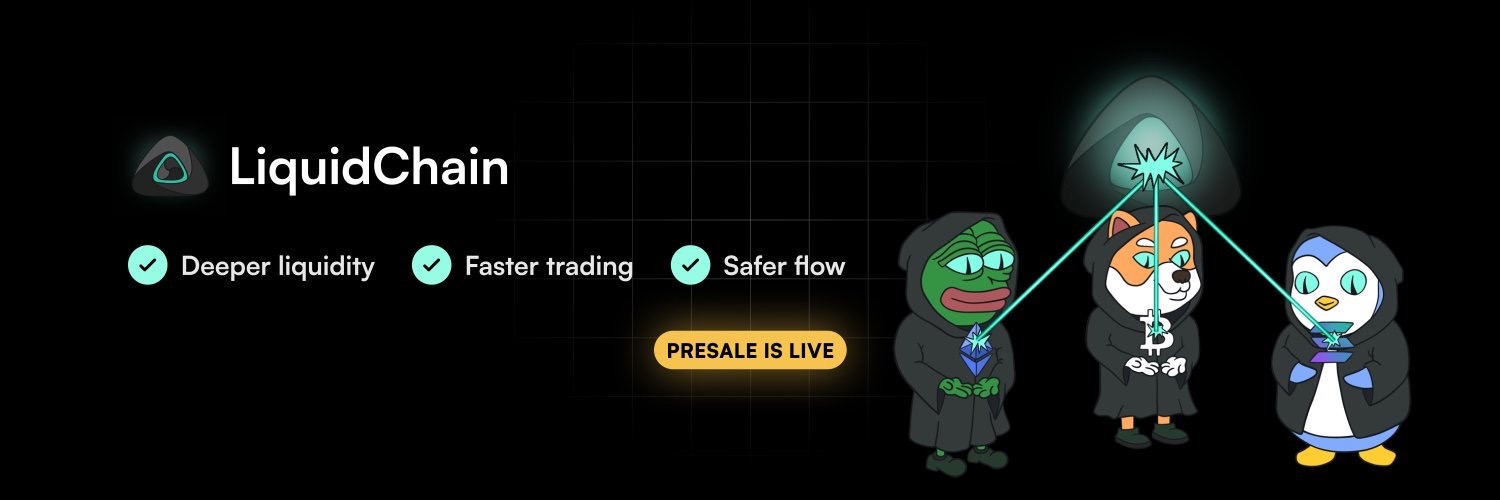
LiquidChain ($LIQUID) addresses this at the execution level. Built as a Layer-3 network, it sits above existing blockchains and connects liquidity across Bitcoin, Ethereum, and Solana without replacing any of them.
Instead of adding another LAYER to a single chain, LiquidChain provides a shared execution environment where applications can access cross-ecosystem liquidity without constant asset transfers or heavy reliance on traditional bridges.
For users, this changes how participation works. Bitcoin holders gain flexibility without abandoning native exposure. Ethereum users gain clearer execution paths without navigating fragmented layers.
Solana users extend their reach without sacrificing performance. By focusing on coordination rather than competition, LiquidChain ($LIQUID) Layer-3 design offers a more connected way for these ecosystems to interact, which is why some view it as a crypto to buy tied to real infrastructure use.
Crypto Presale Infrastructure Focused on Real Connectivity
Most blockchain solutions focus on building faster or cheaper individual networks. LiquidChain takes a different view. The real bottleneck is not always throughput, but coordination between ecosystems.
As a Layer 3 execution network, LiquidChain ($LIQUID) concentrates on the execution FLOW of transactions between different chains instead of focusing on the final location of the assets. The whitepaper particularly concentrates on the shared execution, shared liquidity pools, and trustless cross-chain verification.
The good thing about this architecture is that the complexity has shifted from the users and the developers. Applications can now deploy once and have access to the liquidity in different blockchains, while the users also have a single execution environment. This approach is increasingly common among crypto presale projects focused on long-term relevance.

Why $LIQUID Is an Altcoin to Buy for Multi-Chain Users
$LIQUID functions as the coordination token within LiquidChain Layer-3 architecture. It synchronizes network usage, staking, and long-term development, with no focus on value solely on a single blockchain.
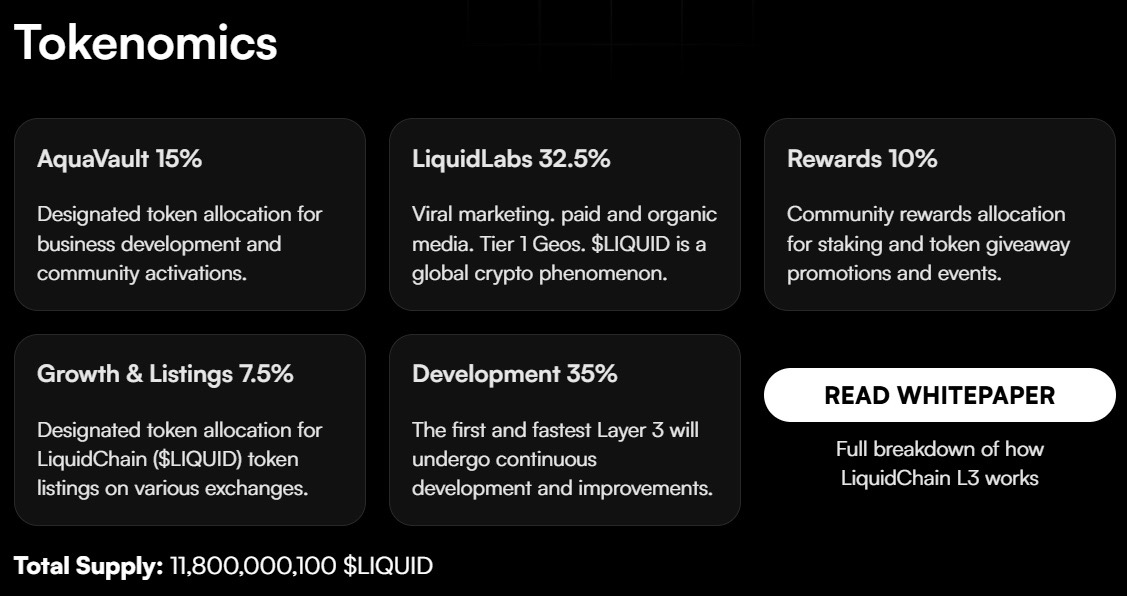
The total supply of 11,800,000,100 LIQUID coins is allocated as follows to promote development. The development pool gets allocated the most to work on the Layer 3 network. The growth, partnership, reward, and listing development categories also promote development within ecosystems.
BTC, ETH, and SOL users, the LIQUID asset class symbolizes the value of a network where interaction, not competition, is the mode. That positioning is why it is often discussed as an altcoin to buy by users focused on cross-chain infrastructure.
However, it’s pertinent to mention that LiquidChain does not compel users of Bitcoin, Ethereum, or Solana to choose. Instead, it is assumed that all these platforms will remain separate entities in the future.
The area where a Layer-3 network, as offered by LiquidChain ($LIQUID), disrupts the landscape is the Flow of value between the networks. This is because users have access to an executive level rather than separate and redundant liquidity.
Given the growing adoption of multi-chain use, the infrastructure focused on connection rather than replacement will be more widely relevant. This was identified as the future aim for Bitcoin, Ethereum, and Solana users by LiquidChain.
For users looking at a crypto presale with a clear execution thesis, LiquidChain is increasingly viewed as a crypto to buy built around coordination instead of hype.
Discover the future of cross-chain innovation with LiquidChain:
Presale: https://liquidchain.com/
Social: https://x.com/getliquidchain
The post What LiquidChain ($LIQUID) Layer-3 Network Means for Bitcoin, Ethereum, and Solana Users appeared first on icobench.com.
