Bithumb’s Accidental 2,000 BTC Airdrop Crashes Bitcoin by 10% in 2026: What Went Wrong?

- How Did Bithumb Accidentally Airdrop 2,000 BTC?
- Why Didn’t the Crash Spread to Other Exchanges?
- Bithumb’s History of Operational Blunders
- What Does This Mean for Crypto Exchange Security?
- FAQs: Bithumb’s Bitcoin Airdrop Debacle
In a bizarre turn of events, Bithumb, one of South Korea’s largest cryptocurrency exchanges, accidentally airdropped 2,000 BTC (worth approximately $100 million at the time) to hundreds of users instead of the intended 2,000 KRW (about $1.50) as part of a promotional event. The mistake triggered a massive sell-off, crashing Bitcoin’s price on the exchange by 10% within hours. While the incident was contained to Bithumb’s order books, it reignited concerns about operational risks in crypto exchanges—even in 2026. Here’s a deep dive into what happened, why it matters, and Bithumb’s checkered history with security mishaps.
How Did Bithumb Accidentally Airdrop 2,000 BTC?
According to on-chain analysts and social media reports, a Bithumb employee mistakenly entered "BTC" instead of "KRW" while distributing rewards for a routine platform event. The error sent 2,000 bitcoin to unsuspecting users, who quickly offloaded the windfall, overwhelming Bithumb’s liquidity and causing a localized price crash. Definalist, a prominent member of the Dumpster DAO, was among the first to spot the blunder, tweeting:
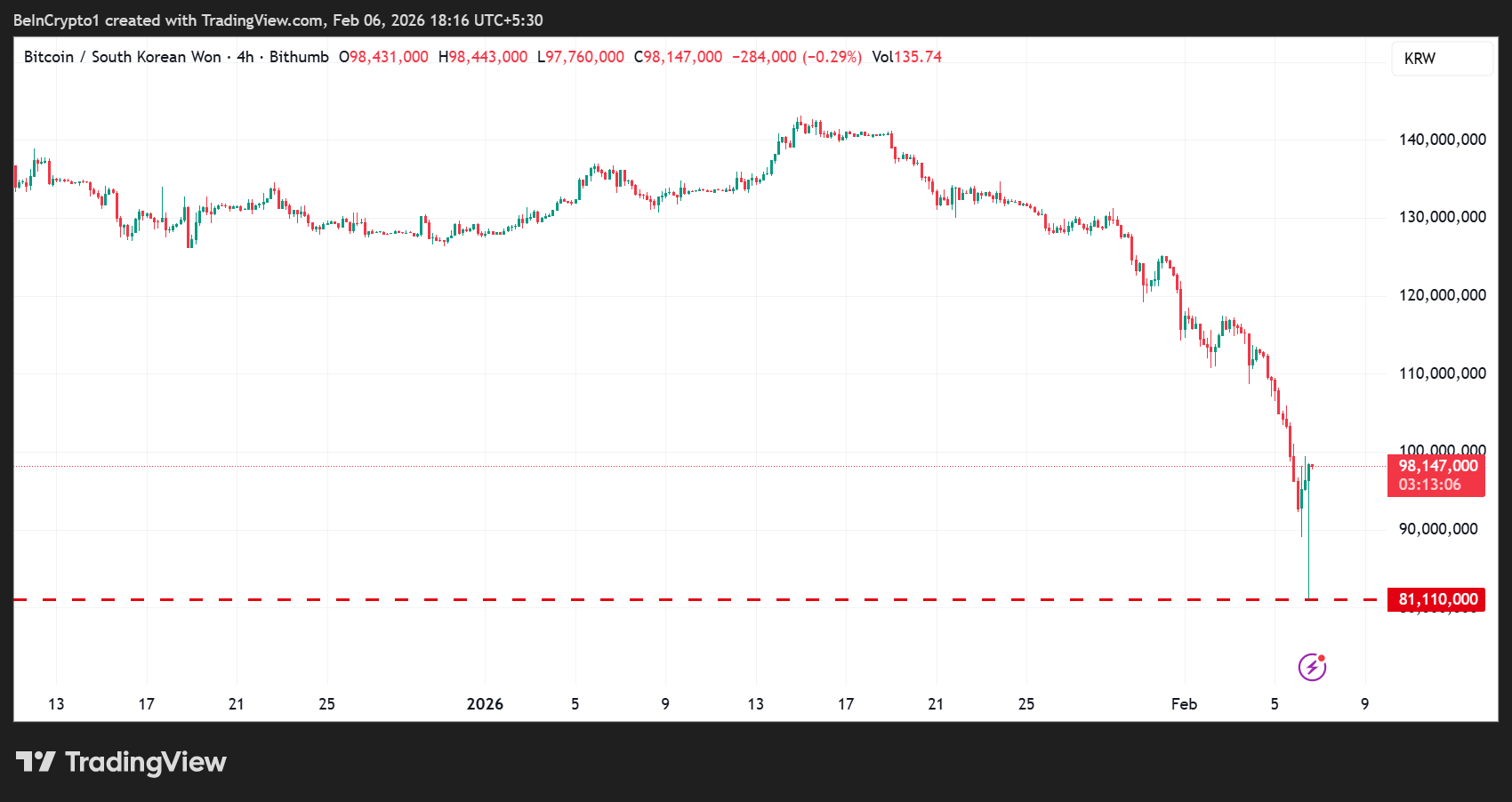
Source: TradingView
Why Didn’t the Crash Spread to Other Exchanges?
Interestingly, the sell-off remained isolated to Bithumb due to its segregated order books. Users dumped their unexpected BTC holdings directly on the exchange, cratering local prices by 10% compared to global benchmarks like Binance and BTCC. Arbitrage mechanisms hadn’t yet corrected the disparity, sparing broader markets from collateral damage. As the chart below shows, BTC/USDT pairs on major platforms remained stable during the chaos.
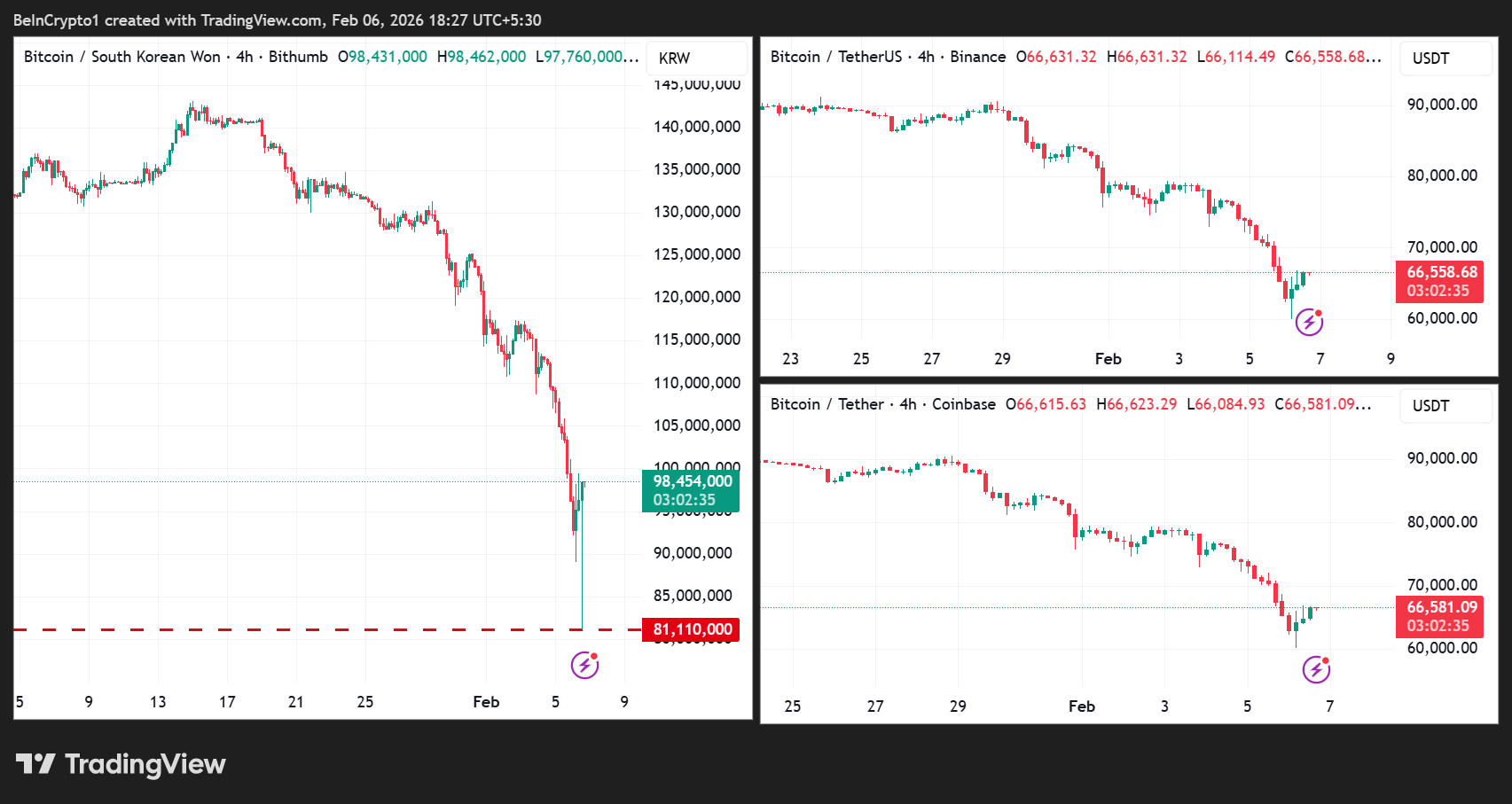
Source: TradingView
Bithumb’s History of Operational Blunders
This isn’t the first time Bithumb has faced scrutiny. In 2017, a data leak exposed sensitive customer information, and in 2020, a South Korean court ruled the exchange partially liable for a $27,200 user loss in a phishing scam—though damages were capped at $5,000. The platform has also weathered ownership changes, including a 50% acquisition by BK Global in 2018 amid a broader crypto investment downturn (global funding plummeted from $7.62B in 2018 to $578M in H1 2020, per FinTech Global).
What Does This Mean for Crypto Exchange Security?
The incident underscores lingering vulnerabilities in even established exchanges. "Human error remains crypto’s Achilles’ heel," noted a BTCC analyst. "While decentralized tech advances, centralized platforms still rely on fallible processes." Bithumb hasn’t issued an official statement, but the mishap could erode short-term trust in exchanges with spotty operational records.
FAQs: Bithumb’s Bitcoin Airdrop Debacle
How much BTC was accidentally sent to users?
2,000 BTC (worth ~$100 million at the time).
Did the price crash affect other exchanges?
No—the sell-off was confined to Bithumb’s order books due to liquidity isolation.
Has Bithumb fixed the issue?
As of February 2026, the exchange hasn’t publicly addressed corrective measures.
