Ethereum Plunges 13% - Is $3,500 the Next Stop for ETH?

Ethereum takes a brutal hit as bears dominate the weekly charts.
The Great Correction
ETH's 13% weekly nosedive leaves traders scrambling—technical indicators flashing red across the board. Support levels crumble like regulatory promises.
Road to Recovery or Deeper Decline?
Market sentiment turns sour as Ethereum battles resistance at every turn. That magical $3,500 target now seems further away than blockchain scalability solutions.
Smart money's watching the charts while Wall Street still tries to figure out what a wallet is.
Technical Analysis
By Shayan
The Daily Chart
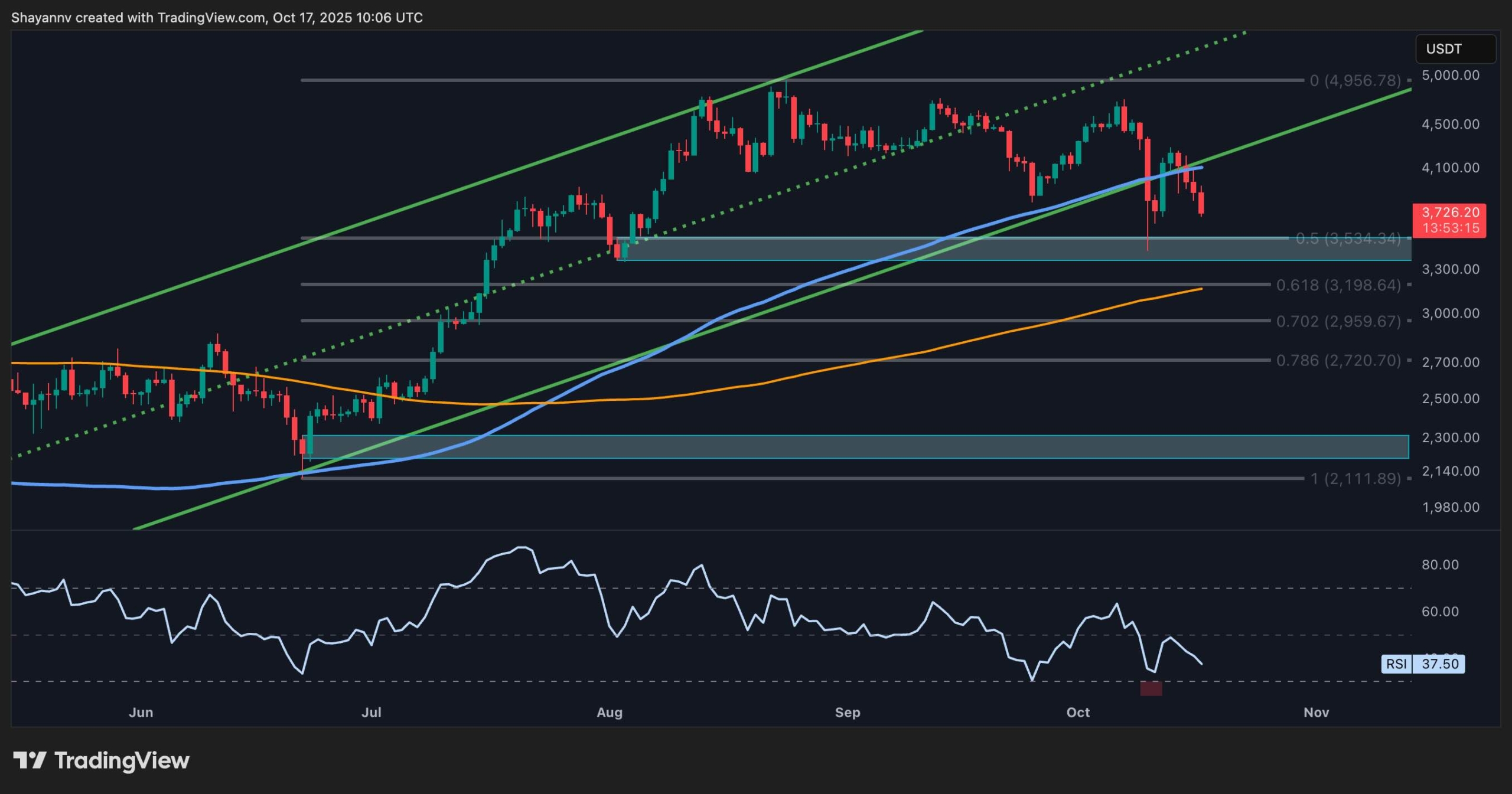
On the daily timeframe, ETH has broken below the long-term ascending channel structure and the 100-day moving average, located around the $4,100 mark. The price is currently moving toward the 0.5 Fibonacci retracement level at $3,530. This zone is a critical area that previously acted as support, and is the base of the most recent rally in August.
The RSI around 37 indicates bearish momentum but hasn’t reached oversold territory yet, implying that more downside is still possible. A clean breakdown below $3,500 could open the way toward the 0.618 retracement level at $3,200, while reclaiming the last price high around $4,200 WOULD be the first sign of recovery.
The 4-Hour Chart
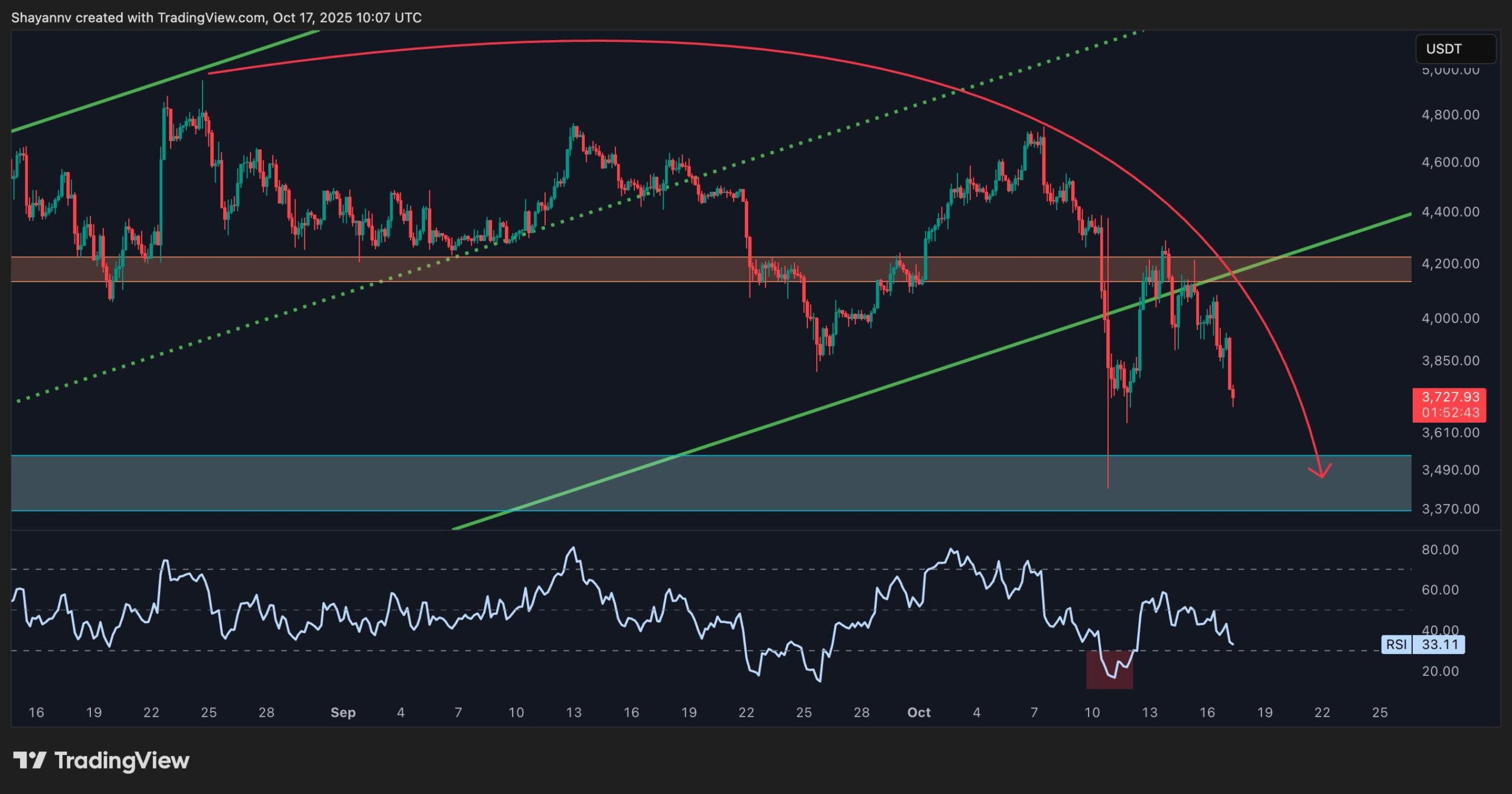
The 4-hour chart shows clear bearish order FLOW as the downtrend is aggravating after losing the $4,200 level and failing to reclaim it. The recent rejection from this zone has confirmed a shift in the short-term market structure to bearish.
Momentum remains weak with RSI NEAR 33, suggesting sellers still dominate. The next demand zone lies around $3,500–$3,400, where buyers recently held their ground during the massive liquidation event. However, failure to hold this level could accelerate the move toward $3,200 or even $3,000 in a deeper decline.
Sentiment Analysis
Long Liquidations
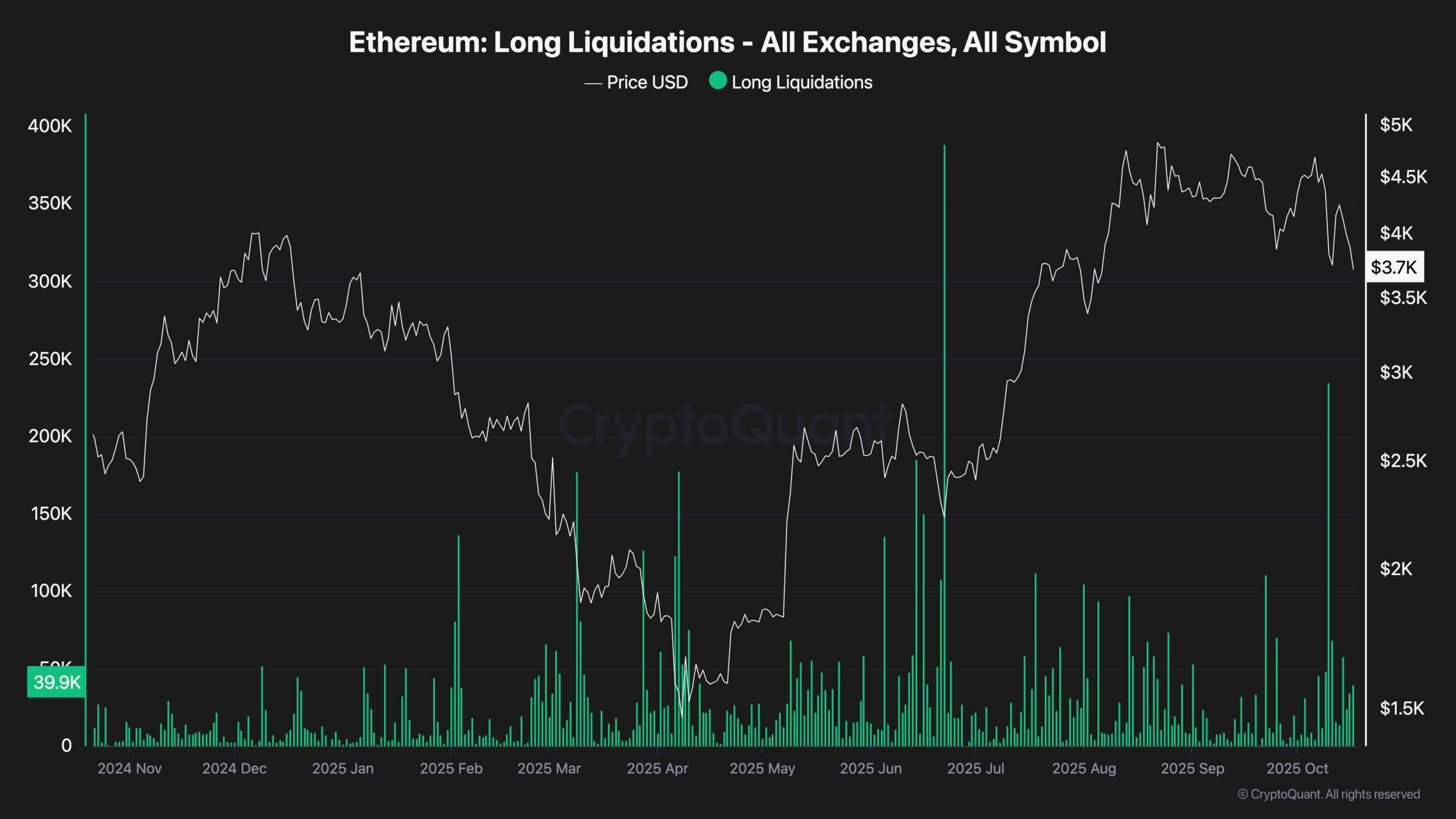
Ethereum’s latest drop triggered a notable spike in long liquidations across all exchanges, marking one of the largest deleveraging events in recent months. This surge in forced selling reflects how overconfident long traders were caught off guard by the market’s swift reversal.
Historically, such liquidation spikes often appear near local bottoms as Leveraged positions get flushed out. However, the magnitude of this latest move suggests panic among retail traders, while institutions are likely waiting for clearer confirmation before re-entering.
Overall, the sentiment remains fearful and risk-averse, with traders preferring caution over aggressive long exposure in the short term.