Trump’s Trade War Threats Against China Shook Bitcoin - But Matt Hougan Calls It Just a Temporary Blip

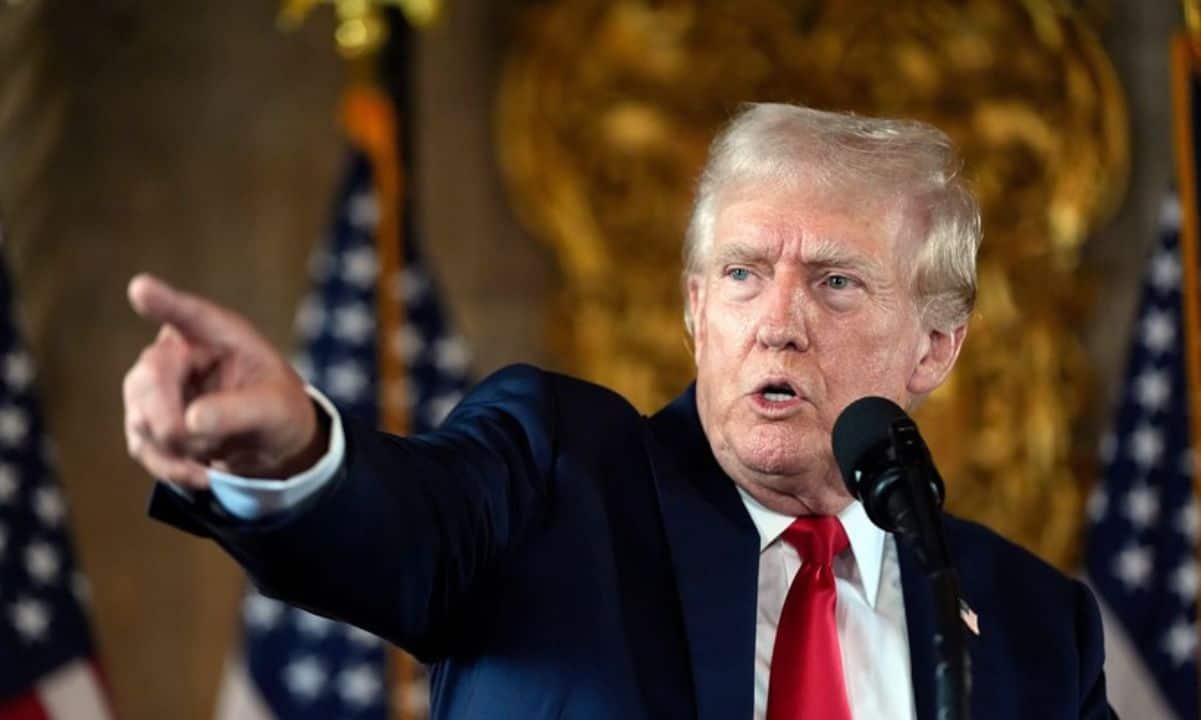
Trade tensions send crypto markets reeling - then bouncing right back.
The Geopolitical Shockwave
When former President Trump renewed trade threats against China, Bitcoin took an immediate hit. The digital asset dropped sharply as traders panicked about global economic stability. Traditional markets wobbled while crypto volatility spiked.
The Analyst's Perspective
Bitwise CIO Matt Hougan sees the dip as pure noise in the signal. He argues Bitcoin's long-term trajectory remains untethered from political posturing. The asset's fundamental value proposition - decentralized, borderless, censorship-resistant money - actually strengthens during geopolitical uncertainty.
Market Mechanics at Play
Short-term traders reacted to headlines while long-term holders accumulated positions. The classic 'buy the rumor, sell the news' pattern played out in reverse as fear gave way to rational analysis. Liquidity briefly tightened before normalizing within hours.
The Bigger Picture
Bitcoin has weathered bigger storms than political rhetoric. Regulatory crackdowns, exchange collapses, and macroeconomic shifts have all failed to derail its core adoption curve. This latest volatility barely registers on the historical Richter scale.
As one Wall Street veteran quipped - 'Traders panic over trade wars while Bitcoin keeps solving math problems.' The algorithm doesn't care about tariffs.
Nothing Fundamental Changed
The sudden drop came after former US President Donald TRUMP threatened China with sweeping 100% tariffs on all imports in response to Beijing’s move to restrict exports of rare earth metals. With equity markets closed, traders sought a real-time reaction mechanism and turned to crypto.
Within minutes, Bitcoin plunged by as much as 15%, and altcoins, led by Solana, saw declines of up to 40%. Nearly $20 billion in Leveraged positions were liquidated in the largest such event in crypto’s history, which ended up amplifying the sell-off through cascading liquidations. Despite this, most crypto assets partially recovered after the US administration softened its stance.
According to Hougan, the key question is whether the episode was a fleeting blip or a signal of more profound structural weakness. The exec found that nothing fundamental to crypto’s outlook changed, while citing the market’s underlying technology, security, and regulatory progress.
Hougan outlined three questions Bitwise uses to assess whether a market shock has lasting implications. These are whether any major institutions collapsed, how blockchain systems performed under stress, and whether investor panic reached systemic levels. None of those red flags appeared. No major firms or market makers failed, and most losses were confined to retail traders who had taken highly leveraged positions.
Technologically, decentralized platforms such as Uniswap, Aave, and Hyperliquid continued operating as usual without disruption. Centralized venues did experience some turbulence. Binance, for instance, refunded traders on a few separate occasions. But overall, the crypto markets held up as well or better than traditional ones might have in similar conditions.
Professional players largely ignored the event, in what appears to be a vote of confidence in the asset class’s long-term trajectory. That steadiness, he argued, indicates how far crypto markets have matured from the days when similar volatility would spark panic. The broader picture also remains encouraging. Bitcoin has gained 21% so far in 2025, and Bitwise’s Large Cap Crypto Index is up 22%.
While short-term volatility may continue as liquidity providers and market makers temporarily step back, Hougan believes the market will soon stabilize.
“But over time, I expect the market will catch its breath and renew its attention on crypto’s fundamentals. When that happens, I think the bull market will continue apace.”
Bitcoin Still Far from Peak Euphoria
According to on-chain research by CryptoQuant, Bitcoin’s MVRV ratio is currently NEAR 2.0. This level has historically represented mid-cycle conditions rather than extreme valuations. The ratio remains comfortably below the 4.0 range reached during prior bull market peaks, while still above the sub-1.0 levels seen in major accumulation periods. As such, long-term holders are refraining from heavy selling, and institutional ETF inflows continue to provide support.
Miner activity has also softened, which points to reduced supply pressure. These trends indicate that bitcoin is consolidating within a constructive, mid-phase market environment rather than approaching an overheated or cyclical peak.
