Beijing’s Satellite Town Set for 2026 Completion as US-China Space Race Intensifies

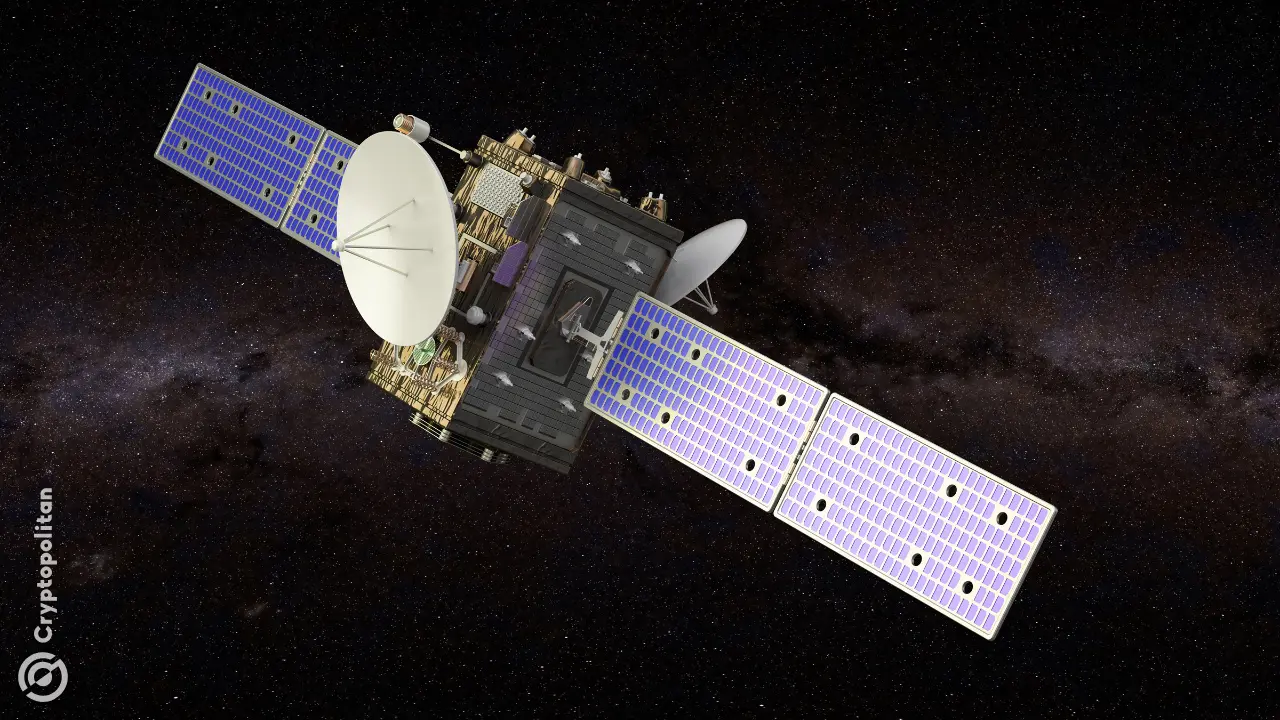
BEIJING, April 18, 2026 - China is accelerating its commercial space ambitions with Beijing's Satellite Town scheduled for completion this year, as launch projections surge to 140 orbital missions amid escalating competition with NASA's Artemis program. The strategic facility, leveraging Haidian's aerospace ecosystem, has already attracted over 40 commercial space companies while U.S. launch activity reached 193 missions in 2025, signaling a new phase in the deep space rivalry following Artemis II's successful lunar flyby this month.
Commercial sector now drives majority of activity
Commercial launches now account for over 60% of all Chinese space missions. Last year, the country sent 311 commercial satellites into orbit, making up 84% of all satellites launched.
Gao Yibin from Future Aerospace said China’s trillion-yuan commercial space market is moving toward standardization and scale. He pointed to faster launch approvals, locally made components, and steady investment from industrial funds as key factors.
“The accelerated implementation of scenarios such as low-Earth orbit constellation networking, satellite internet, space computing power, and 6G air-space-ground integration suggests sustained growth is expected in 2026,” Gao said.
NASA is working to land Americans on the moon by early 2028, before the end of President Donald Trump’s term. China is targeting 2030.
Jared Isaacman, nominated by Trump to lead NASA, put it bluntly: “The difference between success and failure will be measured in months, not years.”
Wu Weiren, chief designer of China’s lunar program, said: “By 2030, the Chinese people will definitely be able to set foot on the moon. That’s not a problem.”
Moon’s south pole landing could determine future standards
Both countries are eyeing the moon’s south pole, where permanently shadowed craters may contain water ice. Dean Cheng from the Potomac Institute said whoever establishes a permanent presence first could set the rules.
“Imagine [China] setting up a lunar outpost and rotating a crew every six months,” Cheng said. If the US only goes once a year or less, he argued, China could influence everything from the language of space travel to data formats and technical standards.
Zhang Rusheng from China’s space administration said commercial aerospace has progressed across the full industrial chain, from research and development to satellite launches and applications. Officials want Beijing’s development zone to attract up to 1,000 companies and support more than 1,000 commercial launches.
The crypto card with no spending limits. Get 3% cashback and instant mobile payments. Claim your Ether.fi card.

Log in to Reply
Log in to comment your thoughtsComments
Related Articles
|Square
Get the BTCC app to start your crypto journey
Get started today Scan to join our 100M+ users