Missouri’s Bitcoin Reserve Bill Advances to House Committee in Major Policy Push

Missouri just moved its Bitcoin reserve bill one step closer to reality—and Wall Street's legacy playbook is starting to sweat.
Why This Matters
State-level adoption isn't just symbolic anymore. It's a direct challenge to the federal monopoly on monetary policy. Missouri's push to hold Bitcoin on its balance sheet could trigger a domino effect, forcing other states to consider digital assets as a legitimate reserve alternative. Forget waiting for SEC approval—this is policy built by pragmatists, not politicians.
The Mechanics
The bill cleared its initial committee hurdle and now heads to the full House. If passed, it would authorize the state treasury to allocate a portion of its reserves into Bitcoin—a move that redefines "safe-haven" assets. No more relying solely on bonds and bullion. This is about hedging against dollar debasement with code, not just gold.
The Bigger Picture
Missouri isn't acting in a vacuum. It's joining a growing cohort of states leveraging crypto to attract talent, capital, and innovation. The policy shift recognizes what traditional finance still denies: digital scarcity beats printed abundance. It also exposes the irony of regulators who champion "innovation" while clinging to analog balance sheets.
One cynical take? The same Wall Street firms lobbying against Bitcoin ETFs are probably drafting proposals to "manage" the state's crypto reserves—for a hefty fee, of course.
Bottom line: When states start stacking sats, the game changes. Missouri's move isn't just a bill—it's a blueprint for the next financial system, built one blockchain at a time.
Key Takeaways
- HB 2080 authorizes the State Treasurer to custody Bitcoin for a minimum of five years.
- The fund relies exclusively on private gifts and grants, prohibiting taxpayer funding for purchases.
- Missouri joins Arizona and Texas in competing to formalize state-level digital asset reserves.
Missouri Legislation Revives Crypto Treasury Push
HB 2080 WOULD amend Chapter 30 of Missouri law to allow the State Treasurer to receive and hold Bitcoin. This is Representative Ben Keathley’s second try after a similar bill failed in March 2025. Now it has been perfected and sent to the House Commerce Committee, showing the issue is back on the agenda.
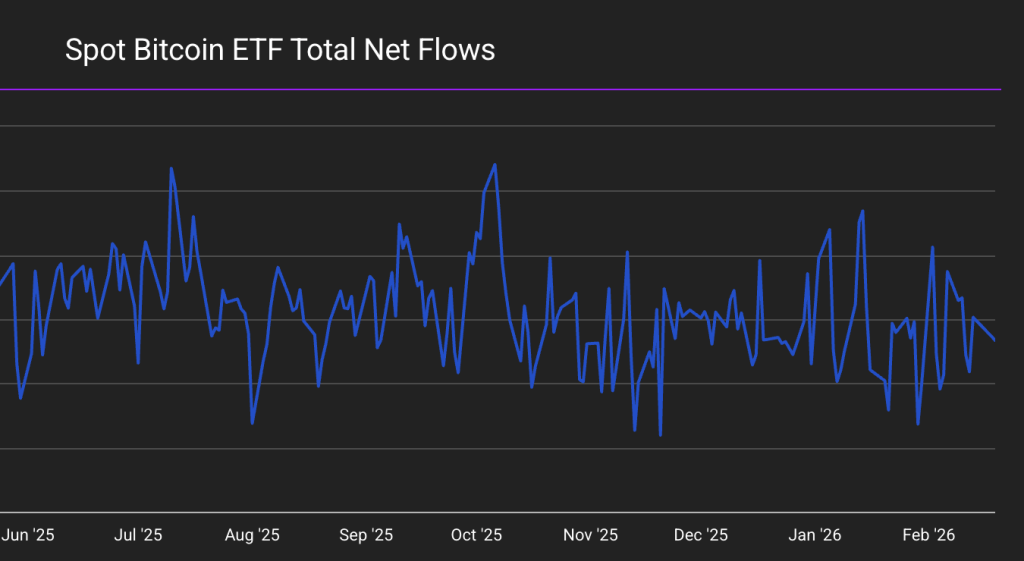
The timing is interesting. While Missouri is pushing a long term Bitcoin reserve, recent data shows spot Bitcoin ETFs have logged multiple weeks of outflows, hinting that short term institutional demand has cooled.
If approved, the reserve would go live by August 28, 2026. Supporters frame it as a hedge against federal inflation, focusing on long term strategy rather than daily price swings.
Strict Holding Periods and Funding Mechanics
The bill is clear on one thing. Any donated Bitcoin must be held for at least five years before it can be sold or transferred.

The Treasurer would have to use cold storage, keeping private keys offline to reduce security risks.
There is also a transparency layer. The state must publish reports every two years covering fund activity, security audits, and transactions.
State Policy Joins Federal Momentum
Missouri is not acting alone. Several states are racing to position themselves as crypto friendly hubs. By creating a legal path to hold Bitcoin, lawmakers hope to attract talent and capital.
NEW:
 Arizona's Digital Assets Strategic Reserve Fund bill (SB1649) cleared the Senate Finance Committee in a 4-2 vote.
Eligible assets explicitly include #Bitcoin, $XRP, Digibyte, and stablecoins. The bill now advances to the Rules Committee. pic.twitter.com/kpN6ds0dBv
The broader regulatory backdrop is also shifting. Federal discussions around clearer crypto rules are gaining momentum, which could make state level reserves easier to expand in the future.
Right now, the bill only allows donation based accumulation. But it sets a precedent. If federal clarity improves, that framework could grow.
If HB 2080 passes, Missouri becomes an early test case for putting decentralized assets inside a state treasury system.
