Vitalik Buterin Sparks Debate as Frame Transactions Enter Ethereum’s Next Upgrade Arena

Ethereum's roadmap just got a spicy new contender. Frame transactions—a proposal to bundle user operations into single, efficient packages—are now officially part of the "Prague" upgrade conversation. The move cuts straight to the heart of Ethereum's scaling ambitions.
The Core Devs Weigh In
Developers are framing it as a potential game-changer for user experience. Instead of signing off on multiple actions, a single signature could approve a complex sequence—think swapping tokens, providing liquidity, and staking rewards in one seamless flow. It bypasses the current friction, making DeFi interactions feel less like a technical chore and more like, well, using the internet.
Buterin's Bullish, But Cautious
Vitalik Buterin's public commentary added significant fuel to the debate. While clearly intrigued by the UX leap, his input highlighted the delicate balance between innovation and security. The core question remains: can this be implemented without introducing new attack vectors or overcomplicating the protocol's core? It's the classic crypto tug-of-war—move fast and break things versus move deliberately and keep billions secure.
The Road to Prague
Getting Frame transactions into the next upgrade isn't a done deal. It faces stiff competition from other EIPs and must survive rigorous technical scrutiny. The community's reaction will be key; after all, this is the same crowd that can turn a minor fee change into a week-long Twitter civil war. Adoption promises a smoother ride for users, though legacy finance folks will likely still call it 'needlessly complex' from their 50-year-old mainframes.
A Provocative Step Forward
This debate signifies more than just a potential feature. It's a signal that Ethereum's evolution is accelerating, prioritizing real-world usability without sacrificing its decentralized soul. The outcome could define how the network feels for the next wave of users. Just don't expect the bankers to understand—they're still trying to figure out what a 'block' is.
Hegota Headliner Debate Turns to Frame Transactions
The “receipt” sits in, whichand addedas a new transaction type proposal.
The Hegota framing matters because devs positioned Frame Transactions as a post-quantum migration path that also enshrines account abstraction primitives such as gas sponsorship and contract-based validation instead of enshrined ECDSA-only signing.
A separateAllCoreDevs Execution agenda (ACDE #229) listedandas formal Hegota headliner presentations, with additional headliner slots forand a follow-on session for.
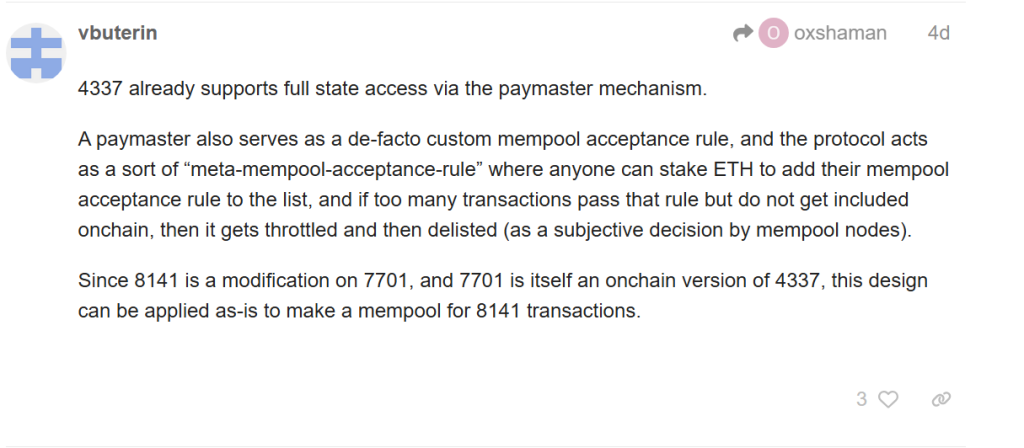
“4337 already supports full state access via the paymaster mechanism.” “A paymaster also serves as a de-facto custom mempool acceptance rule…”
Buterin posted that comment in the Frame Transactions headliner thread, explicitly tying the Frame design to the existingmental model that infrastructure teams already run in production.
FOCIL remains the other censorship-resistance “receipt” devs keep citing into Glamsterdam and beyond, withspecifying aand aconstraint.
Market Angle: Mempool Policy and Order Flow
Frame Transactions (EIP-8141) moves Ethereum’s transaction authentication surface area from a single fixed signature scheme into programmable validation frames, so the trade for desks is not “wallet UX.”
The trade is: once paymasters define acceptance rules and builders decide inclusion economics, you getthat interact directly with MEV supply chains.
If Hegota selects Frame as headliner in, watch foraround sponsored transactions,that change retail routing, and a repricing of “protocol-level MEV protection” narratives already competing withbids for the same upgrade slot.
