Meme Coin Marketers: The Predatory Chaos Engine Fueling Crypto’s Wild West

The digital gold rush has a new sheriff—and it's wearing a doge mask. Meme coin promoters aren't just riding the volatility wave; they're manufacturing it, turning social sentiment into a high-stakes casino where the house always wins.
The Playbook: Hype, Pump, and Ghost
Forget fundamentals. The new blueprint bypasses whitepapers and dives straight into the dopamine cycle. A viral tweet, a celebrity nod, an army of anonymous accounts—liquidity materializes from pure narrative. These campaigns cut through regulatory gray areas faster than a blockchain confirmation, leaving traditional finance scrambling to define 'security' while millions change hands in minutes.
Extracting Value from Chaos
It's a perfect storm: low-code token creation meets global, unbanked audiences hungry for a lottery ticket. Promoters seed the frenzy, take their cut at the peak, and vanish before the inevitable crash—leaving bag-holders chasing the next narrative. The real innovation isn't in the code; it's in the psychological leverage, turning FOMO into a tradable asset.
The Aftermath and the Irony
Regulators draft frameworks, exchanges list with disclaimers, and the cycle repeats. Each boom-bust leaves scars but also attracts fresh capital, paradoxically validating the very ecosystem it exploits. The ultimate cynical finance jab? Wall Street spent decades perfecting pump-and-dump schemes—crypto just democratized them with a meme filter and removed the paperwork.
This isn't a bug in decentralized finance; it's a feature. As long as attention holds value, predatory chaos will find its market makers—proving that in the digital age, the most volatile asset isn't on the blockchain, but in the human psyche chasing the next parabolic dream.
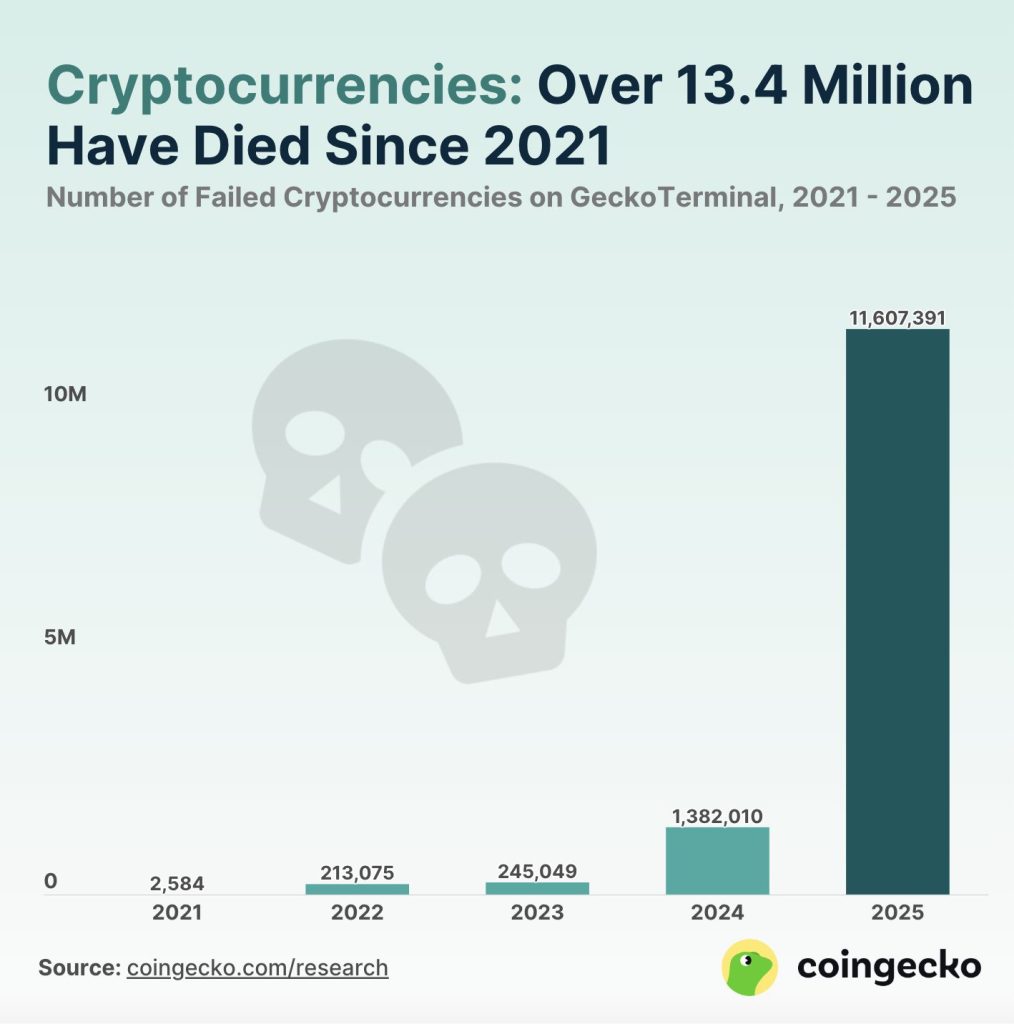
Plagued by Bots and Snipers
While the promise of rags-to-riches behind meme coins appeals to many, most of the riches end up in the wallets of snipers which utilise automated scripts to front-run traders, profiting millions, while the token fails after launch. The pattern is perpetuated by examples revealing that more than fifty of the largest investors in the $TRUMP coin profited more than $10 million each, while 200,000 wallets lost money.

What starts as a promise of wealth is then revealed to be a skewed distribution in which few
holders control the majority of the supply, leaving retail audiences with the “hopium” that a
crashing token WOULD see a glimpse of its initial pump. This wild west of an ecosystem has
largely inflated Solana’s 2025 failure rate, with billions in retail capital wiped out, and
legitimate creators apprehensive about token launches.
Communities and Creators Bear the Brunt of Failures
The meme coin market ended 2025 with a 65% decline to $35 billion in market capitalization,
compared with the $100 billion valuation at the end of 2024. The “moon” promised by
creators and sought by communities appears in sight, but is viewed from the Southern
Hemisphere at the bottom of the chart. Trust in creators and launchpads is impeded. A large
question mark looms over the ecosystem’s longevity.
With pumps and dumps already attracting lawsuits, meme coins are drawing regulatory scrutiny that emphasizes enforcement action and prosecution by federal agencies for fraudulent conduct. As the potential of the market is threatened, there needs to be a serious discussion on what a healthier model would look like and how it would empower trends as ownable assets through fair launches and burning mechanisms that maintain longevity.
Fairness in a Fast and Furious Market
Trends fire up and fizzle faster than Gen Z’s TikTok attention span, and with it, countless tokens are launched, leaving retail investors wondering what the “official” trending coin is. Before long, the trend had hit its tokenized peak with bots and insiders bolstering a token, with everyday investors left behind. The industry must look into a trend-first economy with bot-resistant windows and creator rewards that enable fairness in the ecosystem.
One key measure in analyzing the best meme coins to invest in is the project’s tokenomics model to evaluate supply, distribution, and mechanisms that create incremental value. If investors know the “official” token, aren’t threatened by the few’s domination of the supply, chances are not only that they’re more likely to invest, but that their investment is protected from the predatory chaos of the meme coin space. If the industry addresses these points, it can prevent the common 90% crashes as seen with the viral $HAWK meme coin.
Structure Over Hype
The hype surrounding viral movements is fundamental to meme coins, but without the structure that prevents bot-driven chaos, launches remain untenable and unsustainable. It is imperative for the industry to MOVE towards equitable models that reward creators and protect investors from the headline-grabbing rug pulls that audiences have grown desensitized to seeing.
Aversion to this conversation poses a risk of stagnation and growing failure in an increasingly questionable market. With fair launches that take structure into consideration, investors stand to see stability in prices, increased institutional interest, and evolve memecoins beyond speculative volatility, turning predatory chaos into participatory opportunity.
Disclaimer: The views and opinions expressed in this article are those of the author and do not necessarily reflect the views of Cryptonews.com. This article is for informational purposes only and should not be construed as investment or financial advice.
