South Korea’s $3.5M Stablecoin Barrier: Will This Crypto Bill Actually Pass?

Seoul draws a regulatory line in the sand—and it's a multi-million dollar one.
The Capital Requirement Gambit
Forget lightweight startups. The proposed legislation mandates a minimum capital reserve of $3.5 million for any entity looking to issue a Korean won-pegged stablecoin. It's a move that screams institutional gatekeeping, aiming to filter out fly-by-night operators before they ever get to the mint.
The Regulatory Tightrope Walk
Balancing innovation with investor protection is the eternal dance. This bill represents a classic, heavy-handed approach: throw a high financial wall around the sector and see who's serious enough to scale it. It prioritizes stability over accessibility, betting that deep pockets equate to responsible management—a theory traditional finance has debunked repeatedly.
The Political Hurdles Ahead
Getting this through the National Assembly is no sure bet. The crypto lobby is powerful, and lawmakers remain divided between fostering a digital economy and reigning in its wilder excesses. The $3.5 million figure itself could become a bargaining chip, subject to dilution or intensification as political winds shift.
South Korea isn't just regulating an asset class; it's attempting to pre-empt a future financial crisis. The question remains: will this high-stakes bet on capital requirements secure the market or simply stifle its growth? Only time—and political will—will tell if this bill becomes law or just another proposal lost in committee. After all, in finance, the most expensive barriers often just inspire more creative ways to bypass them.
Stablecoin Capital Threshold Mirrors Electronic Money Standards
The proposal, part of the forthcoming Digital Asset Basic Act, places stablecoins closer to traditional electronic money under Korean law at a time of heightened concern over market stability and capital flows.
Under the draft, any company seeking to issue stablecoins in South Korea must meet the threshold, aligning the rule with existing requirements for electronic money firms.
Lawmakers argue that because stablecoins function like digital cash, issuers should be subject to comparable financial safeguards.
The measure is intended to prevent undercapitalized firms from issuing tokens without sufficient backing, reducing the risk of abrupt collapses.
Officials say stronger balance sheets should help issuers absorb losses and manage operational risks, limiting potential harm to users during periods of stress.
Korea’s in a full-on stablecoin bubble right now: There are zero clear regulatory guidelines on stablecoins so far.Every other day, Korean financial news headlines are like: “XYZ bank/company just filed a trademark for a stablecoin.”Whenever a listed company files a… pic.twitter.com/GG7wphTdzg
Beyond capital rules, the bill introduces a new governance structure to manage market risks more effectively.
A proposed inter-ministerial body, the Virtual Asset Committee, would be led by the chair of the Financial Services Commission.
Other members would include the Bank of Korea’s deputy governor and a vice minister from the Ministry of Economy and Finance.
The committee is designed to coordinate rapid responses to hacks, system failures, and major market disruptions.
The task force plans final coordination with the party’s policy committee and relevant government bodies before introducing the bill.
Lawmakers are targeting submission ahead of the Lunar New Year holiday, which falls on February 17, 2026.
South Korea Central Bank Voices Concerns Over Stablecoin Risks
Despite progress on the bill, key policy disagreements remain unresolved.
Sensitive issues such as the scope of the Bank of Korea’s authority and potential limits on major shareholder holdings are still under discussion.
Bank of Korea Governor Lee Chang-yong has repeatedly raised concerns about stablecoins, particularly those linked to foreign currencies.
Speaking at the Asian Financial Forum in Hong Kong, Lee warned that stablecoins could enable rapid cross-border capital movement, weakening capital controls.
 South Korea considers domestic crypto issuance regime as central bank governor warns won stablecoins could be used to circumvent capital Flow controls.#SouthKorea #Crypto #Stablecoinhttps://t.co/191aiNvzvc
He said the risks would increase if U.S.-dollar-pegged stablecoins were connected to U.S.-dollar-pegged tokens, allowing funds to exit the country quickly during market stress.
Those warnings come as regulators remain split on whether stablecoin issuance should be restricted to bank-led consortia.
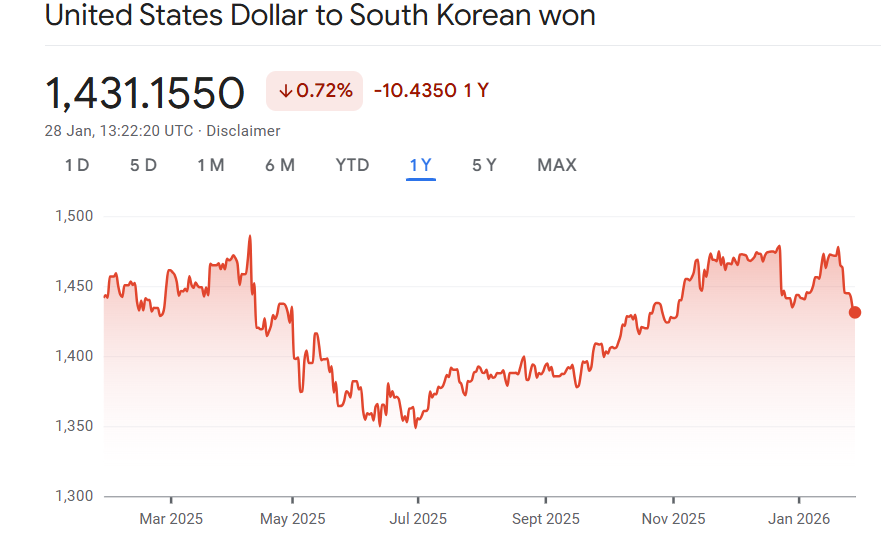
At the same time, currency pressures have added to policymakers’ caution, with the won sliding toper dollar amid tariff threats from U.S. President Donald Trump.
Corporate Crypto Access Expands After 9-Year Ban
The current regulatory improvement aligns with South Korea’s recent rollback of a 9-year ban on corporate crypto investment.
New guidelines now allow listed companies and professional investors to trade digital assets under defined limits.
Under the Virtual Currency Trading Guidelines for Listed Corporations, firms would be permitted to invest up to 5% of their equity capital in top-20 cryptocurrencies by market value.
The change represents the final phase of a three-step plan introduced by the Financial Services Commission in February 2025.
Once implemented, around 3,500 corporate entities are expected to gain access to crypto markets, though discussions continue over whether dollar-pegged stablecoins such as USDT will be included.
