Wallet Linked to Major US Crypto Theft Unleashes Solana Meme Coin — Plummets 97% in Single Trading Session

A digital wallet previously flagged in connection with a high-profile cryptocurrency theft in the United States has just launched a new token on the Solana blockchain. The asset, categorized as a 'meme coin,' saw its valuation evaporate almost entirely within hours of its debut.
The Rapid Unraveling
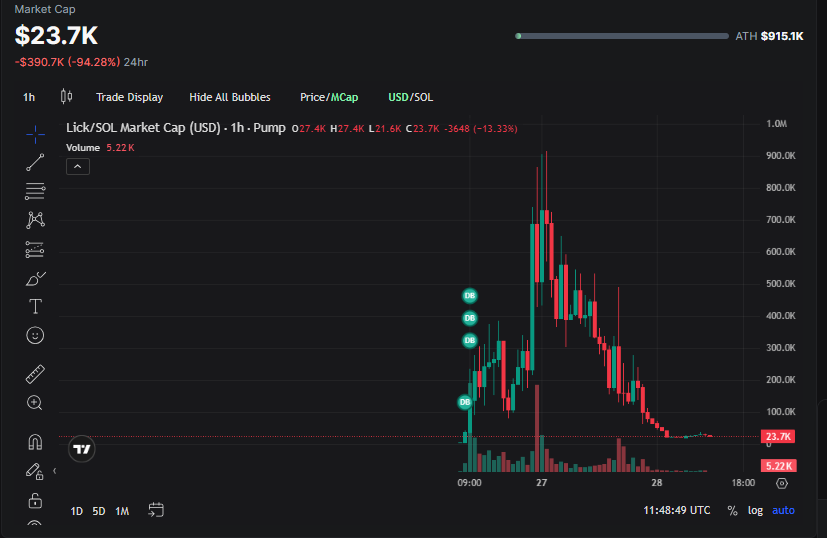
Market data shows the token's price chart didn't just dip—it executed a near-total collapse. A 97% drop overnight turns initial liquidity into little more than digital dust, leaving late entrants holding the bag. It’s the kind of volatility that makes traditional equity traders need a lie down.
Context is Key
While the new token itself isn't directly accused of wrongdoing, its origin point raises immediate red flags. The launching wallet's history injects a layer of reputational risk that the market priced in—swiftly and brutally. This isn't just about poor tokenomics; it's about the shadow of past actions chilling investor sentiment.
The Solana Meme Coin Arena
The Solana network has become a hotbed for these high-risk, high-reward speculative assets, prized for low transaction fees and high speed. This incident serves as a stark reminder that the infrastructure enabling innovation also enables rapid capitulation. Due diligence now must extend beyond the smart contract to the entities behind the deployer address.
A Finance Professional's Sigh
Another day, another token proving that in crypto, 'fundamental value' can sometimes mean the fundamental desire to find a greater fool. The cycle of hype, launch, and collapse continues, with only the ticker symbols changing. It’s a brutal, unregulated proving ground where narratives are built and destroyed at blockchain speed.
The episode underscores a perpetual crypto truth: in a market where anyone can launch an asset, provenance and trust aren't just metrics—they're the entire safety net. And sometimes, that net has very, very large holes.
 Source: pump.fun
Trading activity indicates that the deployer wallet accumulated tokens early while the market capitalization was still below $21,000, making four purchases before the sharp rally and subsequent collapse.
Bubblemaps Finds Concentrated Supply in LICK Token Debut
Further scrutiny came from blockchain analytics firm Bubblemaps, which reported that the deployer of LICK held approximately 40% of the total token supply at launch.
John Daghita (@lick), who stole $40M from the US government, just launched $LICK on pumpfun and is live streaming on Telegram
He holds 40% of the supply
Unhinged https://t.co/jUku6wIfXg pic.twitter.com/apZQojKnuz
Such concentration is widely viewed by analysts as a warning sign, as it allows insiders to exert outsized control over price action and liquidity.
Bubblemaps claimed that the same individual tied to the alleged theft controlled the deployer wallet and a significant share of the supply during the token’s launch phase.
The launch attracted attention after blockchain investigator ZachXBT said the wallet associated with the token deployer was connected to tens of millions of dollars in crypto allegedly tied to U.S. government-seized assets.
 @ZachXBT alleges a crypto theft from US government wallets is linked to the son of a federal crypto custody contractor’s CEO.#Hack #Cryptohttps://t.co/5G1BLSmHCn
In an X post on Jan. 23, ZachXBT claimed the individual behind the online alias “John Daghita,” also known as “Lick,” had displayed control over wallets holding approximately $23 million during a recorded dispute with another actor in a Telegram group.
Public records show that Command Services & Support, a Virginia-based firm whose president is Dean Daghita, received a U.S. Marshals Service contract in October 2024 to assist with the custody and disposal of certain digital assets seized by the government.
ZachXBT alleged that John Daghita, the president’s son, gained unauthorized access to wallets connected to those holdings.
The allegations have not been tested in court, and no criminal charges have been announced.
Meme Coin Chaos Deepens Across Solana’s Pump.fun Ecosystem
The incident has also drawn attention from policymakers, as Patrick Witt, director of the WHITE House Crypto Council, said in a post on X that he was reviewing the claims following ZachXBT’s disclosures.
On it. More to follow. https://t.co/lZJHM12Nx5
— Patrick Witt (@patrickjwitt) January 26, 2026According to BitcoinTreasuries.NET, U.S. authorities may control more than 328,000 bitcoin through various seizures, including assets from the Bitfinex case, potentially worth around $30 billion at current prices.
Beyond the specific allegations, the LICK collapse fits into a broader pattern within Solana’s meme coin ecosystem.
Data from early 2025 suggests that more than 98% of tokens launched on Pump.fun exhibit characteristics associated with rug pulls or rapid pump-and-dump schemes.
Analysts estimate that only a tiny fraction of the millions of tokens created on the platform ever reach even modest liquidity levels, while the average lifespan of many tokens has dropped to less than 25 minutes before abandonment or sharp declines.
Recent cases have reinforced these concerns, as in December, Solana-based AI token AVA fell more than 96% after onchain analysis showed roughly 40% of its supply had been accumulated by wallets linked to the deployer at launch.
In January, the WhiteWhale memecoin briefly lost around 60% of its market value within minutes after a large holder sold a significant portion of the supply, an event widely described by traders as a rug pull despite later partial recovery.
