Ethereum’s ERC-8004 Unleashes AI Agents Anywhere – Is This the Future of Finance?

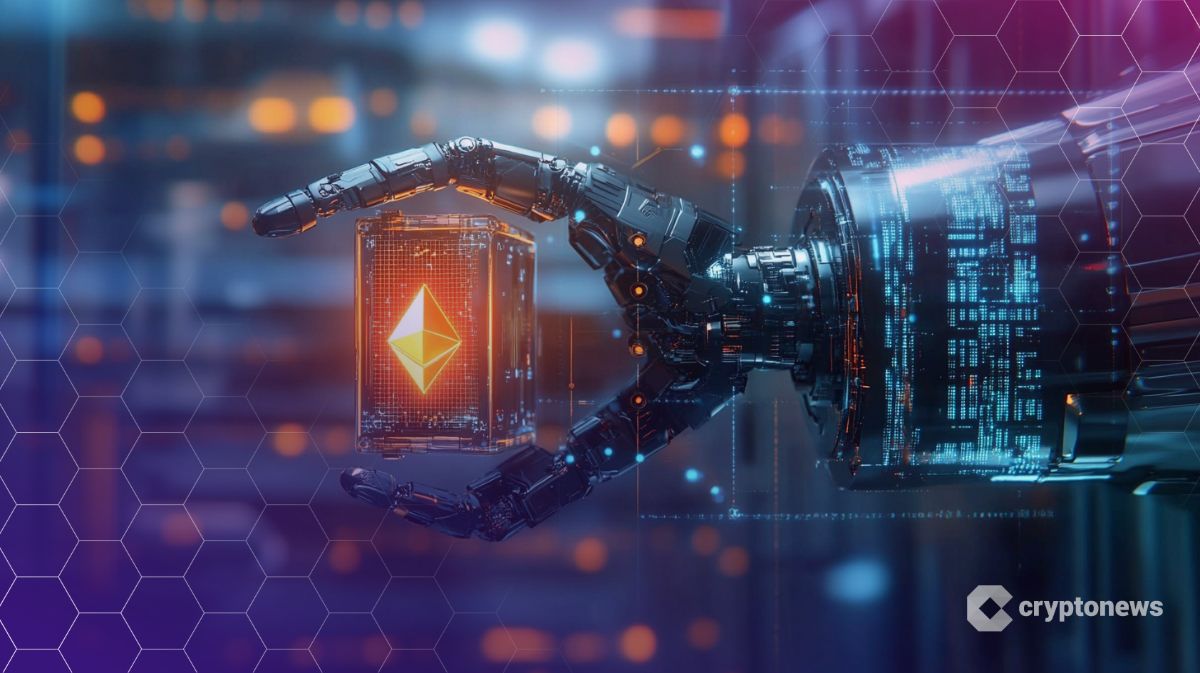
AI just got a universal passport. Ethereum's new ERC-8004 standard shatters the walled gardens, letting autonomous agents operate across any blockchain, app, or platform. No more siloed intelligence.
The Interoperability Breakthrough
Forget chain-specific bots. ERC-8004 defines a common language—a set of protocols—that allows an AI agent trained on Ethereum to execute tasks on Avalanche, arbitrage on Polygon, or manage a portfolio across a dozen networks without rewriting its code. It bypasses the fragmentation that's been holding decentralized intelligence back.
From Smart Contracts to Smart Agents
This isn't an upgrade; it's a phase shift. While smart contracts automate rules, these portable AI agents can make context-aware decisions. Imagine a DeFi liquidity manager that continuously hunts for the best yields across all of DeFi, or a negotiation agent that can secure the best NFT price on any marketplace. The potential cuts across trading, governance, and even creative industries.
The Cynical Take
Of course, the first major use case will likely be building even more efficient, cross-chain trading bots that vacuum up retail liquidity before humans can blink—because in crypto, if you can monetize it, you will.
The real test? Whether this creates a flourishing ecosystem of useful digital entities or just amplifies the existing noise. One thing's certain: the game just changed, and the agents are now playing on every field at once.
Solving AI’s Trust Crisis Through Blockchain Infrastructure
AI agents currently operate as isolated systems confined to their own ecosystems, unable to interact across organizational boundaries without pre-existing trust relationships.
OpenAI’s agents work only within OpenAI’s infrastructure, while Google’s agents recognize only Google’s rules, creating fragmented networks that limit autonomous capabilities.
While Google’s A2A protocol and Anthropic’s MCP have established communication standards that allow different AI systems to communicate, neither addresses the fundamental question of how agents discover reliable partners or verify their credentials.
ERC-8004 fills this gap by providing three Core components for trustless agent interaction.
First, each AI agent receives a unique blockchain identity registered as an, creating verifiable credentials that cannot be forged or tampered with.
2/ Agents are NFTs
You can mint, view in wallets, transfer, and manage them (including delegations to operators) using existing 721 infra & apps. pic.twitter.com/TFjzcZ8pJV
Second, the protocol records on-chain reputation scores based on user ratings and task performance, similar to Uber driver ratings but stored permanently on Ethereum.
Third, high-risk tasks requiring additional validation can leverage cryptographic proofs, trusted execution environments, or stake-secured verification to ensure agents deliver accurate results.
The standard works by registering agents through an Identity Registry that assigns each a unique ID and points to a registration file listing capabilities, endpoints, and supported protocols, including A2A, MCP, ENS names, and wallet addresses.
A Reputation Registry stores feedback from users who interact with agents, recording ratings and optional detailed reviews on IPFS for permanent access.
4 / Reputation is on-chain.
Using scores and custom tags (tag1, tag2), anyone can submit, store and aggregate reputation signals on-chain. Events + optional extended feedback on IPFS power sophisticated off-chain analysis.
AI is the catalyst for distributed reputation on… pic.twitter.com/ZIJCTrwvKS
For sensitive operations like financial transactions, a Validation Registry connects agents with independent verifiers who can stake funds to re-run tasks or use zero-knowledge proofs to confirm outputs match claimed results.
Ethereum Ecosystem Rallies Behind Agent Economy Vision
The protocol’s co-authors include Marco De Rossi from MetaMask, Erik Reppel from Coinbase, and Jordan Ellis, formerly a CORE developer of Google’s Agent-to-Agent Protocol.
MetaMask has already integrated the standard, while more than 70 projects submitted demos and built agent browsers resembling blockchain explorers but designed specifically for discovering AI services.
Layer 2 networks, including Taiko, have officially endorsed ERC-8004 as builders race to establish infrastructure for what analysts project could become a trillion-dollar autonomous economy.
Community response has emphasized Ethereum’s unique position as a neutral ground for AI coordination.
“Civilizations scale because humans are capable of implicit trust, ai agents are not; their only path to building an agentic society is through a ledger of shared truth..aka a blockchain,” wrote developer binji. “ERC 8004 cements Ethereum and its L2s as that blockchain.“
it’s the start. February is genesis month will be key
— Davide Crapis (@DavideCrapis) January 27, 2026The timing aligns with explosive growth in related infrastructure.
Coinbase’s x402 payment protocol, which enables AI agents to make automated stablecoin payments, saw transaction volume surge by more than 10,000% in October 2025.
The protocol works seamlessly with ERC-8004, handling payment mechanics, while the agent standard manages identity and trust verification.
Cloudflare and Coinbase subsequently launched the x402 Foundation to standardize machine-to-machine payments, with Cloudflare CEO Matthew Prince announcing NET Dollar, a stablecoin specifically designed for AI agent micropayments.
Analysts view ERC-8004 as potentially transformative for Ethereum’s role in the broader technology landscape.
IOSG researcher Jiawei compared the protocol’s ambition to become the “,” arguing that if agents need infrastructure free from single-company control, blockchain provides the only viable neutral coordination layer.
“If you are an AI agent, you have no loyalty other than your own survival; you wouldn’t want to stake your memory and reputation on any one company or government,” the researcher wrote.
Major technology companies, including Google, Coinbase, and MetaMask, are already participating in development, suggesting mainstream acceptance of blockchain-based AI coordination is building momentum beyond cryptocurrency-native projects.
