South Korea’s Crypto Gambit: Domestic Issuance Plans Emerge as Governor Sounds Alarm on Stablecoin Dangers

Seoul is drafting a blueprint for homegrown digital assets—just as its top financial watchdog slams the brakes on the stablecoin hype train.
The Domestic Push
Forget just trading global tokens. South Korean regulators are now sketching frameworks that could see local corporations and financial institutions minting their own cryptocurrencies. It's a power play for sovereignty in a market dominated by offshore giants, aiming to keep capital and innovation within its digital borders.
The Stablecoin Stumble
Meanwhile, the nation's financial governor is waving red flags. The message? Treat dollar-pegged tokens not as safe harbors, but as complex, unregulated debt instruments masquerading as cash. One major bank's rumored stablecoin project already got a very public side-eye from regulators—a classic case of moving fast and getting told to sit down.
The Regulatory Tightrope
The plan isn't about opening the floodgates. It's a controlled burn. Expect a licensing regime stricter than a traditional bank charter, with real-time settlement and transparency mandates that would make most legacy finance tech blush. They want the blockchain's efficiency without its wild west reputation.
The Finance Jab
It's the oldest story in the book: regulators chasing innovation with a rulebook, while finance chases yield with a blindfold. South Korea's dance is just the latest act—trying to foster 'responsible' crypto while the global market treats 'responsible' as a suggestion.
The final move? A market that's Korean-led, regulator-approved, and stablecoin-wary. Whether investors want that world is a different question entirely.
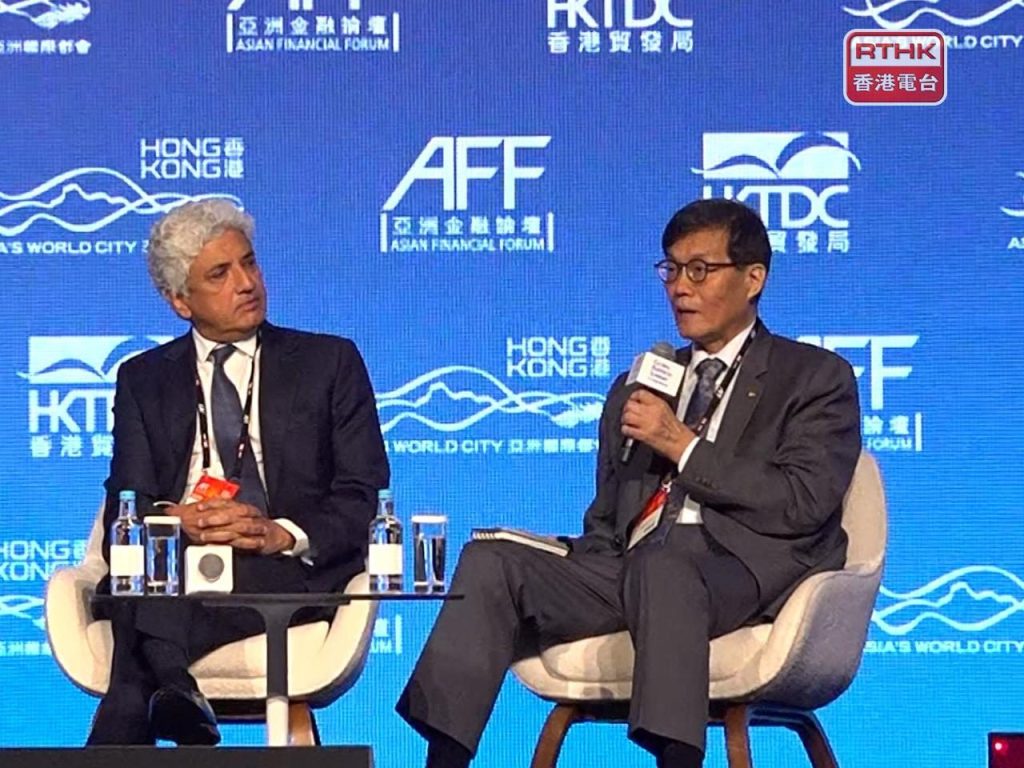 Source: RTHK
Governor Flags Capital Control Concerns Over Stablecoin Launch
Rhee stressed that once launched, won-denominated stablecoins “might be used to circumvent capital Flow control measures, especially when combined with US dollar stablecoins.”
He noted that USD stablecoins are widely used and readily available, with transaction costs far lower than using dollars directly.
The governor warned that when exchange rate fluctuations trigger market expectations, funds may flow rapidly into dollar stablecoins, leading to large-scale cash transfers.
He added that non-bank issuance of stablecoins makes regulation particularly difficult for authorities.
Despite these concerns, Rhee acknowledged that market pressure has forced authorities to allow South Korean residents to invest in overseas-issued virtual assets.
He explained that won-denominated stablecoins would primarily serve cross-border transactions, while tokenized deposits would handle more domestic payments.
Won Under Pressure as Trump Tariff Threat Compounds Volatility
The won-dollar rate closed at 1,446.2 won on Monday, rising 5.6 won after President Donald TRUMP threatened to increase tariffs on Korean automobiles, lumber, and pharmaceuticals to 25% from 15%.
Trump posted on Truth Social that the “South Korean’s legislature is not living up to its deal with the United States,” announcing the tariff hike in response.

However, the currency’s losses proved limited as South Korea’s National Pension Service lowered its end-2026 foreign stock target to 37.2% from 38.9%, strengthening the won by as much as 2% to 1,433.3 per dollar following the announcement.
The welfare ministry said dollar demand was increasing with the pension fund’s growing size, while dollar supply in the onshore foreign exchange market was being outweighed by demand.
The KOSPI also rallied 2.73% to close at 5,084.85 on Tuesday despite Trump’s tariff threat, as investors bought the dip following Samsung Electronics’ 4.87% gain and SK Hynix’s 8.70% surge to a record high.
Min Kyung-won, a Woori Bank researcher, told the ChosunBiz that Trump’s statement “acts as a bearish factor for the won,” but added that the possibility of coordinated market intervention by US and Japanese foreign exchange authorities supports the currency’s upper range.
Regulatory Deadlock Stalls Stablecoin Framework Despite Market Momentum
The Bank of Korea has pushed for stablecoins to be issued only by consortia controlled by banks, insisting that lenders hold at least a 51% ownership stake to protect monetary stability.
The Financial Services Commission has resisted setting a fixed ownership threshold, warning it could sideline technology firms and slow innovation in digital payments.
Rhee emphasized at the Hong Kong forum that digital finance regulation should be strengthened, not relaxed, cautioning against forgetting the costs of the 2008 financial crisis.
He argued that South Korea’s fast payment system is highly developed and retail CBDCs do not offer significant advantages, though the central bank is conducting pilot projects with tokenized deposits and wholesale CBDCs.
 South Korea’s comprehensive crypto law has been delayed to 2026 due to a dispute over who should be allowed to issue stablecoins.#Crypto #Regulationhttps://t.co/jKP9L9n63S
The regulatory impasse persists despite strong market momentum, as South Korea ended its nine-year corporate crypto trading ban this month and passed amendments to the Capital Markets Act establishing legal frameworks for tokenized securities trading beginning January 2027.
Back in October, the Solana Foundation partnered with Wavebridge to develop a KRW-pegged stablecoin, while BDACS also launched KRW1 on Avalanche in September, with every token backed 1:1 by won held in escrow at Woori Bank.
