EU Aims to Empower ESMA with SEC-Style Crypto Oversight Authority

Brussels is drafting a power play. The European Union wants its markets watchdog, ESMA, to start policing crypto with the same muscular authority the SEC wields across the Atlantic.
The Regulatory Blueprint
Forget the patchwork. The plan would centralize supervision of major crypto-asset service providers under a single EU banner, mirroring the SEC's top-down approach. It's a direct response to the U.S. model—where clarity, however contentious, has fostered a (relatively) mature market. The EU's MiCA framework laid the groundwork; now they want the enforcer.
Why This Matters for Your Portfolio
For investors, this isn't just bureaucratic noise. A unified EU rulebook run by a powerful regulator could finally crush the regulatory arbitrage game that has some firms hopping borders. It promises one set of rules for 27 countries—potentially making the bloc a more predictable, if stringent, arena than the U.S.'s current enforcement-by-lawsuit theater. Liquidity follows legitimacy.
The Global Domino Effect
Watch Asia. If the EU goes full-SEC and the U.S. doesn't blink, pressure mounts on other major economies to pick a lane. This could accelerate a global tripartite split: the U.S.'s enforcement-driven regime, the EU's compliance-heavy framework, and the agile, innovation-friendly hubs. Your diversification strategy just got a geopolitical layer.
A cynical take? Centralized oversight often just means a new fee structure and longer approval times—because nothing says 'innovation' like a committee. But for crypto's long-term bullish case, playing by the old world's rules might be the price of admission to the new financial system. The game is being institutionalized, whether the purists like it or not.
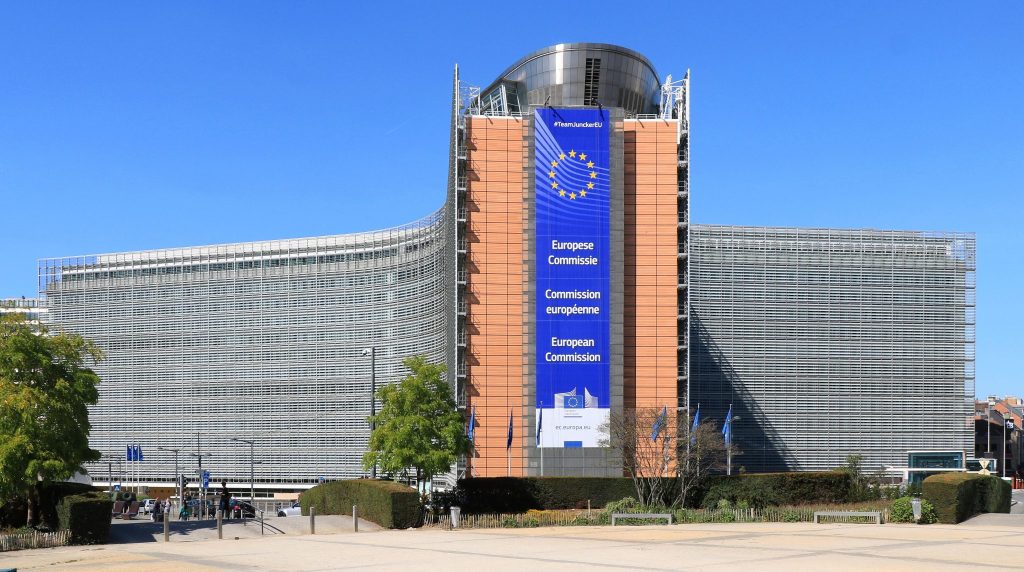 Source: Wikipedia
Centralized Powers Target Cross-Border Efficiency
ESMA WOULD gain authority to directly authorize crypto firms seeking to operate across the bloc, replacing the passporting system, where companies secure approval in one jurisdiction before expanding throughout the EU.
The regulator would also assume oversight of significant trading venues, central counterparties, and central securities depositories alongside its expanded crypto mandate.
The Commission’s framework introduces “” status to streamline corporate structures into a single licensing format while enhancing ESMA’s coordination role in asset management.
Officials positioned the changes as essential for responding to emerging risks and addressing inconsistencies from fragmented national approaches.
The package simultaneously addresses barriers to distributed ledger technology by amending the DLT Pilot Regulation to increase proportionality and provide legal certainty for blockchain adoption.
Member states will see directives converted into regulations to reduce national discretions that enable regulatory gold-plating.
Member States Split Over Sovereignty Concerns
France backed the centralization push after Bank of France Governor François Villeroy de Galhau warned that the current passporting model creates regulatory loopholes due to uneven oversight.
“This framework would benefit from much stricter regulation of the multi-issuance of the same stablecoin within and outside the European Union, to reduce arbitrage risks in times of stress,” he said in October.
Germany also recently signaled openness to expanded ESMA powers following years of opposition, while ECB President Christine Lagarde endorsed centralized supervision as essential for European competitiveness against the United States.
Just last month, ESMA Chair Verena Ross highlighted the inefficiency of national regulators building 27 separate crypto frameworks when centralized resources could achieve better alignment.
European Commission proposes transferring crypto exchange supervision from national regulators to ESMA in bid to standardize oversight across the bloc.#Europe #ESMA #MiCAhttps://t.co/ND271lQ1n3
— Cryptonews.com (@cryptonews) November 3, 2025While others seem to be geared toward the idea, Luxembourg Finance Minister Gilles Roth rejected the shift, stating that his country prefers “supervisory convergence rather than creating a costly and ineffective centralized model.“
In fact, Malta’s Financial Services Authority warned that centralization would introduce bureaucratic layers that would hinder competitiveness, at a time when the EU is striving to enhance its global position.
Industry groups raised concerns about disrupting MiCA’s rollout before it is fully implemented.
“Reopening MiCA at this stage would introduce legal uncertainty, risk delaying the authorization process, and divert attention and resources from the practical task of consistent implementation,” said Robert Kopitsch, secretary general of Blockchain for Europe.
Implementation Timeline Faces Political Hurdles
The European Parliament and Council must approve the proposals through negotiations, where maintaining package unity remains crucial for establishing a genuine single market across the investment chain.
Officials expect Parliament to adopt a legislative framework position by May 2026, while member states aim for general agreement by year-end.
ESMA will begin overseeing equity and bond price consolidation, alongside ESG ratings, from 2026 onward, with oversight of cryptocurrency extending the regulator’s authority as Europe pursues tighter market integration.
The Commission emphasized that the reforms address fragmentation that raises costs for cross-border trades, a significant obstacle for startups scaling in Europe rather than the U.S.
The initiative forms part of broader efforts to complete the EU’s capital markets union, after data-sharing rules published on November 26 established strict requirements for how crypto firms must collect, store, and report user information to tax authorities, starting January 2026.
 EU’s new crypto data-sharing rules will force exchanges and service providers to share user data and transaction records.#EU #CryptoPrivacyhttps://t.co/YoIDXmgNvm
The Transfer of Funds Regulation, which extends the travel rule to crypto, takes effect on December 30 and requires exchanges to identify transaction participants, including self-hosted wallet interactions.
