Trump’s $300M Blockchain-Powered Maldives Resort Lets Investors Buy In Before Groundbreaking

Disrupting luxury real estate—or just cashing in on crypto hype? Trump’s latest venture tokenizes paradise.
The Pitch: Own a Piece of Presidential Opulence
Forget waiting for construction permits—investors can now snap up digital stakes in a $300M Maldivian resort that exists mostly in whitepapers and renderings. The project promises blockchain-based ownership, though skeptics whisper it’s just a timeshare with extra volatility.
Why It (Maybe) Matters
Tokenization could democratize high-end property investing—if regulators don’t crush it first. Early backers get bragging rights and potential tax headaches, while the developer pockets liquidity before breaking ground. Classic ‘visionary’ move.
The Bottom Line
Another day, another asset class getting the crypto glitter treatment. Whether this moons or crashes, someone’s getting rich—and it’s probably not the retail investors.
Investors to Buy Into Trump’s New Maldives Resort Through Tokenization
The project will be situated a short distance from Malé and feature approximately 80 beach and overwater villas, catering to high-end travelers.
Eric Trump, executive vice president of The Trump Organization, said the Maldives opening represents a new chapter for the family’s global portfolio, adding that the tokenization model introduces a fresh way for investors to participate in a resort from day one.
Dar Global CEO Ziad El Chaar said the company plans to keep expanding tokenized real estate structures after this first launch.
The announcement lands at a time when tokenized assets are gaining momentum. Data from rwa.xyz shows the sector’s market capitalization at around $3.52 billion, with monthly active addresses up more than 53% over the past month and total holders rising above 165,000.
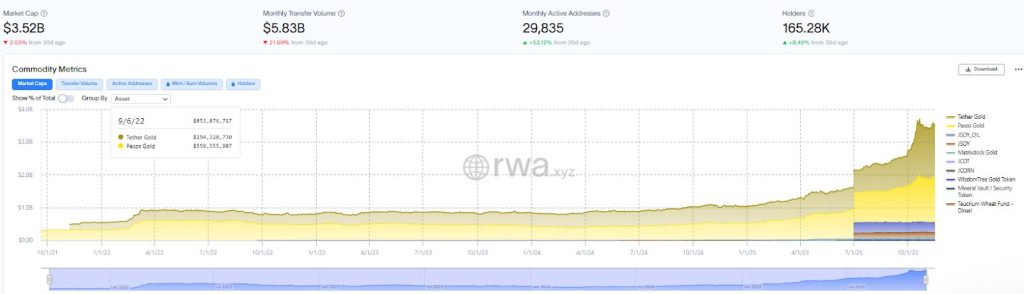
Transfer volume has slowed in recent weeks, but interest in real-world asset tokens has continued to rise as institutions explore new settlement and financing systems.
Tokenized Property Market Heats Up Globally, And the Trump Organization Is Getting In Early
Trump’s real estate ventures have been drawing closer to blockchain technology throughout the year.
In April, the company said buyers would be able to pay in cryptocurrency for units in its $1 billion tower in Dubai, a project including a branded hotel, residences, a private clubhouse, and a pool planned to be one of the tallest in the world.
 The @Trump Organization will begin accepting cryptocurrency payments for property sales at its $1 billion luxury tower in Dubai.#Trump #Cryptohttps://t.co/WiGBYkQkwj
Units start at around $1 million, with penthouses listed at more than $20 million.
Dubai has been positioning itself as a center for digital asset activity, though it has also faced scrutiny over the role of its property market in moving illicit money.
Still, the city continues to court blockchain firms, and its property regulator in May launched Prypco Mint, the first government-backed tokenized real estate platform.
The program seeks to tokenize as much as $16 billion in Dubai property by 2033 through fractional ownership recorded on the XRP Ledger.
The Trump family’s digital expansion also includes a real estate-themed blockchain game expected to debut this year, designed by longtime associate Bill Zanker and built with mechanics inspired by mobile city-building titles.
The game follows earlier ventures involving NFTs, memecoins, and crypto-linked media initiatives.
At the same time, financial authorities globally are pushing deeper into tokenized finance.
Singapore’s central bank is preparing a pilot for tokenized government bills settled with a central bank digital currency, describing asset-backed tokens as past the experimental phase but still early in broader adoption.
 The MAS plans to pilot the issuance of tokenized MAS bills that will be settled using central bank digital currency (CBDC).#Singapore #Cryptohttps://t.co/2XyVwbgIFp
Europe is testing tokenized sovereign debt and exploring permanent frameworks for digital trading systems under its DLT Pilot Regime.
Institutional interest is rising as well. A recent study from State Street found that digital assets make up about 7% of current portfolios, a figure projected to double within three years.
Investors identified tokenized private markets as one of the next major areas to grow, especially as firms look for more efficient ways to handle illiquid assets.
