Bitcoin Soars Past $105k as U.S. Avoids Shutdown—But ETF Exodus Continues

Washington's last-minute budget deal sends BTC bulls charging—just as Wall Street's 'paper bitcoin' products keep bleeding.
Relief Rally or Dead Cat Bounce?
The crypto king defies gravity after politicians temporarily shelve their dysfunction. Traders cheer the liquidity reprieve, but that $105k resistance won't break itself.
ETF Outflows Hit Record Streak
Institutional investors keep dumping GBTC like it's 2021 all over again. Maybe those 'approved' funds weren't the moon ticket everyone promised—who could've seen that coming?
The Real Test Comes Next
This pump lives or dies on whether macro traders actually believe the Fed will pivot. Spoiler: They've been wrong before. Repeatedly.
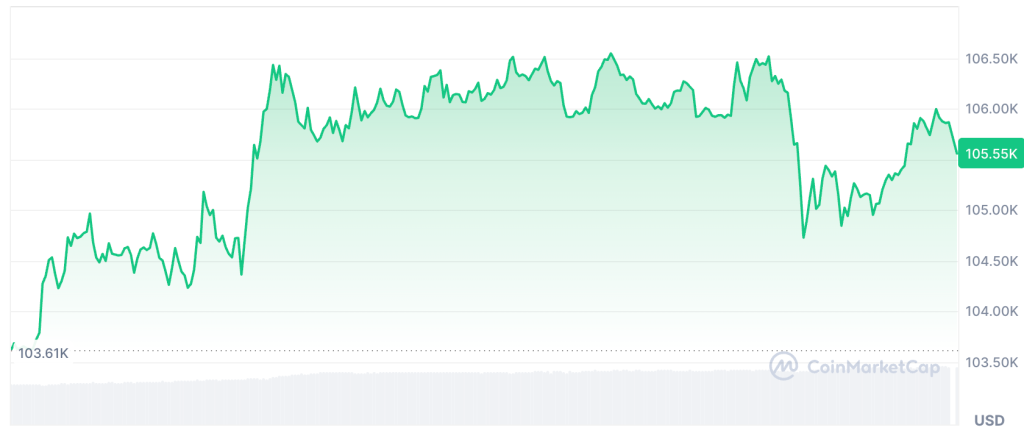
Bitcoin Price (Source: CoinMarketCap)
Policy Relief Meets Heavy Outflows
Listed product flows set a cooler backdrop. Farside Investors’ tracker shows roughly $1.2 billion in net outflows from U.S. spot Bitcoin ETFs over the latest week, a sum that has frequently absorbed rebounds and limited follow-through during New York hours.
Reuters noted that a shutdown resolution lowers near-term policy noise, which typically steadies risk positioning. That effect can help liquidity providers rebuild depth; however, persistent ETF redemptions can offset those gains by recycling supply into the market during rallies.
Glassnode’s previous “Week On-Chain” review described long-term holders as net distributors in strength since late October. When seasoned wallets sell into bounces at the same time ETFs see outflows, cash demand needs to expand to absorb both channels before any base becomes durable.
A clean finish to the funding bill WOULD remove a near-term overhang. If that outcome pairs with slowing ETF redemptions, relief can extend beyond a single session and broaden to more trading windows.
 WLFI and OFFICIAL TRUMP climb after Senate passes funding bill, easing shutdown fears and lifting sentiment across altcoin markets.#shutdown #trump #altcoinhttps://t.co/quXGxOj3fp
Flows, Depth, And The Price Path
Basis and funding normalized during the pullback, which often marks a reset rather than a trend change. The next phase depends on cash inflows. A turn from net outflows to net inflows in the U.S. spot ETFs would indicate that fresh demand is exceeding distribution.
Order-book quality provides a second check: rebuilt depth on BTC pairs across top venues during London and New York sessions tends to reduce gap risk and helps rallies survive headline swings. Market participants track cumulative depth bands to judge whether liquidity is returning evenly.
With the good news kicking off a new week, sentiment remains cautious. The Fear and Greed Index in the 20s has historically coincided with two-way trade, where intraday spikes fade unless supported by heavier spot volumes.
Stronger closes on days with firmer volumes would mark a healthier repair than squeezes driven by derivatives.
A U.S. government shutdown deal can steady rate-cut expectations at the margin and calm collateral stress, but crypto direction has increasingly hinged on whether cash products receive steady allocations rather than on futures-led bursts alone.
THE MAN WHO DOES IT ALL. pic.twitter.com/n5RJFDx5RO
Beyond Bitcoin: ETH, SOL, XRP Reads
Ethereum tracked the bounce with slightly wider percentage moves, a pattern seen when DeFi-linked activity lifts realized volatility. Flows into or out of ETH-focused vehicles will help determine whether the MOVE extends beyond relief, especially if exchange balances continue to edge lower on spot demand.
Solana has drawn attention from product development and discretionary traders. Weekly ETF flow roundups showed relative resilience in SOL-linked vehicles compared with BTC and ETH during recent sessions, hinting that breadth can return if bitcoin steadies and redemptions slow.
XRP often amplifies shifts in majors during stressed weeks. A calmer BTC tape with better depth typically narrows XRP intraday ranges and reduces slippage around event headlines.
The near-term test is straightforward. If U.S. spot ETF outflows ease while the shutdown deal moves to signature and long-term holder distribution slows, bidders can build a base with less friction. Until those series turn together, rebounds will continue to meet supply at familiar levels.
