Digital Rupiah Revolution: Indonesia’s CBDC Backed by Government Bonds Mimics Stablecoin Mechanics

Central banks just discovered what crypto knew all along—real backing matters.
Bond-Backed Digital Currency
Indonesia's central bank breaks from tradition, anchoring their digital rupiah directly to government securities. No more printing money out of thin air—every digital token gets concrete bond collateral.
Stablecoin DNA in CBDC Clothing
The architecture mirrors private stablecoins but swaps corporate promises for sovereign guarantees. Think USDC mechanics with treasury-grade backing—minus the crypto volatility.
Monetary Policy Reimagined
Direct bond linkage creates instant transmission channels for interest rates. Central bankers gain surgical precision while citizens get digital cash that actually holds value.
The Global Domino Effect
Watch other developing nations follow suit—nothing motivates central bankers like seeing neighbors modernize their monetary systems successfully.
Finally, a CBDC that understands money should be backed by something beyond government promises. Who knew financial innovation would come from bureaucrats playing catch-up with crypto?
Can Government Bonds Make a CBDC Truly Stable? Indonesia Thinks So
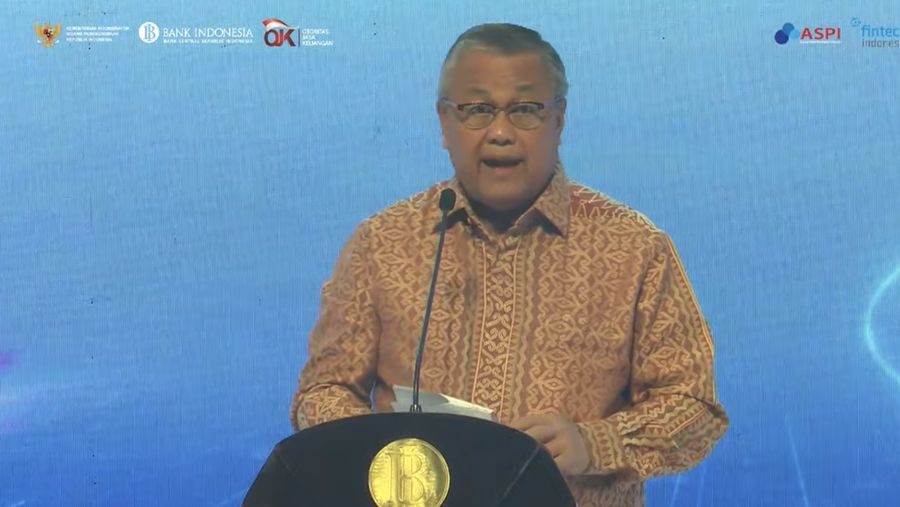
Governor Warjiyo revealed that the digital rupiah will be supported by “digital central bank securities,” tokenized versions of government bonds, known locally as Surat Berharga Negara (SBN).
“We will issue Bank Indonesia securities. We have a digital version, a digital Bank Indonesia rupiah with underlying government bonds, and a national Indonesian stablecoin version,” he said.
This approach effectively combines the security of a central bank-issued currency with the stability of an asset-backed digital token, creating what BI officials describe as a “national stablecoin.”
The model ties the value of the digital rupiah directly to government bonds through tokenization, ensuring that each unit of digital currency is underpinned by a tangible, stable asset.
Bank Indonesia’s new framework aligns with its broader digital finance agenda, which focuses on expanding innovation and acceptance, strengthening industrial structures, and maintaining financial stability.
The MOVE also builds on the success of the Project Garuda proof-of-concept completed in December 2024, which tested distributed ledger technology (DLT) platforms such as Corda and Hyperledger Besu for digital currency issuance, redemption, and fund transfers.
 Bank Indonesia has successfully completed the first phase of its digital Rupiah project#DigitalRupiah #Indonesiahttps://t.co/eG515hcDNt
Under the bond-backed design, BI will tokenize government bonds to issue digital securities built atop the CBDC infrastructure.
The system aims to enhance market liquidity by making bond settlement faster and more transparent while reducing transaction costs through blockchain-based automation.
What differentiates Indonesia’s CBDC With Stablecoin Twist From Private Stablecoins
Indonesia’s central bank says the hybrid CBDC will provide multiple advantages, including greater monetary policy control, improved payment efficiency, and enhanced security.
Unlike private stablecoins, which carry credit and issuer risks, the digital rupiah will be a direct liability of the central bank. Officials believe this structure will reinforce public trust while offering faster, cheaper, and more programmable payments domestically and internationally.
The central bank’s plan to issue a bond-backed CBDC could help counter the growing influence of private digital currencies while preserving national monetary sovereignty.
Through Project Garuda, BI aims to provide a safer, government-backed alternative to privately issued stablecoins, offering price stability, regulatory oversight, and financial inclusion.
Notably, the rollout will occur in phases, starting with a wholesale digital rupiah for interbank transfers before expanding to a retail version for the public.
Bank Indonesia’s Digital Rupiah Project Enters New Stage Amid Rapid Crypto Expansion Nationwide
Deputy Governor Juda Agung previously stated that findings from the proof-of-concept will FORM the foundation for the next development phase, focusing on scalability and operational readiness.
The project’s design emphasizes interoperability across digital platforms, ensuring that the digital rupiah can integrate seamlessly with existing payment systems and international standards such as ISO 20022.
Indonesia’s approach stands out globally. While China’s e-CNY focuses on retail use and state control, and the Bahamas’ SAND Dollar targets financial inclusion, Indonesia’s model blends both elements, central trust and asset-backed stability.
Unlike Singapore’s Project Orchid or Hong Kong’s e-HKD, which prioritize programmability and private collaboration, Indonesia’s CBDC directly incorporates stablecoin-style asset backing to ensure long-term stability.
Beyond policy innovation, the digital rupiah comes amid rapid growth in Indonesia’s crypto sector.
Indonesia's crypto market is booming! With over $30 billion in transactions and 21 million traders in 2024, the country is solidifying its status among the global crypto leaders.#Indonesia #Cryptohttps://t.co/IicWGY4fID
The country recorded over 475 trillion rupiah (around $30 billion) in crypto transactions by late 2024, a 352% increase from the previous year, with more than 21 million traders now participating.
According to a study by the University of Indonesia, the crypto industry contributed $4.4 billion to GDP in 2024 and generated over 333,000 jobs.

Notably, Indonesia secured the seventh position in Chainalysis’s 2025 Global Crypto Adoption Index.
