South Korean City to Seize Crypto from Delinquent Water Bill Payers

Local government flexes digital asset recovery powers—your Bitcoin isn't safe from municipal bills.
The Enforcement Shift
Gone are the days of simple property liens. This city's diving straight into digital wallets when residents skip water payments. They're treating crypto holdings like any other seizable asset—no special treatment for your precious Bitcoin.
Legal Precedent Setting
Municipalities worldwide watch closely as traditional collection methods meet blockchain transparency. The irony? Using decentralized technology for centralized enforcement. Your keys might mean your coins, but unpaid bills mean their coins now.
Global Implications
Watch other cash-strapped cities follow suit—nothing inspires bureaucratic innovation like finding new revenue streams. First they came for your bank account, now they're coming for your hardware wallet.
Another reminder that in the grand scheme, crypto's just another asset class—subject to the same old financial realities and government reach. The revolution will be taxed... and now repossessed.
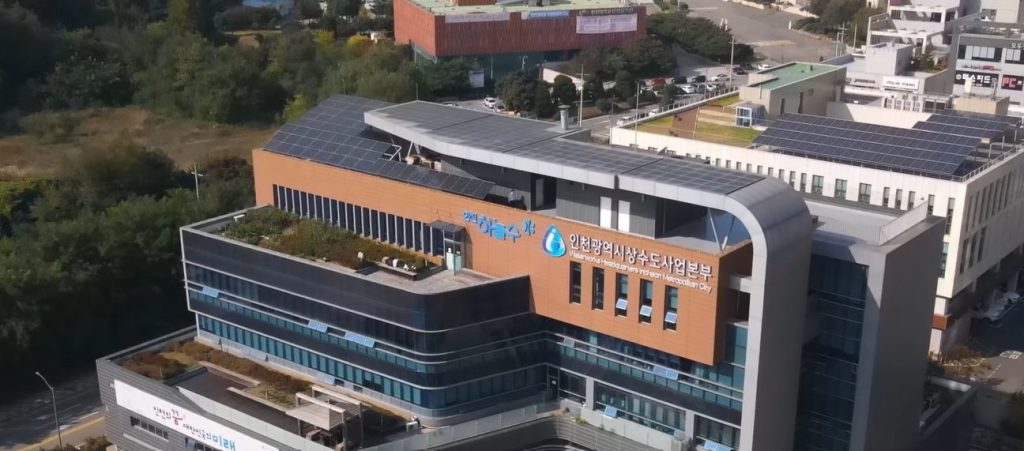 Incheon Metropolitan City’s Waterworks Headquarters, in Incheon, South Korea. (Source: @incheon.waterworks/Facebook/Screenshot)
Water Bills: Crypto Confiscation Pilot Begins
The city will run a “special collection period for overdue water bills” from November 1. During this time, it will match data on unpaid bills with data from domestic crypto exchanges such as Upbit and Bithumb.
If authorities find that any of the residents with unpaid bills have crypto holdings, they will send official warnings.
If residents fail to respond to these warnings, the city will then confiscate coins and MOVE to liquidate them.
The city said it will initially focus on individuals who have amassed unpaid water bills of over 500,000 won ($360).
These individuals represent 34% of the city’s unpaid tax bill total. They owe Incheon an estimated combined total of 813 million won ($580,260), a city official said.
An Incheon city official said that people who are having difficulty paying their bills for financial reasons can apply for a deferral of payment.
They can also choose to pay in instalments, the official added. Jang Byung-hyun, the head of the Incheon City Waterworks Headquarters, said:
“Water bills are an essential revenue source that is directly linked to the quality of our residents’ lives. We will strive to launch this new cryptoasset seizure system, the first of its kind in the country. It will help us boost fiscal soundness and improve our management systems.”
South Koreans in their 20s saw their inflation-adjusted real incomes grow by less than 2 percent per year on average from 2014 to 2024, the lowest among all age groups during that period, a report showed Monday.https://t.co/PTHilqgBeD
— The Korea Herald 코리아헤럴드 (@TheKoreaHerald) September 29, 2025North Gyeongsang Crackdown
Elsewhere in the country, the newspaper Hankook Ilbo reported that North Gyeongsang Province will begin its own “special collection” period in November and December.
North Gyeongsang is also hoping to seize crypto and other intangible assets during this period.
The province said that “thorough investigations” into “various hidden assets,” including crypto holdings, have already yielded results.
Province officials said that in the first half of this year, tax agents “seized 10.2 billion won ($7.3 million) worth of assets and collected 4.9 billion won ($3.5 million) in unpaid taxes.”
