The $37T Question: Can Stablecoins Really Solve America’s Debt Crisis?

Stablecoins emerge as potential lifeline for staggering US debt burden.
Digital Dollar Alternatives
While Washington debates traditional solutions, crypto innovators propose a radical workaround: dollar-pegged digital currencies that bypass bureaucratic bottlenecks. These assets maintain 1:1 dollar parity while operating on decentralized networks—cutting settlement times from days to seconds.
The $37 Trillion Reality Check
No magic bullet exists for debt accumulated over decades. Stablecoins might optimize Treasury operations, but they can't print real value. The real test? Whether blockchain efficiency can outperform political gridlock.
Wall Street's worst nightmare: technology that actually makes sense.


Stablecoins Can’t ‘Magically’ Wipe Away US Debt
Cutting through conspiracy and hyperbole, crypto analysts say moving U.S. debt into stablecoins may not be technically feasible.
“Migrating even a fraction of $37 trillion of U.S. debt onto stablecoin rails isn’t just a switch you flip,” Kony Kwong, CEO of GAIB, a company that’s building the economic LAYER for artificial intelligence on-chain, told Cryptonews.
He said the idea of using stablecoins to “magically devalue” U.S. debt is unrealistic.
“Treasuries are legal contracts, and you can’t just re-label obligations without triggering default or explicit policy moves.”
While new issuance can be slowly and incrementally tokenized, says Kony, using stablecoins to shortchange global creditors would go beyond the limits of what is legally possible.
Symbiotic chief operating officer Jill Friedman, who is also a lawyer, said the proliferation of stablecoins such as Tether’s USDT and Circle’s USDC is likely to increase global access to U.S. dollars.
But simply manipulating stablecoins to erase America’s debt is outside federal remit, she says. Kobyakov’s claim may be Russia’s compensatory grasp for Trump’s weaker points in a soft war that has largely favored the latter.
To start with, the U.S government does not own stablecoins.
“It’s important to remember that U.S. dollar stablecoins are not issued by the government or central bank but by private entities and financial institutions,” Friedman tells Cryptonews. “The biggest USD stablecoin is Tether, which isn’t based in the U.S. and has a market cap of $172 billion.”
America does have an option to create its own sovereign stablecoin. As Kony explains:
“If the U.S. launched a sovereign, Treasury-backed dollar token, it would likely become the default inside regulated pipes (i.e., banks, fintechs, and compliant exchanges). This is because counterparty and policy risk drop, squeezing private issuers on yield capture and onshore market share.”
A federal stablecoin would not phase out USDT and USDC. “They would continue to serve permissionless, cross-border liquidity and faster multi-chain distribution, where a federal coin moves more slowly,” he added.
“We would see more on-chain demand for T-bills (good for U.S. funding), tighter margins for private stablecoins in the U.S., and a split market: regulated dollars for regulated rails, private dollars for the edges.”
Coin Wars
The Kremlin’s novel claim may not be technically precise, but it reveals discomfort with America’s growing influence in crypto and the stablecoin market under the self-proclaimed “Crypto President” Donald Trump.
Russia worries about what could happen if the U.S. acquires an influential stake in a major token, such as USDT or USDC, to pump or devalue it in its own interests, according to analysts.
Kobyakov’s claim also brings Russia and America’s covert “coin wars” into the open. While the U.S. is a clear tech hegemon, Russia is not a pushover.
Russia’s socialist roots may have helped it spawn open-source apostles such as ethereum founder Vitalik Buterin and TON founder Pavel Durov. Its position as a comparable global superpower has also provided a haven for cypherpunks – like Edward Snowden – hounded by the U.S.
But a centrist culture, even a jail-and-recruit scheme, that places disruptive tech talent under the wings of government has naturally led to a brain drain. Russia is now pursuing a digital alternative to dollar dominance via the BRICS+ platform.
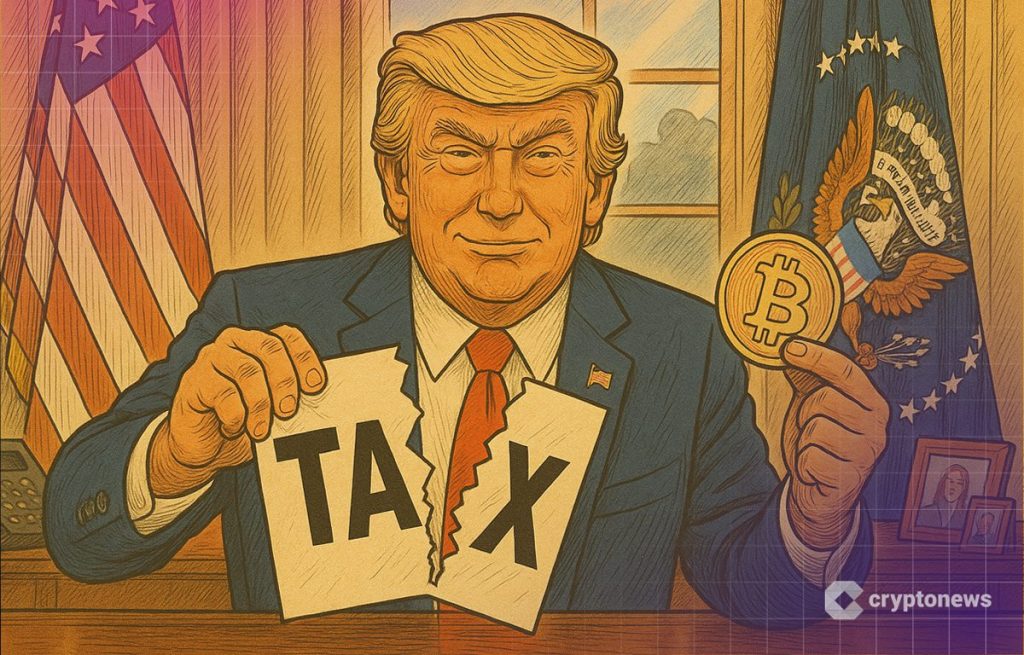
Trump’s Wager On Bitcoin
Paying down federal debt in crypto is a classic wager of the Trump Team. Rather than arbitrarily migrate the national debt to stablecoins, President Trump has floated the idea of stacking up Bitcoin in the government reserve.
The plan has been variously “debunked” by crypto analysts. Ben Ritz, vice president of policy development for the think tank Progressive Policy Institute, says the entire market cap of BTC is nowhere NEAR the U.S.’s $37 trillion debt.
“If all the Bitcoin in the world isn’t worth enough to cover a single year’s budget deficit, there is no way buying 5% of it can plausibly stem the growth of, let alone pay off, our national debt,” Ritz said in a Forbes op-ed.
It is still possible that a reserve currency held for 20 years could increase in value. But aggressive buying would cause price distortion, volatility, and potentially bring down the BTC price, he said. Perceived government takeover, even if limited to 5%, would also “rewrite” the rules of alternative finance.
